



The lr3 peptide has emerged as one of the most extensively researched modified growth factors in peptide science, attracting significant attention from researchers studying muscle growth, metabolic regulation, and cellular development. As a synthetic analog of insulin-like growth factor 1 (IGF-1), this peptide features specific structural modifications that dramatically extend its biological activity and enhance its potency compared to the naturally occurring hormone. Understanding how this modified peptide functions at the molecular level provides valuable insights into its potential applications across various research domains.
Understanding the Structure and Modifications of LR3 Peptide
The lr3 peptide represents a scientifically engineered variant of native IGF-1 with two critical structural modifications that fundamentally alter its biological behavior. The designation "LR3" refers to these specific changes: "Long R3" indicates an extended peptide chain with an arginine substitution at position 3.
Key Structural Features
The primary modification involves extending the peptide sequence from 70 to 83 amino acids, adding an additional 13 amino acids at the N-terminus. This extension significantly impacts how the molecule interacts with binding proteins in the biological environment. The second modification replaces the glutamic acid at position 3 with arginine, further reducing affinity for IGF-binding proteins.
These structural changes create several functional advantages:
- Extended biological half-life of approximately 20-30 hours versus 10-15 minutes for native IGF-1
- Reduced binding to IGF-binding proteins by approximately 1000-fold
- Enhanced systemic circulation and tissue availability
- Increased potency in cellular signaling pathways
The reduced affinity for IGF-binding proteins represents perhaps the most significant functional improvement, as native IGF-1 is rapidly sequestered by these binding proteins, limiting its biological activity.

Mechanisms of Action and Cellular Signaling
The lr3 peptide exerts its biological effects primarily through interaction with the IGF-1 receptor, though its modified structure allows for prolonged and enhanced signaling compared to the native hormone. Upon binding to cellular IGF-1 receptors, the peptide initiates a cascade of intracellular signaling events that influence protein synthesis, glucose metabolism, and cellular proliferation.
Activation of Growth Pathways
The PI3K/Akt/mTORC1 pathway activation represents the primary mechanism through which this peptide influences muscle protein synthesis and cellular growth. When the peptide binds to IGF-1 receptors on muscle cells, it triggers phosphorylation of insulin receptor substrate proteins, which subsequently activate phosphoinositide 3-kinase (PI3K).
This activation cascade proceeds through several steps:
- IGF-1 receptor phosphorylation and activation
- Recruitment and phosphorylation of IRS proteins
- PI3K activation and PIP3 production
- Akt kinase activation through PDK1 phosphorylation
- mTORC1 activation promoting protein synthesis
- Inhibition of GSK-3β reducing protein degradation
The extended half-life of lr3 peptide means these signaling pathways remain active for significantly longer periods than with native IGF-1, potentially leading to more sustained anabolic effects in muscle tissue.
Metabolic and Anti-Catabolic Effects
Beyond promoting protein synthesis, this peptide also influences cellular metabolism and inhibits protein degradation pathways. The activation of Akt suppresses the transcription factors FoxO1 and FoxO3a, which normally promote expression of muscle-specific ubiquitin ligases such as atrogin-1 and MuRF1.
| Pathway Component | Native IGF-1 | LR3 Peptide |
|---|---|---|
| Receptor Binding Affinity | High | High |
| IGFBP Binding | Very High | Very Low |
| Half-Life | 10-15 minutes | 20-30 hours |
| Systemic Availability | Low | Significantly Higher |
| mTORC1 Activation Duration | Brief | Extended |
Research Applications in Muscle Growth and Recovery
The lr3 peptide has been extensively studied in research settings examining muscle hypertrophy, satellite cell activation, and recovery from muscle damage. The peptide’s enhanced biological potency makes it particularly valuable for investigating the fundamental mechanisms underlying muscle growth and regeneration.
Satellite Cell Proliferation and Differentiation
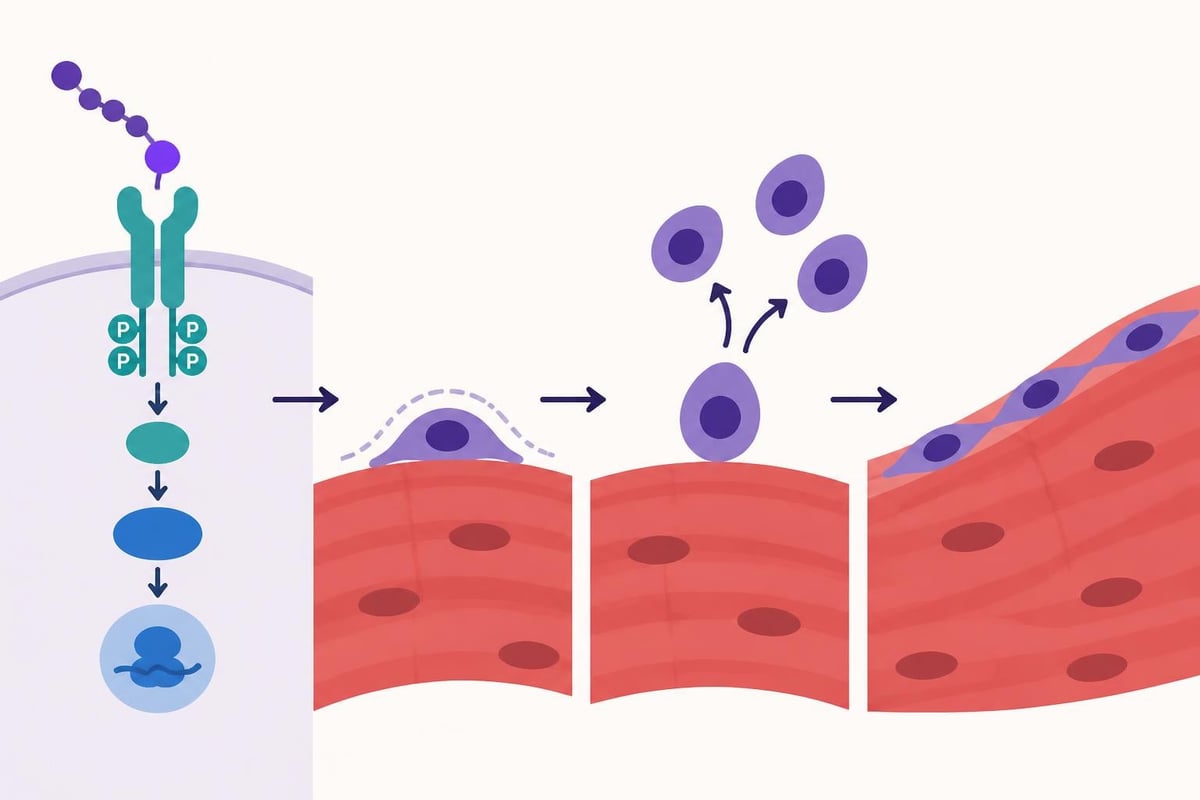
Satellite cells serve as muscle stem cells, remaining quiescent until activated by mechanical stress, injury, or growth signals. Research indicates that lr3 peptide can stimulate satellite cell activation and proliferation more effectively than native IGF-1 due to its extended presence in the circulation and tissues.
Key research findings include:
- Enhanced satellite cell entry into the cell cycle
- Increased myoblast proliferation rates
- Improved fusion of myoblasts into existing muscle fibers
- Sustained activation of muscle protein synthesis machinery
These effects appear particularly relevant for those interested in muscle growth applications, as satellite cell incorporation into existing fibers represents a critical mechanism for increasing muscle fiber size.
Protein Synthesis and Degradation Balance
The balance between protein synthesis and degradation ultimately determines net muscle protein accretion. The lr3 peptide influences both sides of this equation by simultaneously promoting anabolic pathways and suppressing catabolic processes.
Research protocols examining dosing parameters have documented in various model systems the relationship between peptide concentration and protein synthesis rates. The comprehensive research bibliography contains numerous studies examining optimal timing, frequency, and dosing strategies for maximizing anabolic responses while minimizing potential adverse effects.
Metabolic Effects and Body Composition
Beyond direct effects on muscle tissue, the lr3 peptide also influences whole-body metabolism, glucose disposal, and fat metabolism. These systemic metabolic effects complement the localized muscle-building properties and contribute to overall improvements in body composition.
Glucose Metabolism and Insulin Sensitivity
The structural similarity between IGF-1 and insulin means that lr3 peptide can activate insulin receptors and hybrid IGF-1/insulin receptors, though with lower affinity than for pure IGF-1 receptors. This cross-reactivity contributes to improved glucose uptake in muscle cells and enhanced insulin sensitivity.
Research has documented several metabolic benefits:
- Increased GLUT4 translocation to cell membranes
- Enhanced glycogen synthesis in muscle tissue
- Improved glucose clearance from circulation
- Reduced hepatic glucose production
These effects may be particularly relevant for individuals researching metabolic optimization alongside weight loss goals, as improved glucose metabolism supports better body composition outcomes.
Lipolysis and Fat Metabolism
While primarily known for anabolic effects in muscle tissue, the lr3 peptide also influences adipose tissue metabolism. The peptide can enhance lipolysis (fat breakdown) and reduce lipogenesis (fat storage) through several mechanisms involving hormone-sensitive lipase activation and reduced lipogenic enzyme expression.
| Metabolic Parameter | Effect Direction | Proposed Mechanism |
|---|---|---|
| Glucose Uptake | Increased | Enhanced GLUT4 translocation |
| Glycogen Synthesis | Increased | Activated glycogen synthase |
| Lipolysis | Increased | HSL activation, PKA signaling |
| Lipogenesis | Decreased | Reduced ACC and FAS expression |
| Insulin Sensitivity | Improved | Enhanced IRS signaling |
Pharmacokinetics and Biological Half-Life
The extended half-life and pharmacokinetic profile of lr3 peptide represents one of its most distinguishing characteristics compared to native IGF-1. Understanding these pharmacokinetic properties is essential for designing effective research protocols and interpreting study results.
Absorption and Distribution
Following administration in research models, the modified structure of lr3 peptide allows for improved systemic absorption compared to native IGF-1. The reduced binding to IGF-binding proteins means a higher proportion of administered peptide remains free in circulation to interact with cellular receptors.
The distribution phase shows:
- Rapid initial distribution to highly perfused tissues
- Sustained circulation time due to reduced protein binding
- Enhanced penetration into muscle tissue
- Prolonged receptor engagement and signaling activation
Metabolism and Elimination
The lr3 peptide undergoes proteolytic degradation similar to other peptide hormones, though its modified structure provides some protection against rapid enzymatic breakdown. The extended sequence and amino acid substitution appear to reduce susceptibility to certain proteases that rapidly degrade native IGF-1.
Elimination characteristics include:
- Primarily renal clearance of degraded fragments
- Some hepatic metabolism and degradation
- Terminal half-life extending 20-30 hours
- Reduced clearance rate compared to native IGF-1

Research Protocols and Quality Considerations
Conducting rigorous research with lr3 peptide requires careful attention to dosing protocols, reconstitution procedures, storage conditions, and purity verification. The research dosing protocols documented in scientific literature provide valuable guidance for experimental design.
Reconstitution and Storage
Proper handling ensures peptide stability and biological activity throughout research studies. The lr3 peptide typically arrives as a lyophilized powder requiring reconstitution with bacteriostatic water or sterile water before use.
Best practices for preparation and storage:
- Reconstitute with appropriate sterile solution per manufacturer guidelines
- Store lyophilized powder at -20°C for maximum stability
- Store reconstituted solution at 2-8°C for short-term use
- Protect from light and temperature fluctuations
- Avoid repeated freeze-thaw cycles
The stability of reconstituted lr3 peptide varies depending on storage conditions, with refrigerated solutions typically maintaining activity for several weeks when properly prepared and stored.
Quality Verification and Purity Standards
High-quality research requires peptides meeting strict purity standards. Reputable suppliers employ multiple analytical techniques to verify peptide identity, purity, and potency before releasing products for research use.
| Quality Parameter | Testing Method | Acceptable Range |
|---|---|---|
| Purity | HPLC Analysis | ≥98% |
| Identity | Mass Spectrometry | Matches theoretical mass |
| Peptide Content | UV Spectroscopy | ≥90% of stated amount |
| Bacterial Endotoxins | LAL Test | <1.0 EU/mg |
| Sterility | USP Method | No growth |
For researchers seeking comprehensive information about peptide quality standards and research applications, the FAQ section provides valuable guidance on proper handling and storage protocols.
Regulatory Status and Research Limitations
The lr3 peptide occupies a unique regulatory position as a research chemical not approved for human therapeutic use by regulatory agencies such as the FDA. Understanding this regulatory context is essential for anyone working with this peptide in research settings.
Current Regulatory Framework
The regulatory status of LR3 peptide reflects its development as a research tool and cell culture supplement rather than a pharmaceutical agent. No regulatory authority has approved this peptide for human medical treatment, weight loss, muscle building, or any therapeutic indication.
Important regulatory considerations:
- Classified as a research chemical for laboratory use only
- Not approved by FDA for human consumption
- Not evaluated for safety or efficacy in clinical trials
- Should only be used in controlled research environments
- Subject to regulations governing research chemicals
Research Use and Scientific Investigation
Despite its non-approved status for human use, the lr3 peptide remains valuable for scientific investigation into growth factor biology, muscle physiology, and metabolic regulation. The comprehensive peptide resources available through academic institutions support continued research into IGF-1 signaling pathways and their therapeutic potential.
Legitimate research applications include cell culture studies, animal model investigations, and basic science research examining growth factor mechanisms. These research contexts allow scientists to explore the fundamental biology underlying muscle growth, metabolic regulation, and cellular proliferation.
Comparative Analysis with Other Growth Factors
Positioning the lr3 peptide within the broader landscape of growth factors and anabolic peptides helps clarify its unique properties and potential research applications. Several related compounds share some functional similarities but differ in important mechanistic and pharmacokinetic characteristics.
LR3 Peptide Versus Native IGF-1
The most direct comparison involves the lr3 peptide and unmodified IGF-1, as the former was specifically engineered to address limitations of the latter. Native IGF-1 exhibits potent anabolic effects but suffers from extremely rapid clearance and extensive binding protein sequestration.
Key differences include:
- Half-life: LR3 provides 100-fold longer circulating half-life
- Binding protein affinity: LR3 shows 1000-fold reduced IGFBP binding
- Systemic availability: LR3 maintains higher free concentrations
- Dosing frequency: LR3 requires less frequent administration in research protocols
- Receptor selectivity: Both target IGF-1R with similar affinity
Comparison with Other Anabolic Peptides
Researchers exploring anti-aging and recovery enhancement often compare lr3 peptide with other growth-promoting compounds such as growth hormone secretagogues, BPC-157, and TB-500. Each peptide class operates through distinct mechanisms and offers different research advantages.
The lr3 peptide's direct receptor activation distinguishes it from growth hormone-releasing peptides, which work indirectly by stimulating pituitary GH secretion. This direct mechanism may provide more predictable and consistent effects in controlled research environments.
Future Research Directions and Emerging Applications
The scientific understanding of lr3 peptide continues to evolve as researchers explore novel applications and refine existing knowledge about its mechanisms and effects. Several emerging research directions show particular promise for expanding our understanding of this modified growth factor.
Tissue-Specific Delivery Systems
Current research explores targeted delivery methods that could enhance peptide concentration in specific tissues while minimizing systemic exposure. These approaches might include encapsulation technologies, conjugation to targeting ligands, or localized administration strategies.
Emerging delivery technologies under investigation:
- Nanoparticle encapsulation for controlled release
- PEGylation to further extend circulation time
- Tissue-specific targeting through receptor-mediated delivery
- Local administration strategies for concentrated tissue effects
Combination Protocols and Synergistic Effects
Research examining lr3 peptide in combination with other compounds may reveal synergistic effects that exceed the sum of individual components. Potential combination partners include other growth factors, metabolic modulators, and recovery-enhancing peptides like GHK-Cu.
Preliminary research suggests certain combinations might optimize anabolic signaling while minimizing potential adverse metabolic effects. However, these combination protocols require careful investigation to establish safety profiles and optimal dosing ratios.
Quality Sourcing and Research Considerations
For researchers working with lr3 peptide, source quality represents a critical variable affecting experimental outcomes and data reliability. Variations in purity, potency, and handling can significantly impact research results and reproducibility.
Selecting Research-Grade Peptides
High-quality research demands peptides that meet rigorous quality standards verified through comprehensive analytical testing. Researchers should prioritize suppliers who provide detailed certificates of analysis documenting purity, identity, and sterility.
Essential quality indicators include:
- Third-party analytical verification (HPLC, MS)
- Batch-specific certificates of analysis
- Documented storage and handling procedures
- Transparent manufacturing processes
- Compliance with research chemical regulations
Importance of Proper Handling Protocols
Even the highest-quality peptide can degrade if improperly handled or stored. Research protocols must include specific procedures for reconstitution, aliquoting, storage, and administration to preserve peptide integrity throughout the study duration.
Temperature control proves particularly critical, as peptides can rapidly lose activity when exposed to excessive heat or repeated freeze-thaw cycles. Maintaining cold chain logistics from manufacturer to end user ensures researchers work with peptides at full potency.
The lr3 peptide represents a powerful research tool for investigating growth factor biology, muscle physiology, and metabolic regulation, offering significant advantages over native IGF-1 through its extended half-life and enhanced biological activity. When sourced from reputable suppliers committed to purity and quality, this peptide enables rigorous scientific investigation across multiple research domains. For those seeking premium-quality peptides backed by stringent quality control and advanced purification methods, Soma Peptide provides the reliability and consistency essential for meaningful research outcomes.