



The igf 1 lr3 peptide represents a significant advancement in peptide research, offering a modified version of insulin-like growth factor 1 (IGF-1) with enhanced stability and extended activity. This synthetic analog has attracted considerable attention from researchers investigating muscle growth, tissue repair, and metabolic function. As an engineered variant with specific structural modifications, IGF-1 LR3 demonstrates unique pharmacological properties that distinguish it from naturally occurring IGF-1, making it a valuable tool for understanding growth factor biology and potential therapeutic applications.
Understanding the Structural Modifications of IGF-1 LR3
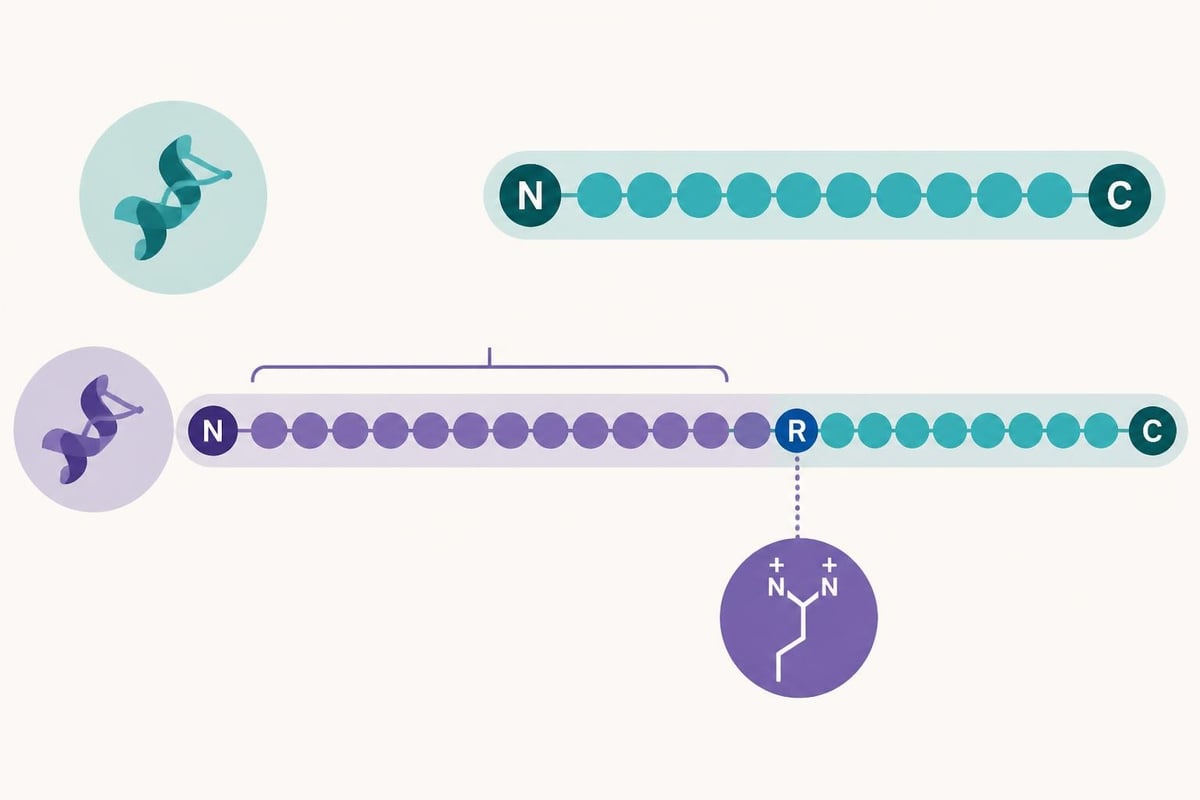
The igf 1 lr3 peptide contains two critical modifications that fundamentally alter its biological behavior compared to native IGF-1. The designation "LR3" refers to Long R3, indicating both an extension of the peptide chain and a specific amino acid substitution.
Key Structural Changes
The first modification involves the addition of 13 amino acids to the N-terminus of the peptide chain, extending the sequence from 70 to 83 amino acids. This extension significantly impacts the molecule's stability and half-life in biological systems.
The second modification replaces the glutamic acid at position 3 with arginine, fundamentally altering the peptide's binding characteristics. This substitution reduces the affinity of IGF-1 LR3 for insulin-like growth factor binding proteins (IGFBPs) by approximately 100-fold compared to native IGF-1.
These structural changes create several functional advantages:
- Extended half-life in circulation (20-30 hours versus 10-20 minutes for native IGF-1)
- Reduced binding to IGFBPs allows greater bioavailability
- Enhanced ability to reach target tissues
- Improved stability during storage and handling
- Maintained receptor binding affinity at IGF-1 receptors
Mechanism of Action and Cellular Signaling
The igf 1 lr3 peptide exerts its effects primarily through activation of the IGF-1 receptor (IGF-1R), a tyrosine kinase receptor present on various cell types throughout the body. Research on IGF-1 LR3’s mechanism of action demonstrates its ability to initiate multiple intracellular signaling cascades.
Receptor Activation and Downstream Pathways
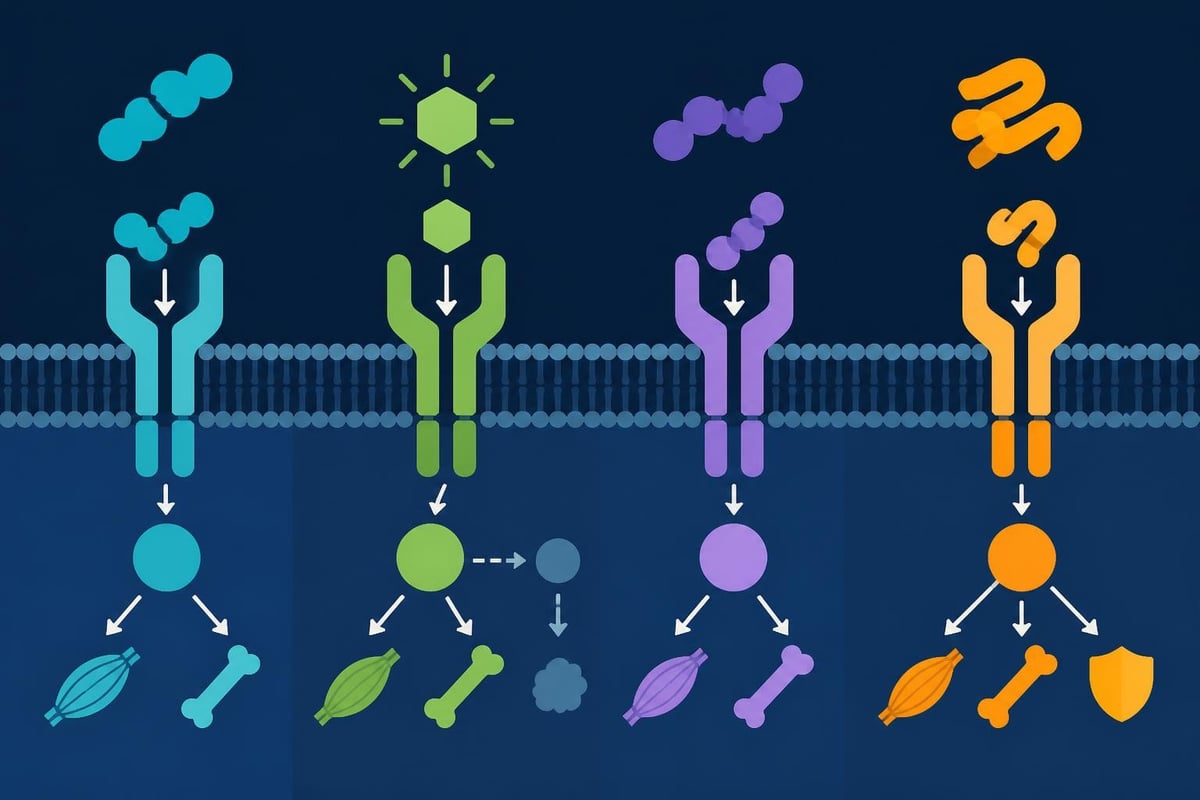
When IGF-1 LR3 binds to the IGF-1 receptor, it triggers receptor autophosphorylation and subsequent activation of two primary signaling pathways: the PI3K/Akt pathway and the MAPK/ERK pathway.
The PI3K/Akt pathway plays a crucial role in protein synthesis, cell survival, and glucose metabolism. Activation of this pathway leads to increased mTOR activity, which serves as a central regulator of cellular growth and protein translation. This mechanism underlies many of the anabolic effects observed in research settings.
| Signaling Pathway | Primary Effects | Biological Outcomes |
|---|---|---|
| PI3K/Akt/mTOR | Protein synthesis activation | Muscle hypertrophy, cell growth |
| MAPK/ERK | Cell proliferation signals | Tissue repair, cell differentiation |
| IRS-1/2 | Metabolic regulation | Glucose uptake, nutrient partitioning |
| FOXO inhibition | Reduced protein breakdown | Preservation of muscle mass |
The reduced binding to IGFBPs means that more of the administered igf 1 lr3 peptide remains free in circulation to interact with target cell receptors. This characteristic contributes to its potency in research applications focused on growth and repair processes.
Research Applications and Studied Effects
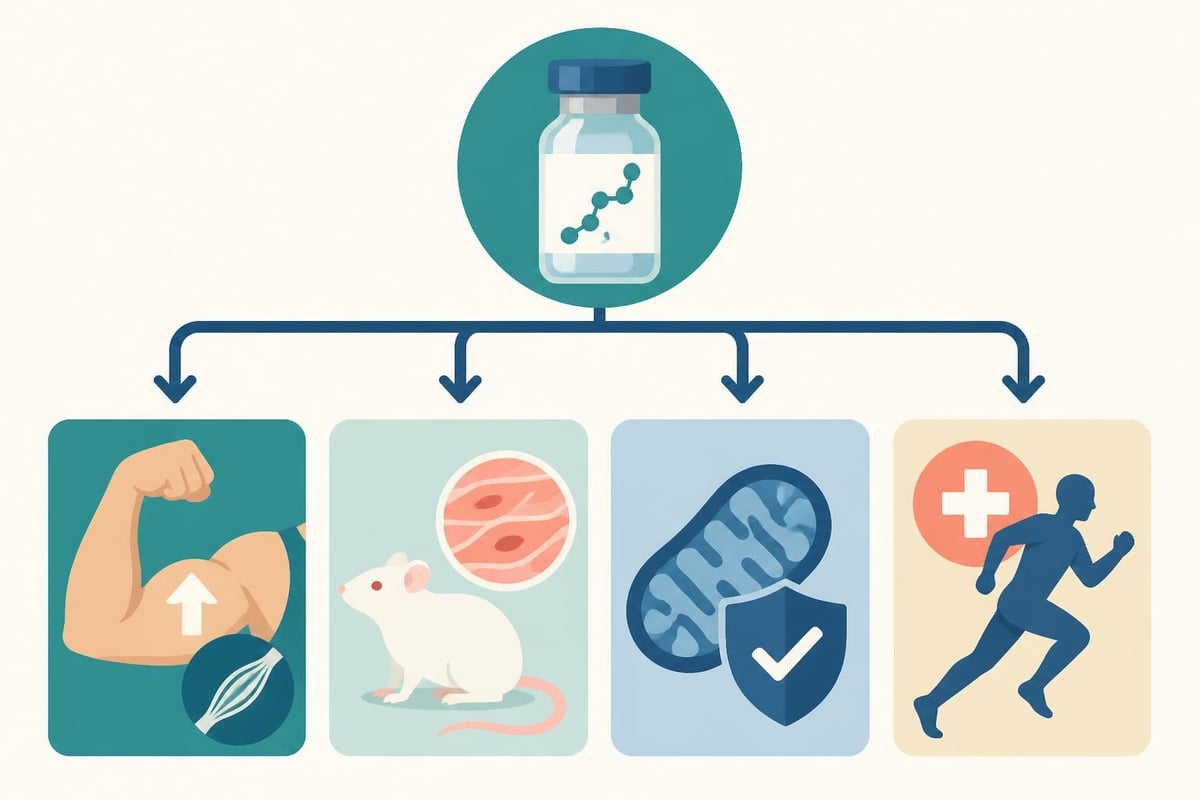
The igf 1 lr3 peptide has been investigated across multiple research domains, with particular emphasis on muscle biology, tissue repair, and metabolic function. Comprehensive research documentation reveals a substantial body of preclinical studies exploring its potential applications.
Muscle Growth and Hypertrophy Research
Preclinical research has examined the effects of IGF-1 LR3 on muscle fiber hypertrophy and satellite cell activation. Studies indicate that the peptide may stimulate both muscle fiber enlargement and the recruitment of muscle stem cells, potentially leading to enhanced muscle growth through dual mechanisms.
Research protocols typically investigate doses ranging from 20 to 100 micrograms per day in animal models, with administration occurring through subcutaneous or intramuscular injection. The extended half-life of IGF-1 LR3 allows for less frequent dosing compared to native IGF-1.
Key areas of muscle research include:
- Satellite cell proliferation and differentiation
- Myofibril protein synthesis rates
- Prevention of muscle atrophy during immobilization
- Recovery from muscle damage or injury
- Age-related muscle loss (sarcopenia) models
Similar to peptides for muscle growth, IGF-1 LR3 has been studied alongside other compounds to understand synergistic effects and optimal combinations for specific research objectives.
Tissue Repair and Regeneration Studies
Beyond skeletal muscle, the igf 1 lr3 peptide has been investigated for its potential effects on various tissue types. Research has explored its influence on nerve tissue, connective tissue, and wound healing processes.
Studies examining nerve regeneration have investigated whether IGF-1 LR3 might support neurite outgrowth and protect neurons from various forms of stress. The peptide's ability to activate survival pathways suggests potential neuroprotective properties worth exploring in controlled research settings.
Connective tissue research has examined the peptide's effects on collagen synthesis, fibroblast activity, and the healing of tendons and ligaments. These studies often compare IGF-1 LR3 with other repair-focused compounds such as BPC-157 and TB-500 combinations.
Regulatory Status and Research Context
The igf 1 lr3 peptide exists within a specific regulatory framework that defines its current applications and limitations. Understanding this context is essential for researchers and institutions working with this compound.
Current Regulatory Classification
IGF-1 LR3 has not received approval from the FDA or other major regulatory agencies for human therapeutic use. The regulatory landscape for IGF-1 LR3 classifies it as a research chemical intended for laboratory investigation only.
This classification means that the peptide is available for qualified research purposes but cannot be marketed or sold for human consumption, clinical treatment, or athletic performance enhancement. Research institutions must follow appropriate protocols and obtain necessary approvals when conducting studies involving IGF-1 LR3.
Regulatory considerations include:
- Classification as a research reagent
- Requirements for institutional oversight
- Proper handling and storage protocols
- Documentation of research purposes
- Adherence to laboratory safety standards
The absence of clinical approval reflects the current state of research, which remains predominantly at the preclinical stage. Safety profile assessments note that human clinical trials establishing efficacy and safety remain limited, emphasizing the need for continued investigation under controlled conditions.
Dosing Protocols and Administration in Research
Research involving the igf 1 lr3 peptide follows specific protocols designed to optimize stability, bioavailability, and experimental outcomes. Established dosing guidelines provide frameworks for investigators designing studies.
Reconstitution and Storage
IGF-1 LR3 typically arrives in lyophilized (freeze-dried) form, requiring reconstitution with bacteriostatic water or sterile saline before use. The reconstitution process must occur under sterile conditions to maintain peptide integrity and prevent contamination.
Once reconstituted, the peptide requires refrigeration at 2-8°C (36-46°F) and should be used within a specified timeframe, typically 30 days for optimal stability. Unreconstituted peptide vials should be stored at -20°C (-4°F) or colder to preserve long-term stability.
| Storage State | Temperature | Duration | Stability Factors |
|---|---|---|---|
| Lyophilized | -20°C or below | 12-24 months | Minimal degradation |
| Reconstituted | 2-8°C | 30 days | Gradual activity loss |
| Room temperature | 20-25°C | <24 hours | Rapid degradation |
Administration Routes and Timing
Research protocols typically employ subcutaneous or intramuscular injection as administration routes for IGF-1 LR3. The extended half-life of this peptide allows for once-daily administration in most research designs, though some protocols utilize less frequent dosing schedules.
Timing considerations often account for the peptide's effects on glucose metabolism and insulin sensitivity. Some research designs incorporate administration around training or feeding periods to evaluate specific metabolic outcomes, while others maintain consistent timing regardless of other variables.
The relationship between IGF-1 LR3 and other growth-related compounds has been explored in research examining compound stacking. Studies investigating combinations with growth hormone peptides aim to understand potential synergistic or additive effects on various physiological parameters.
Safety Profile and Reported Observations
Understanding the safety profile of the igf 1 lr3 peptide requires examination of both preclinical research data and reported observations from research settings. While comprehensive human safety data remains limited, available information provides insights into potential concerns.
Known Side Effects and Considerations
Preclinical research has identified several potential effects associated with IGF-1 LR3 administration. Hypoglycemia (low blood sugar) represents a primary concern due to the peptide's insulin-like effects on glucose metabolism. Research protocols often include glucose monitoring to track metabolic responses.
Other reported observations in research settings include:
- Joint discomfort or stiffness in some animal models
- Water retention and temporary weight gain
- Increased sensitivity to insulin
- Potential effects on cell proliferation rates
- Headaches in limited anecdotal reports
Contraindications and precautions identified in research:
- Active cancer or history of malignancy (due to cell proliferation effects)
- Diabetic conditions without proper monitoring
- Pregnancy or nursing (insufficient safety data)
- Concurrent use of insulin or hypoglycemic agents
- Pre-existing conditions affecting growth factor signaling
Detailed safety considerations emphasize that the absence of long-term human studies means many potential effects remain unknown, highlighting the importance of continued research under controlled conditions.
Comparison with Related Growth Factors
The igf 1 lr3 peptide exists within a broader family of growth factors and peptides, each with distinct characteristics and research applications. Comparing these compounds helps clarify when specific peptides might be more appropriate for particular research objectives.
IGF-1 LR3 Versus Native IGF-1
Native IGF-1 exhibits a very short half-life (10-20 minutes) and high affinity for binding proteins, which significantly limits its bioavailability. The modifications in IGF-1 LR3 address these limitations, creating a more stable and accessible form for research purposes.
However, native IGF-1 represents the physiological form produced by the body, making it relevant for studies examining normal growth factor biology and endocrine function. Each form serves different research needs based on study design and objectives.
IGF-1 LR3 and Other Anabolic Peptides
Research comparing IGF-1 LR3 with other anabolic compounds provides context for understanding its unique properties. Evidence from published studies demonstrates distinct mechanisms and effects compared to other growth-promoting peptides.
Growth hormone secretagogues work through different pathways, stimulating endogenous growth hormone release rather than directly activating IGF-1 receptors. This distinction creates different downstream effects and potential applications in research protocols.
| Compound Class | Primary Mechanism | Half-Life | Research Focus |
|---|---|---|---|
| IGF-1 LR3 | Direct IGF-1R activation | 20-30 hours | Local tissue effects |
| Native IGF-1 | Direct IGF-1R activation | 10-20 minutes | Physiological studies |
| GH Secretagogues | GH release stimulation | Variable | Systemic GH effects |
| GHRH Analogs | Pituitary GH secretion | 30-60 minutes | Endocrine research |
Quality Considerations for Research Applications
The effectiveness and safety of research involving the igf 1 lr3 peptide depends significantly on compound quality and purity. Researchers must evaluate multiple factors when sourcing peptides for experimental work.
Purity Standards and Testing
High-quality IGF-1 LR3 should demonstrate purity levels of 98% or higher, verified through high-performance liquid chromatography (HPLC) testing. This analytical method separates and quantifies the target peptide from potential impurities or degradation products.
Mass spectrometry provides additional verification, confirming the molecular weight and structure of the peptide. Reputable suppliers provide certificates of analysis (COA) documenting these test results for each batch.
Quality indicators for research-grade peptides:
- HPLC-verified purity ≥98%
- Mass spectrometry confirmation
- Bacterial endotoxin testing
- Sterility verification
- Batch-specific documentation
- Proper storage and handling protocols
Research tools and reagents must meet rigorous quality standards to ensure reproducible results and minimize confounding variables in experimental designs. Working with suppliers who maintain comprehensive quality control systems supports research integrity.
Research Design Considerations
Designing effective research protocols with the igf 1 lr3 peptide requires careful attention to multiple variables that influence outcomes and interpretation. Experienced researchers account for these factors when developing study designs.
Experimental Variables and Controls
Dose-response relationships represent a fundamental consideration in peptide research. Studies typically examine multiple dose levels to establish efficacy thresholds and identify potential dose-dependent effects. Control groups receiving vehicle or placebo injections provide essential comparison points.
Duration of administration significantly impacts research outcomes. Short-term studies (1-4 weeks) may reveal acute effects on signaling pathways and immediate metabolic responses, while longer protocols (8-12 weeks) better assess tissue-level changes and adaptation processes.
Subject characteristics including age, sex, baseline fitness or metabolic status, and genetic background all influence responses to IGF-1 LR3. Well-designed studies account for these variables through randomization, stratification, or statistical adjustment.
Outcome Measures and Assessment
Research objectives determine appropriate outcome measures for IGF-1 LR3 studies. Muscle-focused research might employ muscle fiber cross-sectional area, protein synthesis rates, or functional strength assessments. Metabolic studies utilize glucose tolerance tests, insulin sensitivity indices, or body composition measurements.
Molecular markers provide insights into mechanism of action. Researchers often measure phosphorylation of signaling proteins (Akt, mTOR, ERK), gene expression changes, or satellite cell activation markers to understand how IGF-1 LR3 produces observed effects.
Similar to approaches used in research with other specialized peptides, comprehensive assessment batteries combining multiple measurement modalities provide the most complete picture of IGF-1 LR3's effects and mechanisms.
Future Research Directions
The igf 1 lr3 peptide continues to generate interest across multiple research domains, with several emerging areas showing particular promise for advancing scientific understanding.
Clinical Translation Challenges
Moving IGF-1 LR3 research from preclinical models to human applications faces several significant hurdles. Current research status indicates that substantial additional investigation is required before clinical trials could be justified.
Safety concerns related to long-term administration, particularly regarding cell proliferation and cancer risk, require extensive toxicology studies. The peptide's effects on glucose metabolism necessitate careful monitoring protocols and potentially restricted use in specific populations.
Key research gaps requiring investigation:
- Long-term safety profiles in various populations
- Optimal dosing strategies for specific applications
- Interaction effects with common medications
- Tissue-specific delivery methods
- Comparative effectiveness versus existing treatments
Emerging Research Applications
Novel research directions explore IGF-1 LR3's potential in areas beyond traditional muscle and metabolic studies. Neurological research investigates neuroprotective properties and potential applications in neurodegenerative disease models.
Aging research examines whether IGF-1 LR3 might address age-related declines in tissue repair capacity, muscle mass, and metabolic function. These studies must carefully balance potential benefits against concerns about promoting cellular proliferation in older populations.
Combination research explores how IGF-1 LR3 interacts with other peptides and compounds. Comprehensive peptide research increasingly recognizes that synergistic effects may offer advantages over single-compound approaches, though such combinations add complexity to research designs and safety assessments.
Practical Handling Guidelines for Researchers
Laboratories working with the igf 1 lr3 peptide must implement proper handling procedures to maintain compound integrity and ensure researcher safety. These protocols align with general best practices for peptide research.
Reconstitution Procedures
The reconstitution process requires a sterile environment, appropriate diluent, and gentle mixing technique. Researchers should use bacteriostatic water or sterile saline as directed, adding the liquid slowly along the vial wall rather than directly onto the lyophilized powder.
Aggressive shaking or vortexing can damage peptide structure. Instead, gentle swirling or rolling the vial allows gradual dissolution while preserving molecular integrity. The reconstituted solution should appear clear without visible particles or cloudiness.
Documentation and Record-Keeping
Comprehensive documentation supports research reproducibility and quality control. Records should include batch numbers, reconstitution dates, storage conditions, and any observations about the peptide's appearance or behavior.
Maintaining detailed logs of administration timing, doses, and any observed effects creates valuable data for analysis and helps identify patterns or concerns that might emerge during research protocols.
The igf 1 lr3 peptide represents a valuable research tool with unique structural modifications that enhance its stability and bioavailability compared to native IGF-1, though substantial additional research remains necessary to fully understand its potential applications and long-term safety profile. For researchers and institutions seeking premium quality peptides with verified purity and comprehensive quality documentation to support their investigative work, Soma Peptide provides rigorously tested compounds backed by advanced purification methods and strict quality control standards. Whether your research focuses on muscle growth, tissue repair, or metabolic function, access to reliable, high-purity peptides forms the foundation of meaningful scientific investigation.