









Understanding the concept of a peptide site is fundamental to grasping how peptides function at the molecular level and why they've become such powerful tools in modern therapeutics. A peptide site refers to the specific location on a protein or receptor where peptides bind to exert their biological effects. These binding sites are precisely structured regions that recognize and interact with peptide sequences through a complex array of molecular forces, including hydrogen bonds, electrostatic interactions, and hydrophobic effects. The specificity of peptide site interactions determines the efficacy and selectivity of peptide-based treatments, making this area of study crucial for anyone interested in peptide therapeutics for weight loss, muscle growth, recovery, or anti-aging applications.
The Molecular Architecture of Peptide Binding Sites
The structural characteristics of a peptide site dictate how effectively a peptide can engage its target. Research into peptide binding sites reveals that these regions typically feature complementary shapes and chemical properties that match specific peptide sequences. Unlike small molecule drugs, peptides interact across a larger surface area, allowing for more selective targeting of specific proteins.
Key Components of Peptide Site Recognition
The molecular recognition process involves several distinct features that make peptide site interactions highly specific:
- Amino acid sequence complementarity between the peptide and binding pocket
- Conformational flexibility allowing induced-fit mechanisms
- Electrostatic charge distribution guiding initial peptide approach
- Hydrophobic patches stabilizing the peptide-protein complex
- Hydrogen bond networks providing directional specificity
These elements work together to ensure that peptides bind only to their intended targets, minimizing off-target effects. The precision of peptide site interactions explains why peptide therapeutics often demonstrate superior safety profiles compared to conventional drugs.

Computational Approaches to Peptide Site Prediction
Modern drug discovery increasingly relies on computational methods to identify and characterize peptide sites before laboratory synthesis. Advanced algorithms can now predict drug-binding target sites with remarkable accuracy, accelerating the development of new peptide therapeutics. These computational tools analyze protein structures to identify potential binding pockets and predict how peptides might interact with them.
Machine learning models trained on vast databases of known peptide-protein interactions can suggest optimal peptide sequences for targeting specific sites. This approach significantly reduces the time and cost associated with traditional trial-and-error methods. Researchers can now design peptides with enhanced binding affinity and selectivity before ever entering the laboratory.
Flexible Docking and Structure-Based Design
The CABS-dock web server represents a significant advancement in modeling peptide site interactions without requiring prior knowledge of the exact binding location. This flexibility is essential because many therapeutic peptides must adapt their conformation upon binding, a process known as induced fit.
| Computational Method | Primary Application | Key Advantage |
|---|---|---|
| Homology Modeling | Structure prediction | Uses known templates |
| Molecular Docking | Binding pose prediction | Evaluates interactions |
| Molecular Dynamics | Stability assessment | Simulates real conditions |
| Machine Learning | Site identification | Learns from data patterns |
These computational approaches have transformed how researchers approach peptide site characterization, enabling more rational design of therapeutic peptides for targeted applications.
Peptide Sites in Therapeutic Applications
The therapeutic potential of peptides stems directly from their ability to engage specific peptide sites on target proteins. Different classes of receptors utilize distinct binding mechanisms, which influences the design of peptides for various health goals. For instance, growth hormone secretagogues bind to specific peptide sites on pituitary receptors to stimulate natural hormone release, while tissue repair peptides target sites involved in cellular regeneration pathways.
Understanding these mechanisms helps explain why certain peptides excel at specific functions. Weight loss peptides typically work by engaging peptide sites on metabolic hormone receptors, modulating appetite, energy expenditure, and fat metabolism through precise molecular interactions.
Growth Hormone Pathway Targeting
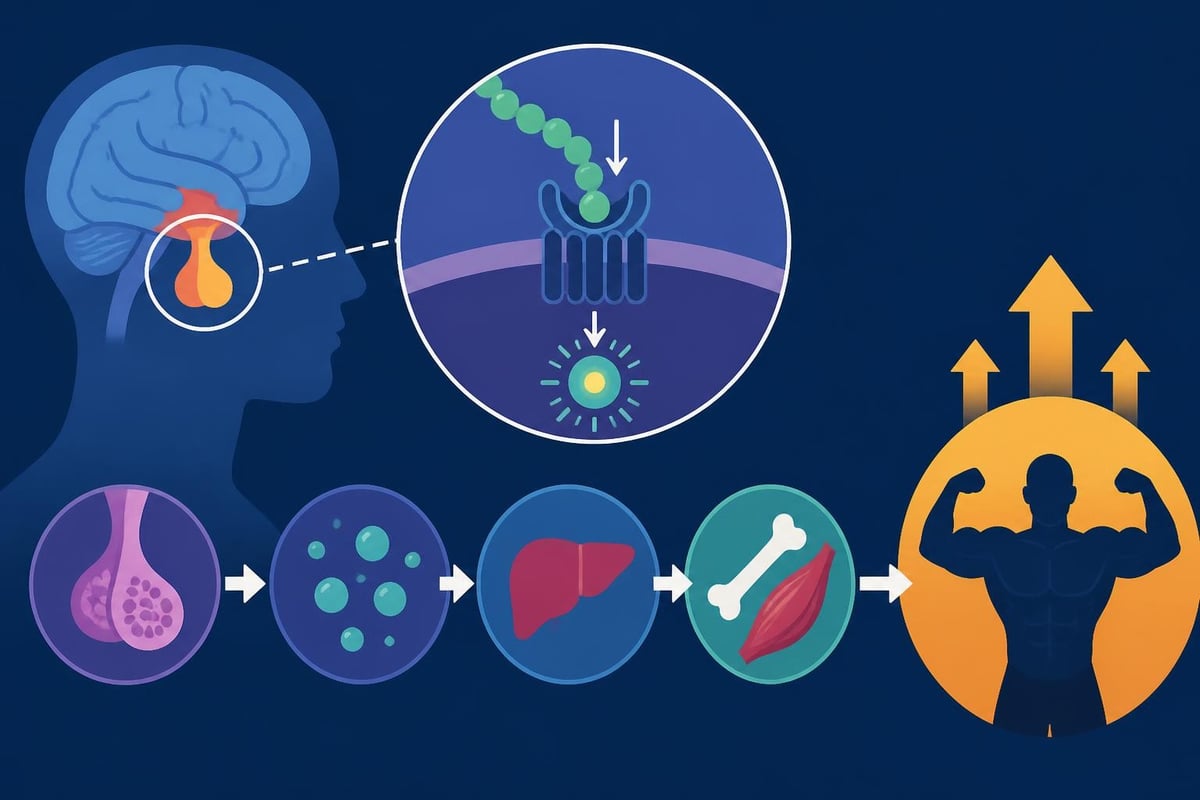
Many popular peptides for muscle growth and anti-aging target peptide sites within the growth hormone (GH) pathway. These compounds stimulate the body's natural GH production by binding to growth hormone-releasing hormone (GHRH) receptors or ghrelin receptors. The specificity of these peptide site interactions allows for targeted enhancement of GH levels without the risks associated with direct hormone administration.
Research demonstrates that peptides designed to target these sites can produce sustained, physiological patterns of GH release rather than the spikes seen with synthetic hormone injections. This more natural rhythm supports better outcomes with fewer side effects.
The Ribosomal Peptide Site
Beyond therapeutic peptide-receptor interactions, the term peptide site also refers to specific locations within the ribosome during protein synthesis. The P-site (peptidyl-tRNA binding site) is one of three crucial locations where transfer RNA molecules position amino acids during translation. Understanding this fundamental biological process provides context for how cells naturally produce peptides and proteins.
The ribosomal peptide site mechanism illustrates the precision of biological systems at the molecular level. During protein synthesis, tRNA molecules move through distinct sites (A-site, P-site, and E-site) in a coordinated dance that assembles amino acids into specific sequences. This natural machinery demonstrates the importance of precise molecular positioning, a principle that extends to therapeutic peptide design.
Advanced Peptide Site Design Strategies
Recent innovations in peptide binder design have introduced AI-based frameworks that simultaneously optimize both sequence and structure for maximum peptide site affinity. These approaches consider multiple factors including binding energy, conformational stability, and potential for immune recognition.
The integration of computational design with experimental validation has created a powerful pipeline for developing next-generation peptides. Researchers can now iterate through thousands of potential sequences virtually, identifying candidates most likely to succeed in biological testing.
Multi-Target Peptide Site Engagement
Some of the most promising therapeutic peptides engage multiple peptide sites simultaneously, creating synergistic effects. Triple agonists, for example, activate three distinct receptor types, producing comprehensive metabolic effects that single-target compounds cannot achieve. This multi-site approach represents the cutting edge of peptide therapeutic development.
When designing peptides for multiple site engagement, researchers must balance affinity at each target to achieve optimal overall effects. Too much selectivity for one site over others can reduce the balanced activation needed for maximum benefit.
Peptide Site Selectivity and Safety
The selectivity of peptide site interactions directly impacts the safety profile of peptide therapeutics. Highly selective peptides that bind only to their intended targets produce fewer off-target effects, reducing the risk of adverse reactions. This selectivity stems from the complementary molecular architecture between the peptide and its binding site.
Therapeutic peptides designed for tissue repair, such as BPC-157, demonstrate remarkable target selectivity by engaging specific peptide sites involved in healing pathways. BPC-157 has been studied extensively for its ability to support the body's natural healing response through targeted peptide site interactions that promote tissue regeneration and reduce inflammation. This selectivity allows it to support recovery across multiple tissue types without interfering with unrelated biological processes.
Optimizing Peptide Site Affinity
The strength of peptide-site binding, measured as binding affinity, must be carefully optimized. Too strong an interaction can lead to prolonged receptor occupation and potential desensitization, while too weak an interaction may not produce therapeutic effects.
- Nanomolar affinity often ideal for sustained effects
- Micromolar affinity suitable for rapid, transient signaling
- Dissociation kinetics influence duration of action
- Conformational changes upon binding affect downstream signaling
Balancing these parameters requires sophisticated understanding of both the peptide site architecture and the desired therapeutic outcome. For more information about peptide quality and selection, Soma Peptide’s FAQ provides valuable guidance.
Peptide Site Interactions in Recovery and Regeneration
Peptides designed for tissue repair and recovery target specific peptide sites involved in cellular regeneration, inflammation modulation, and angiogenesis. These compounds work by engaging binding sites on growth factor receptors, extracellular matrix proteins, and cellular surface molecules that coordinate the healing response.
The complexity of tissue repair requires coordinated activation of multiple pathways, which explains why combination peptide therapies often outperform single agents. Research on healing peptides demonstrates that targeting multiple complementary peptide sites produces synergistic effects that accelerate recovery timelines.
| Recovery Mechanism | Peptide Site Target | Biological Effect |
|---|---|---|
| Collagen synthesis | Growth factor receptors | Enhanced tissue strength |
| Angiogenesis | VEGF pathway sites | Improved blood flow |
| Inflammation control | Cytokine receptor sites | Reduced swelling |
| Cellular migration | Integrin binding sites | Faster wound closure |
Understanding these specific peptide site interactions helps explain why certain peptides excel at supporting recovery from injuries, surgical procedures, or intensive training. The molecular precision of these interactions allows for targeted therapeutic effects without disrupting normal physiological processes.
Emerging Technologies in Peptide Site Analysis
The field of peptide site research continues to advance rapidly, with new technologies enabling unprecedented insight into peptide-protein interactions. Integrated deep-learning frameworks now enable peptide-protein interaction prediction with remarkable accuracy, guiding the development of more effective therapeutic compounds.
These computational advances complement experimental techniques like X-ray crystallography, nuclear magnetic resonance spectroscopy, and cryo-electron microscopy that reveal peptide site structures at atomic resolution. Together, these tools create a comprehensive picture of how peptides interact with their targets, informing rational drug design strategies.
Real-Time Peptide Site Monitoring
Advanced analytical techniques now allow researchers to monitor peptide site interactions in real time, observing how binding kinetics change under different conditions. This dynamic information reveals insights impossible to obtain from static structural snapshots alone.
Surface plasmon resonance and isothermal titration calorimetry provide quantitative data on binding strength, while fluorescence-based methods can track peptide site interactions within living cells. These capabilities accelerate the optimization of therapeutic peptides for specific applications.
Peptide Site Specificity in Anti-Aging Applications
Anti-aging peptides typically target peptide sites involved in cellular senescence, mitochondrial function, and tissue regeneration. These compounds work through diverse mechanisms, from stimulating collagen production to enhancing cellular energy metabolism, all mediated through specific peptide site interactions.
For those interested in comprehensive peptide science, understanding how anti-aging peptides engage their target sites provides valuable context for selecting appropriate compounds. Different peptides offer distinct benefits based on their specific binding sites and downstream effects.
Copper peptides, for example, engage specific peptide sites that trigger collagen synthesis and tissue remodeling pathways. The copper ion serves as both a structural component and a functional element, participating directly in enzymatic reactions that support skin health and regeneration.
The Future of Peptide Site Research
As analytical capabilities continue advancing, researchers gain ever-deeper understanding of peptide site interactions at the molecular level. This knowledge drives the development of more sophisticated peptides with enhanced selectivity, stability, and therapeutic efficacy. The integration of artificial intelligence with traditional drug discovery methods promises to accelerate this progress dramatically.
Future peptide therapeutics will likely feature enhanced tissue targeting, improved bioavailability, and multi-functional capabilities achieved through carefully designed peptide site interactions. Companies like Trimy are developing tools that help track and optimize the delivery of health information, making it easier for patients to access knowledge about advanced therapeutic options. Similarly, RankPill is helping health-focused businesses share evidence-based information about peptides through optimized content strategies.
Personalized Peptide Site Targeting
The ultimate goal of peptide therapeutic development involves personalizing treatment based on individual genetic and physiological factors. As understanding of peptide site variations between individuals grows, customized peptides designed to match a person's specific receptor characteristics may become reality.
This personalized approach would maximize therapeutic benefits while minimizing potential side effects, representing the convergence of precision medicine with peptide science. Genetic testing could identify optimal peptide candidates based on an individual's unique peptide site architecture.
Clinical Translation of Peptide Site Knowledge
Translating peptide site research from laboratory to clinic requires rigorous validation of both safety and efficacy. Clinical trials must demonstrate that peptides designed based on peptide site interactions produce meaningful therapeutic benefits in human patients, not just in cellular or animal models.
The growing number of FDA-approved peptide therapeutics reflects increasing confidence in peptide site-based drug design. Success stories in diabetes management, growth disorders, and other conditions have paved the way for expanded peptide applications in areas like weight management, recovery enhancement, and healthy aging.
Regulatory frameworks continue evolving to accommodate the unique characteristics of peptide therapeutics, recognizing that their specificity and natural origins often translate to favorable safety profiles compared to traditional small molecule drugs.
Understanding peptide site interactions provides crucial insight into how these remarkable molecules support health goals ranging from tissue repair to metabolic optimization. The precision with which peptides engage their target sites enables selective therapeutic effects with minimal disruption to normal physiology. Whether you're interested in recovery enhancement, body composition improvement, or healthy aging support, Soma Peptide offers premium quality peptides backed by rigorous purity standards and comprehensive quality control, ensuring you receive compounds designed to interact optimally with their intended peptide sites for maximum benefit.