Short answer: yes, in moderation, for most peptide users, but the safe amount and timing depend heavily on which peptide you’re using. A PLOS One trial found heavy post-workout drinking cut muscle protein synthesis by roughly 37%, GLP‑1 class users face lowered alcohol tolerance, and Soma Peptide’s own safety guidance leans firmly toward caution over restriction. The one-sentence rule: keep it light, keep it timed away from dosing and training, and check with your prescriber if you’re on a metabolic or healing protocol.
Three quick rules to act on today:
- Separate drinking from dosing and hard training sessions by several hours.
- Stick to light drinking (a drink or two, not a binge) if you’re mid-protocol.
- Ask your prescriber before mixing alcohol with GLP‑1s, insulin-sensitising peptides, or anything post-surgical.
Key Takeaways
Alcohol’s biggest threat to peptide users isn’t a dramatic drug interaction. It’s the quiet erosion of muscle protein synthesis, sleep-driven GH release, and tissue healing that heavy or frequent drinking causes regardless of which peptide you’re using.
| Point | Details |
|---|---|
| Heavy drinking suppresses MPS | A binge-level dose cut muscle protein synthesis by roughly 37% in a controlled trial on tirzepatide side effects, even with protein co-ingested. |
| GLP‑1 users need extra caution | Tirzepatide and semaglutide-class peptides lower alcohol tolerance and raise hypoglycaemia risk if you drink without eating. |
| Timing protects your goals | Avoid heavy drinking within 8 to 24 hours of hard training and within several hours of a bedtime GH peptide dose. |
| Chronic risk beats occasional risk | Repeated heavy drinking, not a single light occasion, drives the liver stress and blunted adaptation seen in the research. |
| Purity reduces one variable | Soma Peptide’s compounds are highly pure with clinical testing, so alcohol timing remains the main factor left in your control. |
Table of Contents
- Which peptide classes change how alcohol affects you
- What human research shows about alcohol, muscle protein synthesis and recovery
- Does alcohol raise your risk of side effects on peptides?
- What are the biggest risks when mixing peptides with alcohol?
- How long should you wait to drink after a peptide dose?
- When should you stop drinking and call your prescriber?
- How Soma Peptide supports safe, informed decisions
- What happens in your body when you mix peptides and alcohol?
- Where to go next for tested peptides and protocol guidance
- Sources
- FAQ
Which peptide classes change how alcohol affects you
Not every peptide reacts to alcohol the same way, and lumping them together is where most generic advice goes wrong.
- GLP‑1/tirzepatide class (semaglutide, tirzepatide): High risk. Slowed gastric emptying plus altered glucose handling means alcohol hits harder, faster, and with more nausea than before you started.
- Growth‑hormone secretagogues (GHS peptides): Moderate risk. These rely on sleep architecture to release GH, and alcohol undercuts that mechanism directly.
- Healing peptides (BPC‑157, TB‑500): Moderate risk. No direct human interaction data exists, but heavy drinking works against tissue repair regardless.
- Recovery/repair peptides: Moderate risk, tied closely to the muscle protein synthesis data below.
- Skin and anti‑aging peptides (GHK‑Cu and similar): Low risk. Alcohol’s main threat here is indirect, through hydration and collagen support, not a documented drug interaction.
Find your class first, then read the sections below with that risk level in mind.
What human research shows about alcohol, muscle protein synthesis and recovery
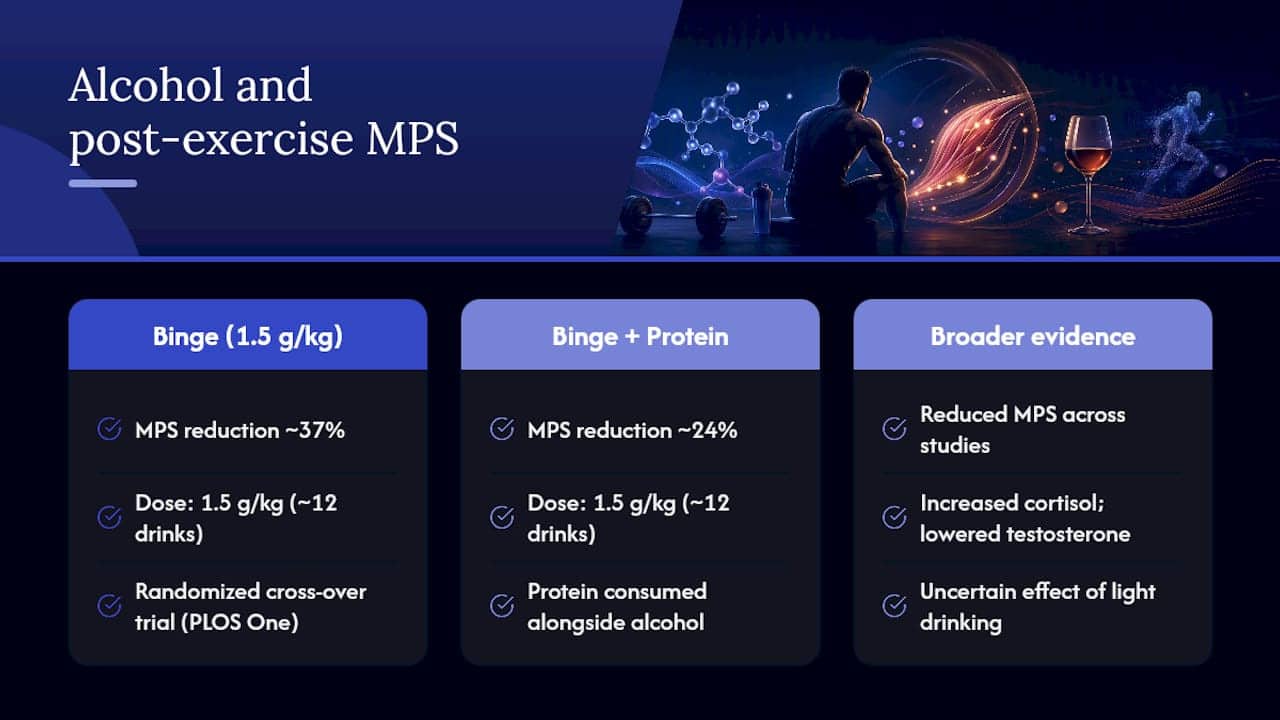
Human trials show a consistent pattern: alcohol suppresses myofibrillar protein synthesis (MPS) after intense exercise, and it does so in a dose-dependent way. The strongest evidence comes from a randomized cross‑over trial published in PLOS One, where participants drank 1.5 g per kilogram of body mass (roughly 12 standard drinks for many adults, a genuinely heavy binge) after a resistance and endurance session.
Statistic: That dose cut MPS by about 37% compared to protein alone, and MPS was still suppressed by around 24% even when protein was consumed alongside the alcohol.
A broader literature synthesis in PMC reviewed multiple studies with varied alcohol doses and found reduced MPS, elevated cortisol, and lower testosterone and circulating amino acids, even when strength and power output looked unchanged in the short term.
Here’s the nuance that matters: the high-confidence finding is that heavy, binge-level drinking suppresses MPS after training. What’s genuinely uncertain is how much occasional light drinking affects long-term muscle or fat-loss outcomes, since most trials used single large doses rather than realistic weekly drinking patterns. Treat the binge data as a warning sign, not a verdict on a single beer with dinner.
Does alcohol raise your risk of side effects on peptides?
Alcohol changes both the acute and chronic risk profile of peptide use, and the two timelines matter differently. In the short term, alcohol worsens nausea, speeds up intoxication, and for anyone on glucose-lowering peptides, raises the risk of hypoglycaemia if you drink without eating. It also compromises judgment around injection technique, and self-injecting while intoxicated is a real, avoidable risk rather than a theoretical one.
Chronic, repeated heavy drinking is the bigger concern for most peptide users. It’s linked to impaired tissue healing, blunted training adaptation through the MPS suppression described above, and added liver stress, which matters because several peptide classes are metabolised through pathways the liver also handles. None of this means occasional light drinking causes lasting harm. The evidence points specifically to heavy or repeated drinking as the driver of chronic risk, not moderate use.
The clearest special case is GLP‑1 and tirzepatide-class peptides. Slowed gastric emptying changes how alcohol is absorbed, which often means faster intoxication and rougher hangovers than users expect, according to Everyday Health’s clinical coverage. Many users also report reduced alcohol cravings on these peptides, a side effect some patients welcome, but it doesn’t cancel out the lowered tolerance. If you’re on tirzepatide, assume your old drinking limits no longer apply until you’ve tested a smaller amount and seen how your body responds.
What are the biggest risks when mixing peptides with alcohol?
Some risks are common sense, others are easy to overlook until you’re already dealing with them.
- Acute risks: worse nausea, faster intoxication, hypoglycaemia risk on glucose-lowering peptides, and impaired judgment around aseptic injection technique.
- Chronic risks: slower tissue healing, blunted training adaptation from repeated MPS suppression, and added liver stress with heavy or frequent drinking.
- GLP‑1 specific: sharply reduced tolerance combined with slowed gastric emptying, which compounds GI side effects like bloating and reflux.
Alcohol works against recovery and body composition goals even without a documented molecular clash. Its effects on sleep, protein synthesis, and appetite mean it often cancels out part of what a peptide protocol is trying to achieve, according to practitioner guidance from Professor Peptides.
Never self-inject or handle needles while intoxicated. Watch for severe abdominal pain, which can signal pancreatitis, or signs of dehydration from vomiting. Either warrants medical attention, not a wait-and-see approach.
How long should you wait to drink after a peptide dose?
Timing is where most of the practical risk gets managed, and it’s simpler than it sounds. General moderation, in study terms, means one or two standard drinks; heavy drinking starts around the binge-level doses used in the PLOS One trial, roughly 12 drinks in one sitting. Avoid heavy drinking within 8 to 24 hours of a hard resistance session if you care about preserving the MPS response. If you’re using a growth-hormone peptide at bedtime, skip alcohol within about four hours of that dose, since even one drinking night can suppress nocturnal GH release, according to reporting from Yahoo Health.
Do: hydrate and eat something substantial before drinking if you’re on a GLP‑1. Don’t drink to intoxication after a recovery-focused workout. Do separate your dosing window from your drinking window whenever your schedule allows it.
Pro Tip: If you’ve just started a new peptide or bumped up your dose, test your alcohol tolerance with a single drink first. Tolerance can shift fast, especially on GLP‑1s, and finding that out at a backyard barbecue beats finding out somewhere less forgiving.
When should you stop drinking and call your prescriber?
Some symptoms mean stop and get checked, not wait and see.
- Severe abdominal pain (possible pancreatitis)
- Fainting, severe dizziness, or vomiting you can’t keep fluids down through
- Redness, swelling, or warmth at an injection site
- Low blood sugar symptoms if you’re on a glucose-lowering peptide
New or worsening nausea after a dose change, or a noticeable shift in alcohol tolerance, is worth a call to your prescriber before you continue either the drinking or the protocol.
How Soma Peptide supports safe, informed decisions
- Consult your prescriber before combining alcohol with any prescribed peptide, especially GLP‑1s or glucose-sensitive protocols.
- Keep a simple drinking log during the first few weeks of a new peptide or dose increase.
- Review the recovery-focused peptide guidance before planning a heavier social occasion.
Purity and testing reduce one variable. What you do with alcohol is still yours to manage.
How solid is the evidence, really?
The MPS suppression data comes from controlled human trials, so that part is solid. Claims about BPC‑157, TB‑500, and most other unregulated peptides rest on animal studies or mechanistic reasoning, not human alcohol-interaction trials. Sample sizes in the exercise studies were small and used extreme binge doses, so treat conclusions about moderate, occasional drinking with more caution, and lean on your prescriber when the evidence runs thin.
What happens in your body when you mix peptides and alcohol?
Acutely, alcohol adds a second substance your liver and kidneys need to process alongside whatever peptide you’ve just injected, and for glucose-sensitive peptides, it adds a real hypoglycaemia risk if you drink on an empty stomach. GLP‑1 users notice this fastest: slowed gastric emptying means alcohol lingers longer, so effects hit harder and last longer than expected.
Chronically, repeated drinking works against nearly every goal peptide users care about. Cortisol rises, testosterone and circulating amino acids drop, and the recovery literature in PMC links this pattern to blunted long-term muscular adaptation, even when short-term strength numbers look fine. For healing peptides like BPC‑157, there’s no human trial directly testing alcohol interaction, but chronic drinking is well understood to slow tissue repair on its own, so combining the two is working against your own protocol rather than with it.
Liver load is the other piece worth naming plainly. Heavy, sustained drinking stresses the same organ that clears many compounds from your system, and that stress compounds over months, not days. None of this means one drink at a wedding undoes a protocol. It means the dose and frequency of alcohol, not its mere presence, is what decides whether it interferes with what your peptides are supposed to do.
A pragmatic take on drinking and peptide goals
We think prohibition-style advice sets people up to ignore all guidance the first time they have a glass of wine. The honest trade-off is this: heavy or frequent drinking will cost you measurable ground on recovery, fat loss, and healing goals, while occasional light drinking, timed sensibly, usually won’t. Prioritize the specific outcome you’re chasing, whether that’s a healing timeline or a strength goal, when deciding how much room alcohol gets in your week. Always run your specific protocol past your prescriber before making that call.
Where to go next for tested peptides and protocol guidance
If you’re training through a recovery or muscle-building phase, the peptides for bodybuilding guide walks through which compounds pair best with your training schedule and how to protect the adaptations alcohol can undercut. Talk to your prescriber before combining alcohol with any prescribed peptide, then browse the guide to find the protocol that matches your actual goal.
Sources
- Alcohol ingestion impairs maximal post‑exercise rates of myofibrillar protein synthesis following a single bout of concurrent training | PLOS One
- Effects of alcohol ingestion on recovery following resistance exercise: a literature synthesis (PMC)
- Can you drink on a GLP‑1? | Everyday Health
This article is general information, not a substitute for advice from a qualified doctor. Consult a qualified healthcare professional about your own circumstances before acting on anything here.
FAQ
Can you drink alcohol while using peptides for weight loss?
Occasional light drinking is generally tolerated, but GLP‑1 and tirzepatide-class peptides lower alcohol tolerance and raise hypoglycaemia risk, so eat first and start with less than usual.
Does alcohol reduce the effectiveness of peptides for muscle growth?
Heavy drinking does. A controlled trial found binge-level alcohol cut muscle protein synthesis by about 37% after exercise, which works against recovery and muscle peptides alike.
How long should I wait to drink after a peptide injection?
Separate dosing and drinking by several hours where possible, and avoid alcohol within four hours of a bedtime growth-hormone peptide dose to protect nocturnal GH release.
Is it safe to drink on GLP‑1 or tirzepatide peptides?
It can be, in small amounts, but slowed gastric emptying means alcohol hits faster and harder than before, and clinicians recommend eating first and testing tolerance carefully.
What are the warning signs I should stop drinking and call my prescriber?
Severe abdominal pain, fainting, persistent vomiting, injection-site infection signs, or symptoms of low blood sugar all warrant stopping alcohol and seeking medical advice promptly.