


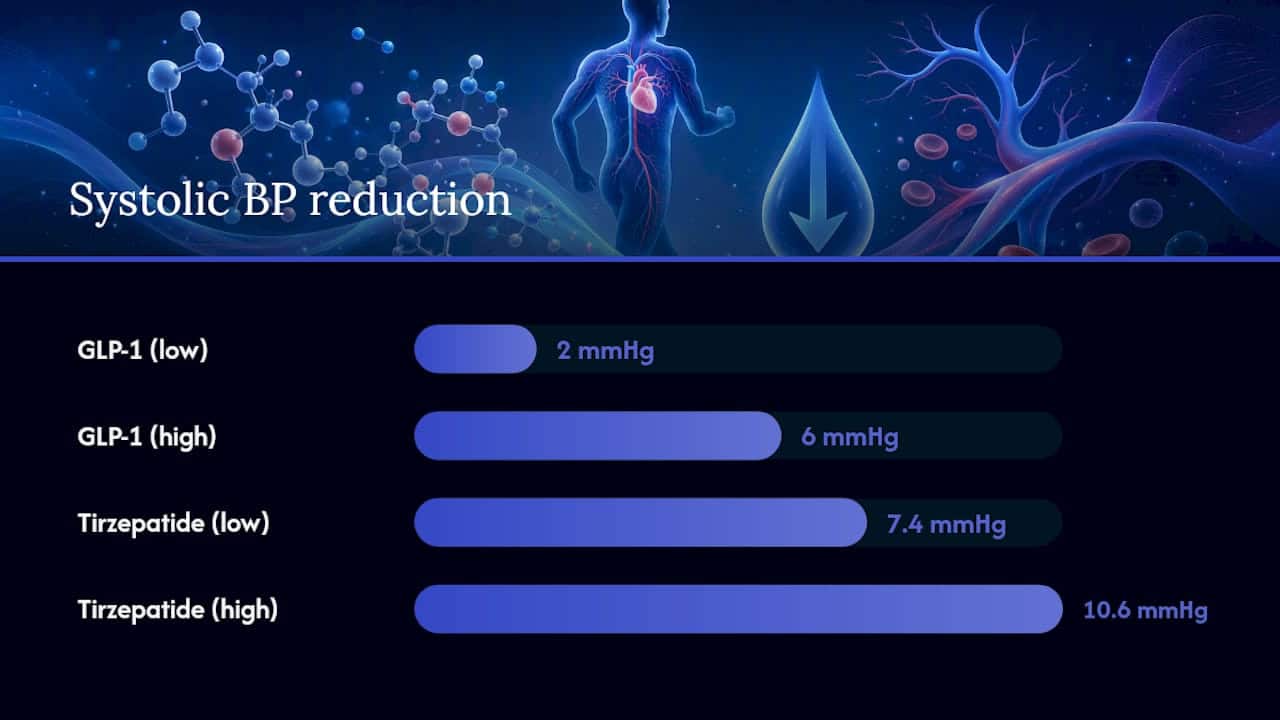
Peptides and blood pressure interact in two completely different ways depending on which peptide you’re talking about, and mixing them up is where most confusion starts. Approved peptide medicines like semaglutide and tirzepatide have measurable, trial-backed blood pressure benefits. In clinical trials, tirzepatide at 5 to 10 mg dropped systolic blood pressure by roughly 7.4 to 10.6 mmHg, while GLP-1 receptor agonists broadly average a 2 to 6 mmHg systolic reduction. Consumer and research-grade peptides like BPC-157, CJC-1295, and Ipamorelin are a different story entirely: no systematic human trials exist, so nobody can say with confidence whether they raise, lower, or leave your blood pressure alone.
Here is your three-step action plan:
- Before you start: take a baseline blood pressure reading (home and clinic) and tell your doctor everything you’re taking.
- While using any peptide: check your blood pressure at the same time each day and log it.
- Stop and call a doctor if: you notice a sustained change over 10 mmHg, new headaches, chest tightness, or a racing heartbeat.
Key Takeaways
The blood pressure effect of a peptide depends entirely on whether it’s an approved medicine with trial data or an unregulated compound with none.
| Point | Details |
|---|---|
| Approved agents lower BP modestly | Tirzepatide trials show 7.4 to 10.6 mmHg systolic reduction; GLP-1s average 2 to 6 mmHg. |
| Consumer peptides are unproven | BPC-157, CJC-1295, and similar compounds lack human trial data on blood pressure effects. |
| Sourcing drives most real-world risk | Contamination and dosing errors from grey-market vials cause more problems than the molecules themselves. |
| Monitor before, during, and after | Take baseline readings, log home BP daily, and watch for sustained shifts over 10 mmHg. |
| Purity documentation matters | Soma Peptide provides third-party COAs confirming over 99% purity so buyers can verify what they’re using. |
Table of Contents
- How peptides and blood pressure regulation actually differ by category
- What does the clinical evidence show about peptides and blood pressure?
- How can peptides change blood pressure, and what are the risks?
- What’s the safety checklist before, during, and after using a peptide?
- How will a doctor assess a peptide-related blood pressure change?
- Why the “natural equals harmless” mindset around peptides is backwards
- Looking for higher-purity sourcing and clearer documentation?
- Selected primary sources and clinical references
- Sources
- FAQ
How peptides and blood pressure regulation actually differ by category
Not all peptides belong in the same conversation, and treating them as one category is the single biggest mistake buyers make. Semaglutide and tirzepatide went through Phase 3 trials, FDA review, and years of post-marketing surveillance. BPC-157, TB-500, and Melanotan didn’t go through any of that, and they’re not approved for human use at all.
The differences that matter:
- Regulatory status: GLP-1 receptor agonists and tirzepatide are approved prescription drugs; BPC-157, CJC-1295, Ipamorelin, TB-500, and Melanotan are sold as research chemicals with no regulatory approval for human consumption.
- Trial evidence: Approved agents have randomized controlled trials with cardiovascular endpoints. Consumer peptides mostly have animal studies or none at all.
- Dosing standardisation: Pharmacy-dispensed tirzepatide comes in fixed, tested doses. Grey-market vials vary in concentration and purity from batch to batch.
- Sourcing: One comes from a licensed pharmacy with a prescription; the other typically comes from online vendors with minimal oversight.
There’s a mechanical reason approved agents lower blood pressure that doesn’t necessarily apply to consumer peptides: much of the effect rides on weight loss itself, plus some direct vascular action researchers are still mapping. Consumer peptides marketed for muscle growth, healing, or anti-aging haven’t been studied closely enough to know if similar mechanisms, or entirely different ones, are at play.
What does the clinical evidence show about peptides and blood pressure?
The evidence gap between these two categories is stark, and it’s worth being blunt about it: one side has data, the other has theory.
For approved GLP-1 medicines, the numbers are consistent across studies. Tirzepatide trials show systolic reductions of 7.4 to 10.6 mmHg at the 5 to 10 mg dose range, and this isn’t a fluke of one study design. Broader reviews of GLP-1 receptor agonists find a more modest but consistent 2 to 6 mmHg systolic drop, often showing up within 2 to 3 weeks of starting treatment, sometimes before significant weight loss has even occurred. That timing detail matters. It suggests these drugs do something to blood vessels directly, not just indirectly through fat loss. You can read more about how tirzepatide’s dual mechanism works if you want the fuller picture.

Long-term outcome data backs this up further. Large cardiovascular outcome trials, including the LEADER trial and its successors, have tracked GLP-1 drugs for years in tens of thousands of patients, giving regulators and doctors a depth of safety data that essentially no consumer peptide can match.
Now flip to the other side of the ledger. Most safety and efficacy claims for popular consumer peptides come from animal studies, not humans. There’s no published trial showing what BPC-157 does to blood pressure in people over 12 weeks. There’s no dose-response curve for CJC-1295 and cardiovascular markers. That’s not a minor gap, it’s a complete absence of the kind of evidence that would let anyone make a confident claim either way.
Here’s the evidence picture side by side:
- Evidence level: Clinical trials (GLP-1s, tirzepatide) vs. animal/bench data only (BPC-157, TB-500, Melanotan, CJC-1295, Ipamorelin).
- Documented BP effect: Modest, measurable reduction (approved agents) vs. unknown direction and size (consumer peptides).
- Known risks: Well-characterized side effect profile vs. largely undocumented in humans.
- Regulatory status: FDA-approved prescription drugs vs. unapproved research chemicals.
- Typical sourcing: Licensed pharmacy vs. online research-chemical vendors.
How can peptides change blood pressure, and what are the risks?
Several biological pathways could plausibly move your blood pressure up or down, and understanding them helps you make sense of what you might feel after starting a peptide.
- Weight loss: Shedding body fat reduces the workload on your cardiovascular system, which is a major driver of the blood pressure improvements seen with GLP-1s and tirzepatide.
- Natriuresis and vascular relaxation: Some GLP-1 research points to increased sodium excretion and endothelial-dependent artery relaxation as direct blood pressure levers, separate from weight change.
- Autonomic and heart rate shifts: Peptides that affect growth hormone secretagogue receptor (GHS-R) signalling, the pathway behind compounds like Ipamorelin and CJC-1295, can plausibly shift sympathetic nervous system tone and heart rate, though human data on this remains thin.
- Fluid retention: Certain peptide activity can mimic vasopressin-like effects, causing your body to hold onto more water and nudging blood pressure upward.
- Contamination and toxicity: Impure or mislabelled vials, a real risk with grey-market peptides, can introduce bacterial endotoxins or incorrect concentrations that stress your cardiovascular system in unpredictable ways.
Drug interactions are the quiet risk most buyers overlook. If you’re on an ACE inhibitor, a beta blocker, an anticoagulant, or an SSRI, adding an unregulated peptide introduces variables nobody has studied. BPC-157’s interaction profile in humans is essentially unknown, and animal research suggests it may touch nitric-oxide pathways, the same pathways several blood pressure medications rely on.
Watch for sustained blood pressure changes, new or worsening headaches, dizziness, a noticeably faster heart rate, or unexplained swelling in your legs or face.
Pro Tip: Most blood pressure problems tied to consumer peptides don’t come from the molecule itself. They come from where it was sourced, how it was dosed, or an interaction nobody flagged because the user never mentioned the peptide to their doctor.
What’s the safety checklist before, during, and after using a peptide?
A little structure here goes a long way toward catching a problem before it becomes an emergency.
Before you start:
- Take a baseline blood pressure reading at home and, ideally, one at a clinic for comparison.
- List every medication and supplement you currently take and review it with a doctor or pharmacist, paying close attention to antihypertensives, anticoagulants, and SSRIs.
- Ask your supplier for a certificate of analysis (COA) confirming purity, and favour vendors that publish third-party lab results rather than in-house claims.
During use:
- Check your blood pressure at roughly the same time each day, ideally before any dosing and before meals, so readings stay comparable.
- Use a validated home blood pressure cuff, not a wrist device, and record the date, time, and reading in a simple log.
- Note anything unusual: mood changes, sleep disruption, swelling, or a resting heart rate that’s climbed noticeably.
After use and red flags:
- Stop the peptide and contact a doctor promptly if you see a sustained change over 10 mmHg from your baseline, new chest discomfort, or fainting.
- A COA should confirm purity above 99% and list the testing lab. Products from a documented research-grade purity standard give you a paper trail to compare against, while pharmacy sourcing remains the gold standard for anything with an approved therapeutic use.
- Anyone combining a peptide with weight loss goals should also look at nutritional strategies like high-protein meal timing, since diet changes alone can shift blood pressure readings and muddy your monitoring data.
How will a doctor assess a peptide-related blood pressure change?
If you bring a blood pressure concern to a clinician after starting a peptide, expect a fairly standard workup. They’ll ask for your full medication and peptide history, review your home blood pressure log, and likely check for orthostatic changes (a drop when you stand up). Basic bloodwork, checking electrolytes and kidney function, is common, and an ECG may follow if you’ve reported a racing heart or fainting. In persistent or unclear cases, doctors sometimes order 24-hour ambulatory blood pressure monitoring.
Bring the product label or COA, your dosing dates and amounts, your home readings with timestamps, and a current medication list. That paperwork turns a vague complaint into something a doctor can actually act on.
Why the “natural equals harmless” mindset around peptides is backwards
The instinct to treat peptides as gentler than pharmaceuticals because they’re “just amino acid chains” gets the risk backwards. Approved agents like tirzepatide carry more blood pressure data than almost any consumer peptide on the market, precisely because they went through rigorous trials. The unregulated compounds carry more uncertainty, not less. Soma Peptide’s position is straightforward: monitor your numbers, loop in a clinician, and demand purity documentation from whoever supplies your peptides. We don’t guarantee outcomes. We insist on transparency instead.
Looking for higher-purity sourcing and clearer documentation?
Grey-market peptide vendors rarely publish real lab work, which leaves buyers guessing about what’s actually in the vial. Soma Peptide takes a different approach: every batch is backed by third-party testing confirming purity above 99%, with documentation you can actually review before you order. That matters most with compounds like BPC-157 and CJC-1295, where human safety data is still thin and knowing exactly what you’re injecting is one of the few controls you have. This isn’t a substitute for medical advice. Talk to a clinician before starting any peptide regimen, especially if you’re managing blood pressure or taking other medications. If you’re ready to compare documented, purity-tested options, browse Soma Peptide’s weight-loss peptide guide to see what’s backed by real testing before you buy.
Selected primary sources and clinical references
- Tirzepatide blood pressure trial data (AHA Journals)
- GLP-1 haemodynamics review (Diabetes, Obesity and Metabolism)
- AMA guidance on injectable peptides
- PBS NewsHour on peptide safety evidence gaps
This article is general information, not a substitute for advice from a qualified doctor. Consult a qualified healthcare professional about your own circumstances before acting on anything here.
Sources
- Hypertension | AHA Journals (tirzepatide and blood pressure data)
- Diabetes, Obesity and Metabolism (GLP‑1 haemodynamics review)
- What doctors want patients to know about injectable peptides | American Medical Association
- What are peptides, and are they safe? Here’s what to know | PBS NewsHour
FAQ
Do peptides raise blood pressure?
Approved GLP-1 medicines and tirzepatide typically lower blood pressure by 2 to 10.6 mmHg depending on the agent and dose. Consumer peptides like BPC-157 have no human trial data confirming a direction of effect either way.
Which peptides lower blood pressure the most?
Tirzepatide shows the largest documented effect, with trials reporting systolic reductions of 7.4 to 10.6 mmHg at 5 to 10 mg doses, compared with 2 to 6 mmHg for GLP-1 receptor agonists generally.
Is it safe to combine peptides with blood pressure medication?
Talk to your doctor first. Interactions between consumer peptides and antihypertensives are largely untested in humans, and even approved agents need monitoring when combined with existing prescriptions.
How do I know if a peptide product is high purity?
Soma Peptide publishes this documentation for its products so buyers aren’t relying on unverified vendor claims.
How often should I check my blood pressure while using a peptide?
Check at roughly the same time daily, ideally before dosing, and log the readings with dates so you can spot a sustained trend rather than reacting to normal daily fluctuation.