


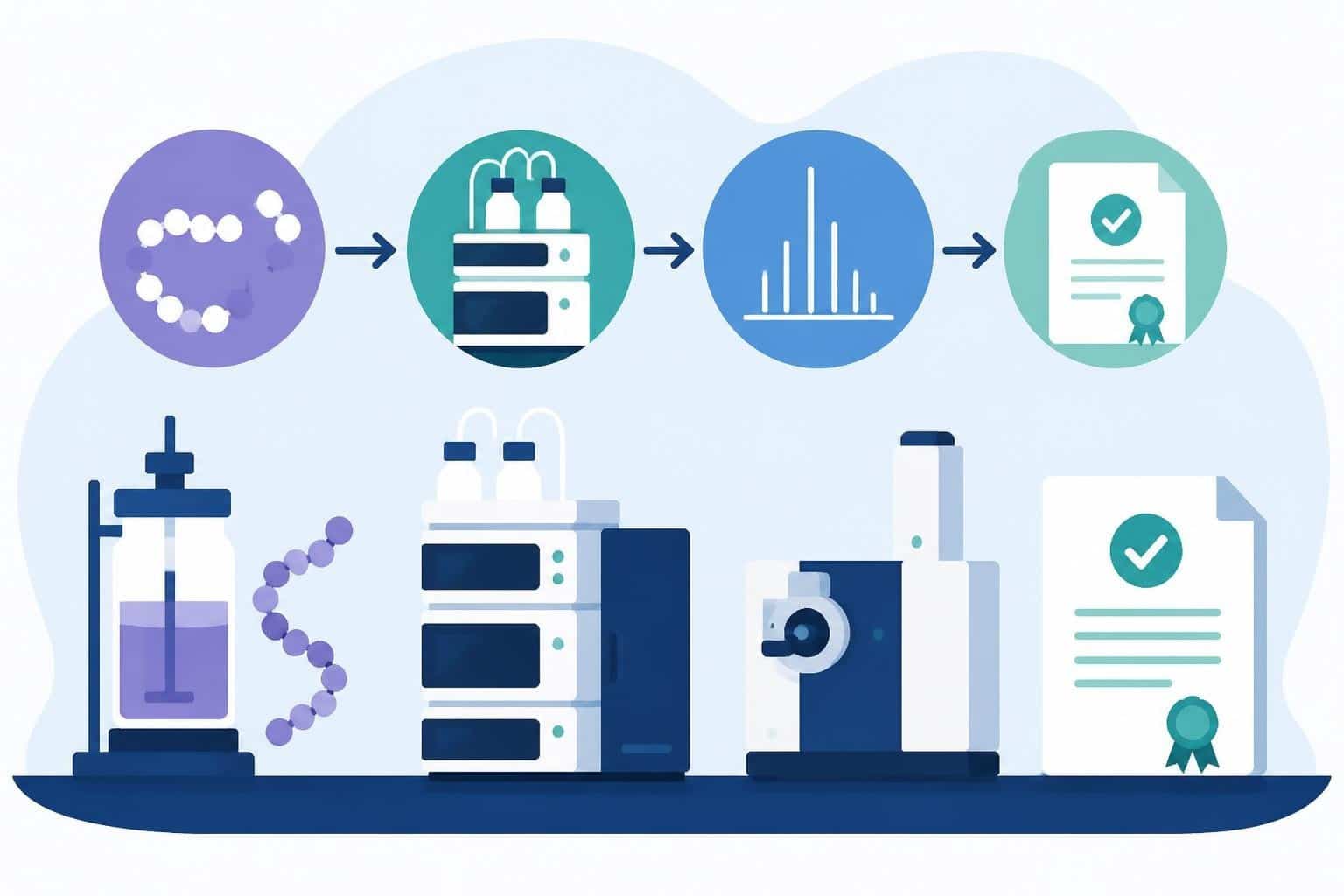
The quality of peptide products depends entirely on the rigor applied during synthesis, purification, and testing. Purity peptide labs represent the backbone of the peptide industry, employing sophisticated analytical techniques to verify that each batch meets strict quality standards. For researchers, clinicians, and consumers seeking therapeutic peptides, understanding how these laboratories operate provides essential insight into product safety, efficacy, and reliability. As peptide applications expand across weight loss, muscle growth, recovery, and anti-aging categories, the role of purity testing has never been more critical.
The Foundation of Peptide Quality Control
Purity peptide labs establish comprehensive quality control systems that begin at the molecular level and extend through every stage of production. These facilities combine advanced instrumentation with skilled technical expertise to identify impurities, verify molecular structure, and confirm concentration accuracy.
Why Peptide Purity Matters
Peptide purity directly influences therapeutic outcomes and safety profiles. Even minor impurities can trigger immune responses, reduce effectiveness, or produce unexpected side effects. High-purity peptides ensure predictable results and minimize risks associated with contaminated or degraded products.
Key factors affected by purity levels:
- Biological activity and receptor binding efficiency
- Stability during storage and transport
- Consistency across different batches
- Safety profile and adverse reaction potential
- Shelf life and degradation rates
Manufacturing facilities that prioritize purity implement multi-stage purification processes, typically achieving purity levels of 98% or higher for pharmaceutical-grade peptides. Understanding peptide purity testing quality standards requires familiarity with both the analytical methods used and the acceptable thresholds for different applications.
Primary Testing Methodologies
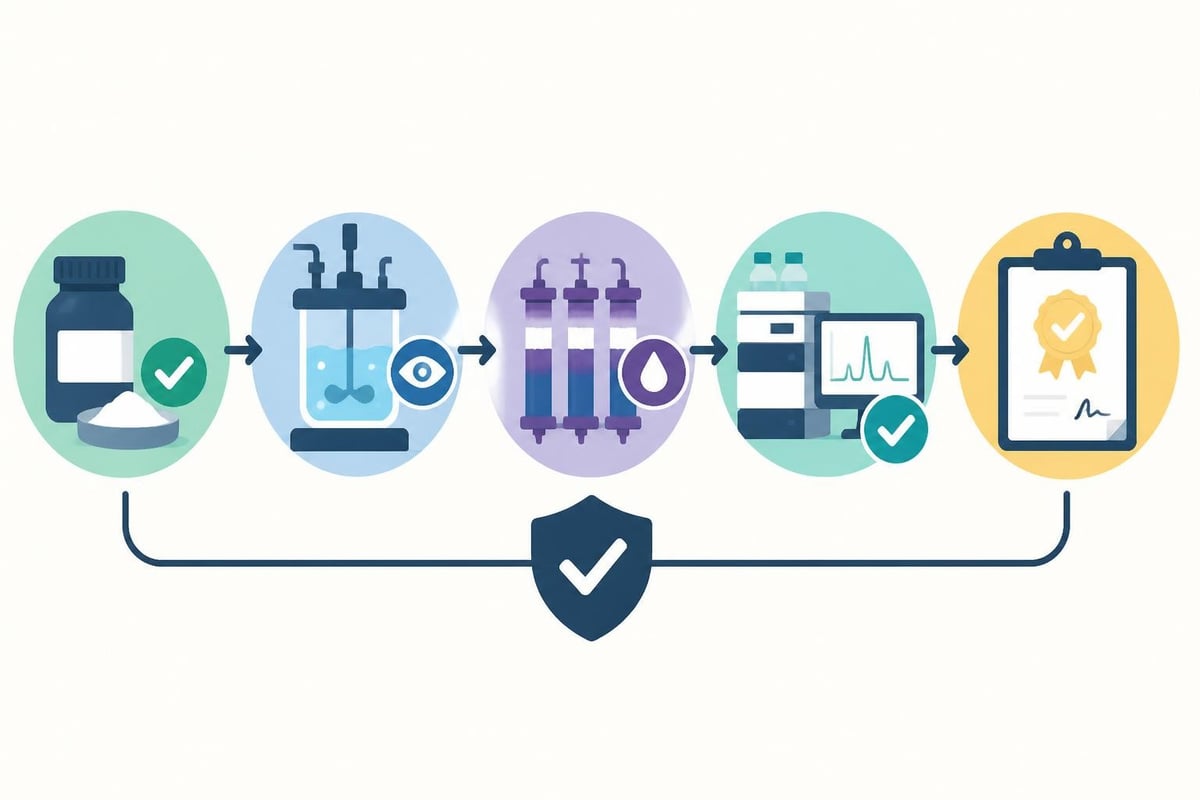
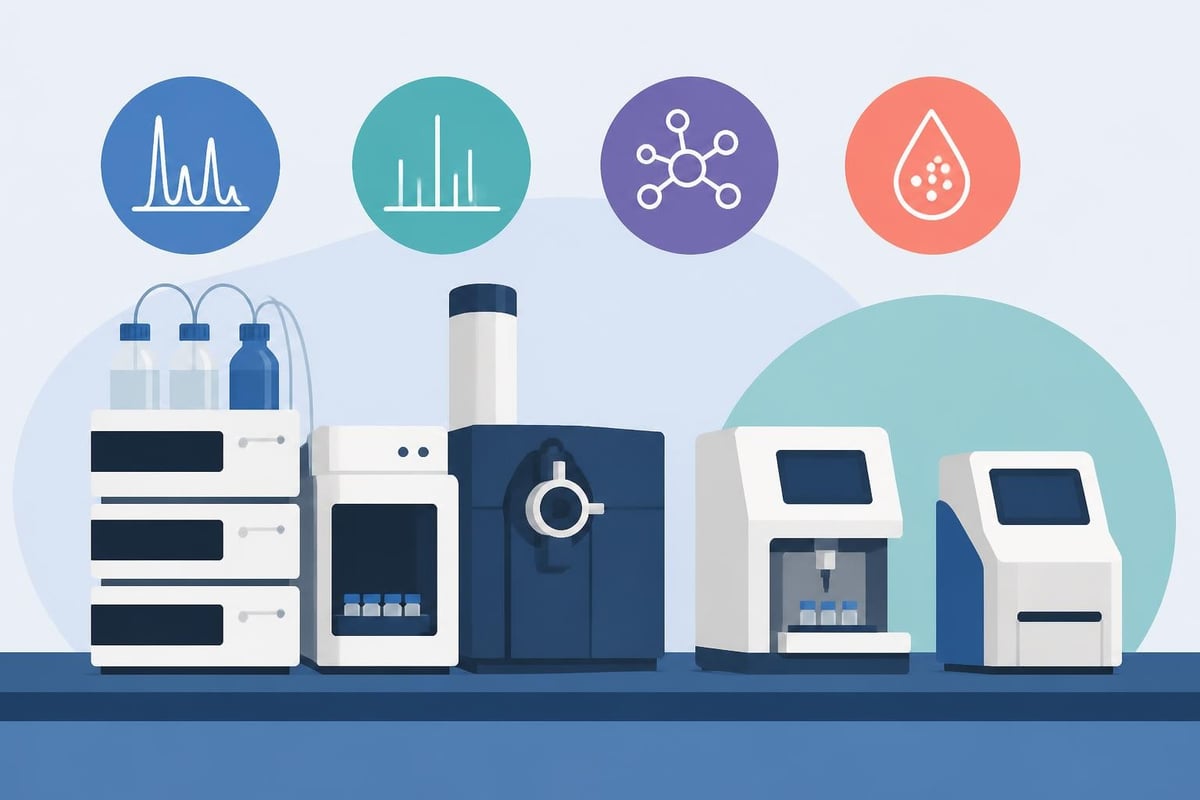
Purity peptide labs rely on several core analytical techniques, each serving a distinct purpose in the verification process. High-Performance Liquid Chromatography (HPLC) stands as the gold standard for separating and quantifying peptide components within a sample.
HPLC analysis involves passing the peptide solution through a specialized column that separates molecules based on their chemical properties. The resulting chromatogram displays peaks representing different components, with the main peptide peak indicating purity percentage. Peptide purity testing methods utilize reverse-phase HPLC most commonly, though other variants exist for specific applications.
Mass Spectrometry (MS) complements HPLC by confirming molecular weight and identifying structural variations. This technique ionizes peptide molecules and measures their mass-to-charge ratio, producing a detailed fingerprint that verifies identity and detects modifications or fragmentation.
| Testing Method | Primary Purpose | Information Provided | Typical Accuracy |
|---|---|---|---|
| HPLC | Purity quantification | Percentage purity, impurity profiles | ±0.5-1.0% |
| Mass Spectrometry | Identity verification | Molecular weight, structural integrity | ±0.01% mass |
| Amino Acid Analysis | Composition confirmation | Sequence accuracy, amino acid ratios | ±2-5% |
| Endotoxin Testing | Safety screening | Bacterial contamination levels | <0.1 EU/mg |
Advanced Testing Protocols in Modern Facilities
Beyond basic purity assessment, sophisticated purity peptide labs conduct additional analyses to ensure comprehensive quality verification. These extended protocols address specific concerns related to peptide stability, sterility, and functional integrity.
Certificate of Analysis Components
Every reputable peptide supplier provides a Certificate of Analysis (COA) documenting test results for each batch. Understanding how to verify vendor quality through COA review empowers consumers to make informed purchasing decisions.
Essential COA elements include:
- Batch or lot number for traceability
- HPLC chromatogram showing purity percentage
- Mass spectrometry data confirming molecular weight
- Appearance and solubility characteristics
- Storage recommendations and expiration date
- Testing facility certification and accreditation
Purity peptide labs typically assign unique identifiers to each production batch, enabling complete tracking from synthesis through distribution. This traceability system supports quality investigations and facilitates recalls if issues emerge post-release.
Sterility and Endotoxin Testing
Peptides intended for injection require additional safety testing beyond purity assessment. Sterility testing confirms the absence of viable microorganisms, while endotoxin testing detects bacterial cell wall components that can cause inflammatory responses even in the absence of live bacteria.
The Limulus Amebocyte Lysate (LAL) test serves as the standard method for endotoxin detection, measuring contamination in Endotoxin Units (EU) per milligram of peptide. Pharmaceutical-grade peptides must meet stringent thresholds, typically below 0.1 EU/mg for injectable formulations.
Quality Standards Across Different Applications
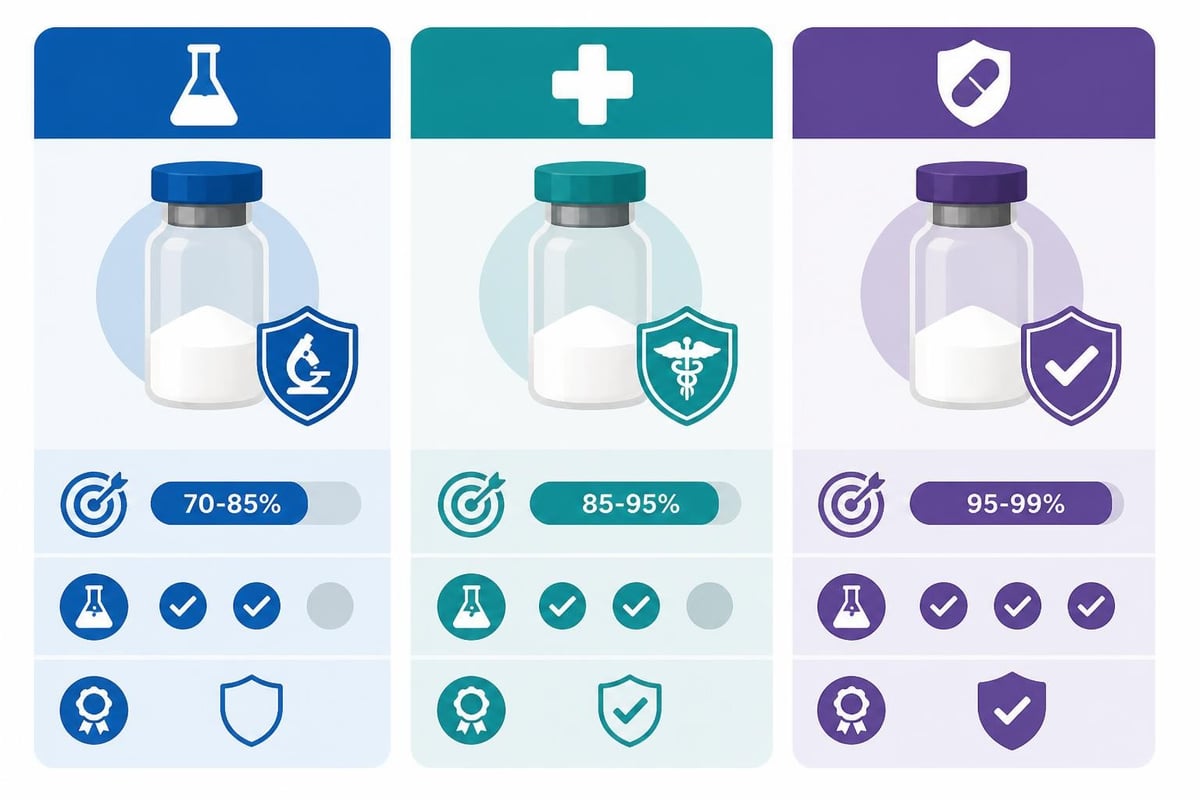
Purity peptide labs adjust their testing protocols based on the intended use of each peptide product. Research-grade peptides may have different requirements than pharmaceutical-grade compounds designed for clinical applications.
Research-Grade vs. Pharmaceutical-Grade Peptides
Research-grade peptides typically achieve purity levels of 95-98%, suitable for laboratory investigations and preliminary studies. These products undergo standard HPLC and MS testing but may not require the extensive validation demanded for human use.
Pharmaceutical-grade peptides, in contrast, must meet Good Manufacturing Practice (GMP) standards and achieve purity levels exceeding 98%. Complete peptide testing protocols for pharmaceutical applications include additional validation steps, environmental monitoring, and documentation requirements.
The distinction between grades affects pricing, availability, and regulatory compliance. Consumers should verify that their peptide supplier maintains appropriate quality standards for the intended application.
Industry Certifications and Accreditations
Reputable purity peptide labs obtain third-party certifications demonstrating adherence to recognized quality standards. ISO 17025 accreditation indicates competence in testing and calibration, while GMP certification confirms compliance with pharmaceutical manufacturing regulations.
| Certification | Scope | Significance for Purity Testing |
|---|---|---|
| ISO 17025 | Laboratory testing competence | Validates analytical method reliability |
| GMP | Manufacturing practices | Ensures consistent production quality |
| FDA Registration | U.S. regulatory compliance | Required for pharmaceutical applications |
| USP Standards | Pharmacopeia requirements | Defines purity thresholds and methods |
Interpreting Analytical Data
Understanding test results requires familiarity with analytical terminology and acceptable ranges. Purity percentages represent the proportion of the target peptide relative to total peptide content, while impurity profiles identify specific contaminants present in the sample.
Reading HPLC Chromatograms
HPLC chromatograms display time on the x-axis and detector response on the y-axis. The main peptide peak typically appears at a characteristic retention time, with smaller peaks representing impurities or related substances.
Purity percentage calculation involves measuring the area under the main peak and dividing by the total area of all peaks, then multiplying by 100. A peptide showing 98.5% purity contains 1.5% impurities, which may include deletion sequences, truncated fragments, or synthesis byproducts.
Common impurity types detected:
- Deletion sequences (missing amino acids)
- Truncated peptides (incomplete sequences)
- Modified residues (oxidation, deamidation)
- Synthesis reagents and coupling agents
- Salts and buffer components
Peptide purity verification methodologies have evolved significantly over the past decade, with improved detection limits and faster analysis times enabling more comprehensive quality control.
Mass Spectrometry Data Interpretation
Mass spectrometry produces spectra showing intensity peaks at specific mass-to-charge (m/z) ratios. The molecular ion peak should correspond to the calculated molecular weight of the target peptide, typically within 0.1% accuracy.
Additional peaks may indicate fragmentation, aggregation, or the presence of related substances. Skilled analysts compare observed mass values against theoretical calculations to confirm structural identity and detect unexpected modifications.
Selecting Quality Peptide Suppliers
Choosing a peptide supplier requires careful evaluation of their testing capabilities, quality documentation, and manufacturing practices. Purity peptide labs that invest in advanced instrumentation and skilled personnel typically produce more reliable products.
Essential Supplier Qualifications
Look for suppliers that provide:
- Batch-specific Certificates of Analysis
- Third-party testing verification
- Detailed chromatogram and mass spec data
- Clear storage and handling instructions
- Responsive customer support and technical guidance
Transparency in testing methodology indicates confidence in product quality. Suppliers who publish detailed analytical methods and maintain essential quality control tests demonstrate commitment to industry best practices.
Red Flags in Peptide Testing
Certain warning signs suggest inadequate quality control or potentially misleading claims. Generic COAs that lack batch-specific information, missing chromatograms, or reluctance to provide detailed test data all indicate potential quality concerns.
Purity peptide labs operating at professional standards readily share comprehensive testing documentation and maintain traceability systems linking each batch to specific production records. Suppliers unable or unwilling to provide this information should be approached with caution.
Advanced Purification Methods
The purification techniques employed by purity peptide labs directly impact final product quality. Multiple purification stages typically achieve higher purity levels than single-pass methods, though this increases production costs and time requirements.
Multi-Stage Purification Processes
Standard purification workflow:
- Initial crude peptide synthesis
- First-pass HPLC purification (removes major impurities)
- Fraction collection and analysis
- Second-pass HPLC purification (polishing step)
- Lyophilization and final formulation
Each purification stage reduces impurity content while potentially decreasing overall yield. Balancing purity targets against production efficiency requires careful optimization of purification parameters including mobile phase composition, gradient profiles, and temperature conditions.
For specialized applications requiring exceptional purity, some purity peptide labs employ preparative HPLC systems with enhanced resolution capabilities. These systems separate closely-related impurities that standard analytical methods might not fully resolve.
Quality Control During Manufacturing
In-process testing complements final product analysis by identifying quality issues during production rather than after completion. Purity peptide labs implement checkpoints throughout synthesis and purification, monitoring reaction progress, intermediate purity, and yield efficiency.
This proactive approach reduces waste, improves batch-to-batch consistency, and enables rapid troubleshooting when deviations occur. Peptide quality testing methods continue advancing with automation and real-time monitoring technologies that enhance process control.
Emerging Technologies in Purity Assessment
Innovation in analytical chemistry constantly improves the capabilities of purity peptide labs. Ultra-high-performance liquid chromatography (UHPLC) offers faster analysis times and superior resolution compared to traditional HPLC systems, while advanced mass spectrometry techniques provide unprecedented structural detail.
High-Resolution Mass Spectrometry
Modern high-resolution mass spectrometers achieve mass accuracy within parts-per-million, enabling detection of subtle modifications and low-level impurities that older instruments might miss. This enhanced precision supports more confident identification of sequence variants, oxidation products, and aggregation states.
Tandem mass spectrometry (MS/MS) fragments peptide molecules in controlled patterns, providing sequence confirmation and localization of modifications. This technique proves particularly valuable for verifying complex peptides with multiple potential modification sites.
| Technology | Advantage | Application in Purity Testing |
|---|---|---|
| UHPLC | Faster analysis, better resolution | Detailed impurity profiling |
| High-res MS | Enhanced mass accuracy | Precise molecular weight verification |
| MS/MS | Sequence confirmation | Structure validation, modification mapping |
| LC-MS | Combined separation and identification | Comprehensive characterization |
Automated Quality Systems
Automation streamlines testing workflows in purity peptide labs, reducing human error and improving throughput. Automated sample preparation, injection systems, and data processing software enable consistent analysis across large batch quantities.
Machine learning algorithms now assist in chromatogram interpretation, peak integration, and impurity identification. Research into peptide machine learning applications demonstrates potential for enhanced quality prediction and process optimization.
Practical Considerations for Consumers
Understanding purity peptide labs operations helps consumers make informed decisions when selecting peptide products. Beyond marketing claims and pricing considerations, analytical documentation provides the most reliable indicator of product quality.
Evaluating Third-Party Testing
Some suppliers utilize independent third-party laboratories for purity verification, adding an extra layer of credibility to quality claims. Third-party testing eliminates potential conflicts of interest and provides unbiased assessment of product quality.
When reviewing third-party test results, verify that the testing laboratory maintains appropriate accreditations and uses validated methods. The analytical methodologies for peptide purity verification should align with industry standards and provide sufficient detail for independent verification.
Storage and Stability Considerations
Even high-purity peptides degrade over time if stored improperly. Purity peptide labs typically recommend specific storage conditions including temperature, light exposure, and humidity control to maintain product integrity.
Lyophilized peptides generally exhibit superior stability compared to liquid formulations, though reconstitution introduces additional variables affecting long-term quality. Following manufacturer recommendations for storage and reconstitution preserves the purity and potency verified during initial testing.
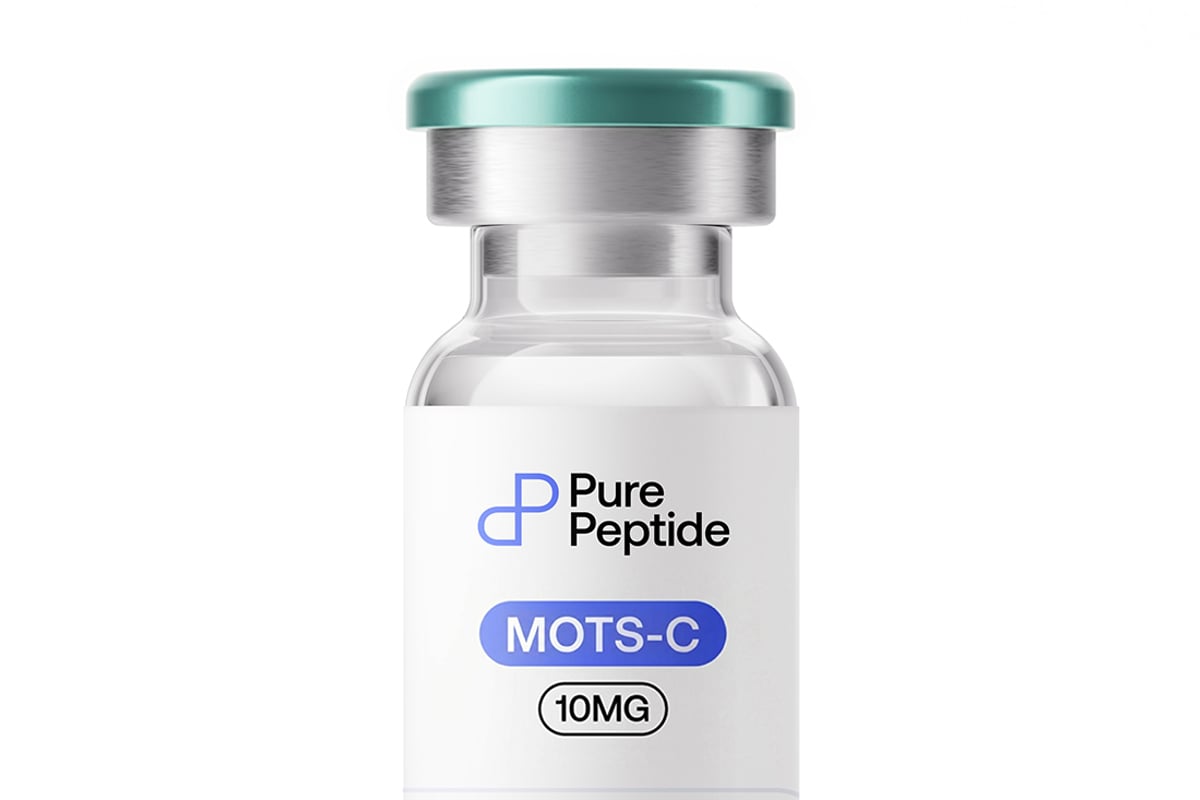
For example, peptides supporting metabolic health and cellular energy production require careful handling to maintain their therapeutic potential. MOTS-c, a mitochondria-derived peptide designed to promote efficient cellular performance, demonstrates how proper storage preserves the quality verified through rigorous testing protocols. This peptide's effectiveness depends on maintaining the purity levels established during laboratory analysis.
Implementation of Quality Management Systems
Comprehensive quality management extends beyond individual test results to encompass every aspect of peptide production. Purity peptide labs implementing robust quality systems document procedures, train personnel, calibrate equipment, and maintain environmental controls that collectively ensure consistent output.
Standard Operating Procedures
Written standard operating procedures (SOPs) define each step in the testing process, from sample preparation through data reporting. SOPs ensure that different analysts obtain comparable results and facilitate investigation when unexpected results occur.
Regular review and updating of SOPs keeps procedures aligned with evolving best practices and regulatory requirements. Purity peptide labs maintaining ISO 17025 accreditation undergo periodic audits verifying SOP compliance and effectiveness.
Personnel Training and Competency
Skilled analysts represent a critical component of reliable peptide testing. Training programs covering instrument operation, method validation, troubleshooting, and data interpretation ensure that laboratory staff maintain competency in complex analytical techniques.
Key training areas include:
- HPLC system operation and maintenance
- Mass spectrometry principles and data interpretation
- Method validation and performance verification
- Quality documentation and record-keeping
- Safety protocols and contamination prevention
Continuing education keeps analytical teams current with technological advances and emerging quality standards. Purity peptide labs investing in personnel development typically deliver more reliable and innovative testing services.
Regulatory Landscape and Compliance
The regulatory environment for peptides varies by country and intended use, with pharmaceutical applications facing the most stringent requirements. Purity peptide labs serving pharmaceutical clients must maintain compliance with FDA regulations in the United States, EMA standards in Europe, and equivalent authorities in other jurisdictions.
Validation Requirements
Analytical method validation demonstrates that testing procedures produce accurate, precise, and reliable results. Validation studies assess parameters including specificity, linearity, accuracy, precision, detection limits, and robustness.
Purity peptide labs document validation studies in comprehensive reports that regulatory authorities review during facility inspections. The validation process confirms that analytical methods perform as intended across the expected range of sample concentrations and matrix conditions.
Documentation and Traceability
Complete documentation creates an audit trail linking raw materials through finished products. Purity peptide labs maintain records of equipment calibration, reagent lot numbers, analyst qualifications, environmental conditions, and test results for each batch analyzed.
This documentation supports quality investigations, enables trend analysis, and provides evidence of compliance during regulatory inspections. Digital laboratory information management systems (LIMS) facilitate record-keeping while improving data accessibility and security.
Future Directions in Peptide Quality Control
As peptide therapeutics expand into new applications, purity peptide labs continue evolving their capabilities. Emerging trends include real-time quality monitoring, predictive analytics, and integration of artificial intelligence in method development and optimization.
Continuous Manufacturing and Real-Time Release Testing
Traditional batch manufacturing is gradually being supplemented by continuous processing approaches that produce peptides in steady-state operations. This shift requires real-time analytical techniques capable of monitoring quality during production rather than testing finished batches.
Process Analytical Technology (PAT) initiatives integrate inline and online sensors with advanced control systems, enabling immediate quality feedback and process adjustment. Purity peptide labs developing PAT capabilities position themselves at the forefront of pharmaceutical manufacturing innovation.
Personalized Peptide Therapies
Growing interest in personalized medicine creates demand for flexible manufacturing and testing systems capable of producing small batches customized to individual patient needs. Purity peptide labs supporting this trend develop scalable analytical methods applicable to diverse peptide structures and formulations.
The tools available through peptide calculators help researchers and clinicians determine appropriate dosing, further supporting the personalization of peptide-based interventions.
Quality peptide products begin in laboratories where rigorous testing, advanced instrumentation, and expert analysis converge to verify purity, safety, and efficacy. When seeking peptides to support your health and performance goals, partnering with suppliers who prioritize comprehensive quality control ensures you receive products backed by scientific rigor and analytical verification. Soma Peptide combines premium synthesis techniques with stringent testing protocols to deliver peptides that meet the highest industry standards, supporting your journey toward optimal health and performance.