


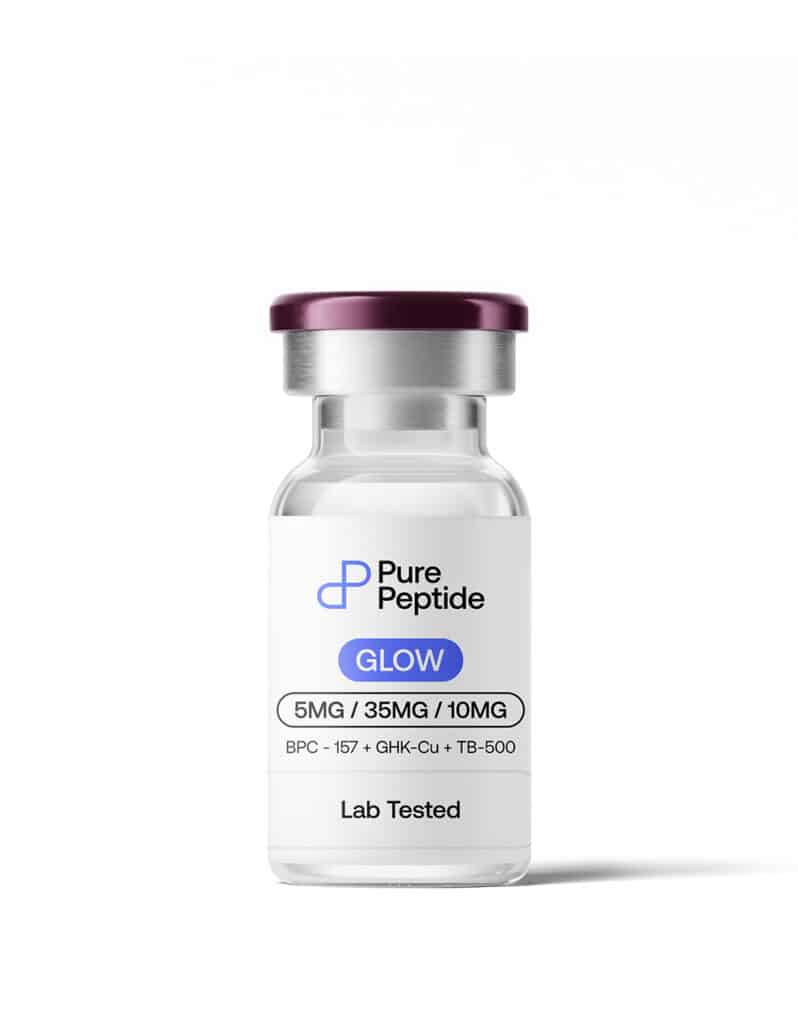
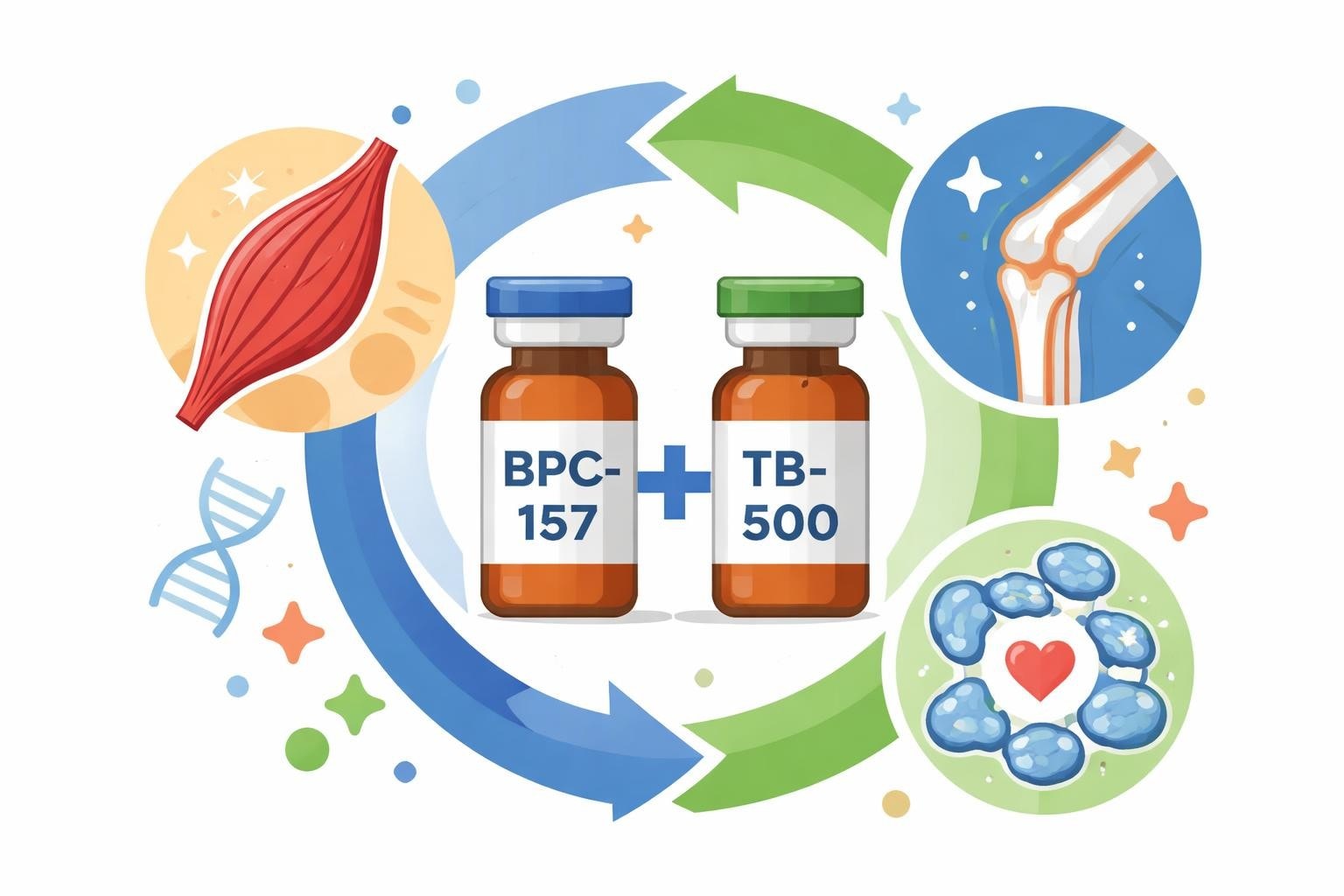
Recovery peptides have become increasingly important for individuals seeking advanced solutions for tissue repair and healing. Among the most researched compounds in this category, the combination of bpc 157 tb 500 stands out for its complementary mechanisms and potential synergistic effects. These two peptides work through distinct pathways to support the body's natural healing processes, making them popular choices for those focused on recovery optimization. Understanding how these compounds function individually and together helps researchers and practitioners make informed decisions about their application in recovery protocols.
Understanding BPC-157 and Its Mechanisms
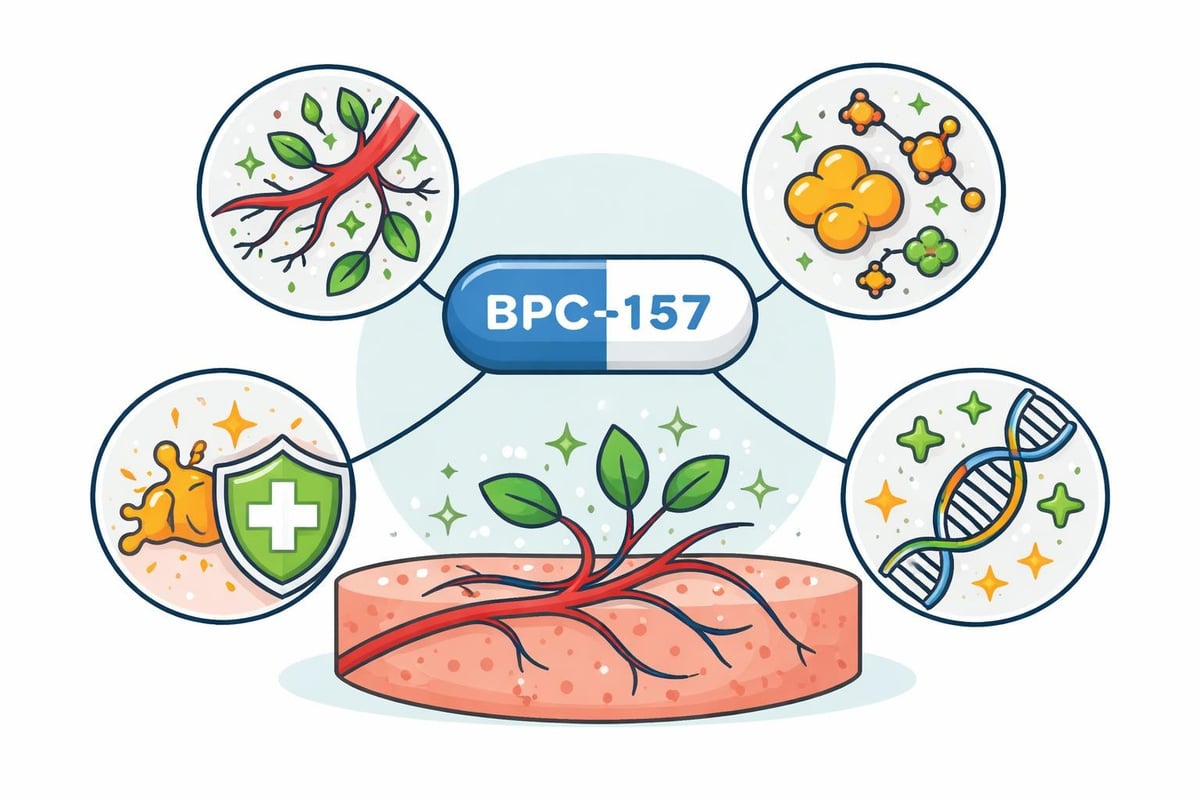
BPC-157, derived from a protective protein found in gastric juice, has attracted significant research attention for its potential role in tissue repair. This pentadecapeptide consists of 15 amino acids and demonstrates stability in gastric environments, making it unique among recovery peptides.
Research suggests BPC-157 influences several biological pathways involved in healing. The peptide appears to promote angiogenesis, which refers to the formation of new blood vessels that deliver nutrients and oxygen to damaged tissues. Additionally, studies indicate potential effects on growth factor expression and collagen production, both critical components of tissue regeneration.
Key Properties of BPC-157
The peptide demonstrates several characteristics that make it valuable for recovery applications:
- Tissue specificity: Research shows potential effects on tendons, ligaments, muscles, and gastrointestinal tissues
- Vascular support: May enhance blood flow to injured areas through angiogenic pathways
- Anti-inflammatory properties: Studies suggest modulation of inflammatory responses
- Systemic stability: Demonstrates resistance to degradation in harsh environments
BPC-157 has been studied extensively in animal models, with researchers exploring applications ranging from musculoskeletal injuries to gastrointestinal healing. The research findings on BPC-157 side effects provide valuable context for understanding its safety profile.
TB-500: The Thymosin Beta-4 Fragment
TB-500 represents a synthetic version of Thymosin Beta-4, a naturally occurring peptide present in virtually all human cells. This 43-amino acid sequence plays crucial roles in cellular migration, differentiation, and tissue development.
The mechanisms of TB-500 differ substantially from BPC-157, which explains why combining bpc 157 tb 500 creates complementary effects. TB-500 primarily works by binding to actin, a structural protein that forms the cellular cytoskeleton. This interaction facilitates cell migration to injury sites, a process essential for tissue repair.
TB-500 Functional Characteristics
| Function | Mechanism | Research Application |
|---|---|---|
| Cell Migration | Actin binding promotes cellular movement | Wound healing studies |
| Tissue Remodeling | Supports extracellular matrix organization | Structural repair research |
| Inflammation Modulation | May reduce inflammatory cytokines | Recovery protocols |
| Blood Vessel Formation | Supports endothelial cell development | Vascular health studies |
Research into TB-500 has explored its potential in various recovery scenarios. The peptide demonstrates particular interest in applications involving muscle injuries, where cell migration and tissue reorganization prove critical. Studies comparing TB-500 versus BPC-157 in research contexts highlight their distinct yet complementary mechanisms.
Synergistic Effects of Combined Use
The combination of bpc 157 tb 500 represents more than simply adding two peptides together. These compounds operate through different biological pathways, potentially creating synergistic effects that exceed what either achieves individually.
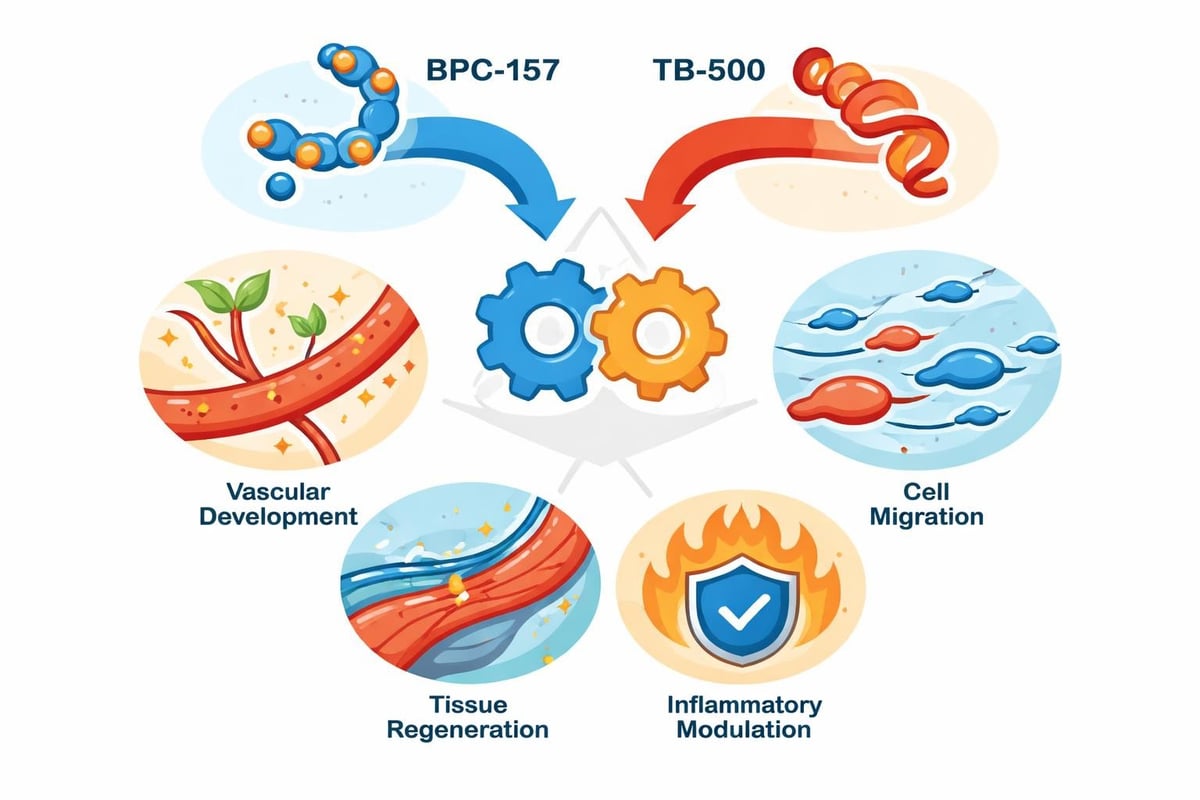
BPC-157 focuses heavily on vascular development and direct tissue regeneration, while TB-500 emphasizes cellular migration and structural remodeling. When used together, these mechanisms may support recovery through multiple simultaneous pathways. Research into combined BPC-157 and TB-500 protocols explores how these complementary actions might enhance overall tissue repair outcomes.
Complementary Pathway Activation
The dual-peptide approach targets recovery from multiple angles:
- Vascular Enhancement: BPC-157 promotes blood vessel formation while TB-500 supports endothelial cell function
- Cellular Recruitment: TB-500 facilitates cell migration to injury sites where BPC-157 may enhance their regenerative activity
- Structural Support: Both peptides contribute to extracellular matrix development through different mechanisms
- Inflammatory Balance: Each peptide demonstrates potential anti-inflammatory properties through distinct pathways
This multi-pathway approach explains why many researchers and practitioners explore bpc 157 tb 500 combinations for complex recovery scenarios. The comprehensive guide to healing peptides provides additional context on this combined approach.
Dosing Protocols and Administration
Understanding appropriate dosing strategies for bpc 157 tb 500 requires consideration of research protocols and individual factors. Both peptides are typically administered through subcutaneous injection, though research has explored various delivery methods.
Individual Peptide Dosing
Research protocols generally explore these ranges:
BPC-157 Dosing Considerations
- Research doses typically range from 200-500 mcg per administration
- Frequency varies from once to twice daily in studies
- Duration of research protocols often spans 4-6 weeks
- Location specificity may influence administration site selection
TB-500 Dosing Approaches
- Research protocols commonly explore 2-5 mg per administration
- Less frequent dosing than BPC-157, often 1-2 times weekly
- Loading phases may utilize higher initial doses
- Maintenance protocols typically reduce frequency after initial period
The difference in dosing frequency reflects the distinct pharmacokinetics of these peptides. TB-500 demonstrates longer-lasting effects, while BPC-157 protocols often utilize more frequent administration for sustained activity.
Combined Protocol Strategies
When using bpc 157 tb 500 together, timing considerations become important:
- Some protocols administer both peptides simultaneously at the same injection site
- Others stagger administration times throughout the day
- Cycling strategies may alternate emphasis between peptides across different protocol phases
- Total weekly dosages should account for both compounds when planning protocols
Quality assurance remains paramount when working with peptides. Certificate of Analysis verification ensures products meet purity and potency standards before use in any research or recovery protocol.
Safety Considerations and Side Effects
Both BPC-157 and TB-500 have been studied for safety profiles, though human clinical data remains limited compared to animal research. Understanding potential side effects helps users make informed decisions about bpc 157 tb 500 protocols.
Research suggests both peptides generally demonstrate favorable tolerability in animal studies. However, comprehensive human trials remain ongoing. The side effects associated with BPC-157 and TB-500 have been documented through both research observations and user reports.
Reported Considerations
Common observations from research and user experiences include:
- Injection site reactions: Redness, swelling, or mild discomfort at administration locations
- Systemic responses: Fatigue, headaches, or changes in energy levels reported by some users
- Dosage-dependent effects: Higher doses may increase likelihood of side effects
- Individual variability: Responses differ significantly between individuals
| Peptide | Common Observations | Rare Reports | Frequency Notes |
|---|---|---|---|
| BPC-157 | Mild injection site reactions | Dizziness, hot/cold sensations | Generally well-tolerated |
| TB-500 | Fatigue in early use | Headaches, temporary lethargy | Often subsides with continued use |
| Combined | Cumulative mild effects | No specific combination-related issues | Monitor both compounds |
The lack of extensive long-term human studies means the complete safety profile continues to develop as research advances. Those considering bpc 157 tb 500 protocols should prioritize quality peptides from verified sources and consult qualified practitioners.
Applications in Recovery and Performance
The practical applications of bpc 157 tb 500 extend across multiple recovery scenarios. Understanding these contexts helps identify when these peptides might offer the most value.
Musculoskeletal Recovery
Soft tissue injuries represent a primary area of research interest for both peptides. Studies have explored applications in:
- Tendon and ligament injuries where collagen synthesis proves critical
- Muscle strains and tears requiring cellular migration and tissue remodeling
- Joint-related issues involving multiple tissue types
- Chronic overuse conditions where inflammation and tissue degradation occur
Research into cellular processes and tissue regeneration provides insight into how these peptides may support musculoskeletal recovery.

Athletic Performance Context
Beyond injury recovery, some researchers explore bpc 157 tb 500 for performance enhancement applications:
- Recovery acceleration: Reducing downtime between intense training sessions
- Tissue resilience: Supporting connective tissue health under repetitive stress
- Adaptation support: Facilitating tissue remodeling during progressive overload
- Preventive strategies: Maintaining tissue integrity during demanding training phases
Those interested in performance applications often explore peptides for muscle growth as complementary compounds to recovery-focused protocols.
Quality and Sourcing Considerations
The effectiveness of any peptide protocol depends fundamentally on product quality. Low-purity peptides may contain contaminants, incorrect concentrations, or degraded compounds that compromise results and safety.
Quality Indicators
When evaluating bpc 157 tb 500 sources, several factors indicate product reliability:
- Third-party testing: Independent laboratory verification of purity and concentration
- Certificate of Analysis: Documentation showing exact composition and purity percentages
- Manufacturing standards: GMP-compliant facilities with quality control protocols
- Transparency: Clear information about sourcing, testing, and handling procedures
The peptide industry varies significantly in quality standards. Reputable suppliers provide detailed documentation and maintain consistent testing protocols. Understanding peptide quality control standards helps identify trustworthy sources.
Storage and Handling
Proper storage preserves peptide integrity and effectiveness:
- Lyophilized (powder) forms should remain refrigerated at 2-8°C
- Reconstituted solutions require refrigeration and typically maintain stability for 30 days
- Freezing may damage some peptide structures and generally isn't recommended for solutions
- Light protection prevents photodegradation of sensitive compounds
Following proper storage protocols ensures bpc 157 tb 500 peptides maintain their potency throughout use periods. Degraded peptides not only lose effectiveness but may also produce unwanted byproducts.
Research Developments and Future Directions
The scientific understanding of bpc 157 tb 500 continues to evolve as new research emerges. Recent studies have expanded knowledge of these peptides' mechanisms and potential applications.
Current research directions include:
- Mechanism elucidation: Identifying specific receptors and signaling pathways
- Combination studies: Exploring synergistic effects with other recovery compounds
- Clinical applications: Advancing toward human trials for specific conditions
- Delivery optimization: Developing more effective administration methods
The detailed comparison of BPC-157 and TB-500 highlights ongoing research into their distinct and overlapping mechanisms.
Emerging Applications
Beyond traditional recovery contexts, researchers explore novel applications:
- Gastrointestinal healing, particularly for BPC-157's protective effects on gut lining
- Neuroprotective properties in brain injury models
- Cardiovascular applications involving vascular health
- Skin wound healing and dermal tissue regeneration
As research progresses, the understanding of optimal bpc 157 tb 500 protocols becomes more refined. This evolution helps practitioners develop more targeted and effective recovery strategies.
Protocol Design and Individualization
Creating effective bpc 157 tb 500 protocols requires consideration of individual factors and specific recovery goals. Generic approaches often miss opportunities for optimization based on unique circumstances.
Assessment Factors
Several elements influence protocol design:
- Injury type and severity: Acute versus chronic conditions require different approaches
- Recovery timeline: Available time frames affect dosing frequency and intensity
- Previous peptide experience: Prior exposure may influence starting doses
- Concurrent interventions: Other therapies or compounds in use
- Individual response patterns: Monitoring and adjusting based on observed effects
Starting with conservative doses and gradually adjusting based on response provides a safer, more sustainable approach than immediately using maximum research doses.
Monitoring and Adjustment
Effective protocols include systematic monitoring:
- Establish baseline measurements of relevant recovery markers
- Track subjective recovery indicators (pain levels, mobility, function)
- Document any side effects or unusual responses
- Adjust dosing or frequency based on observed results
- Implement rest periods or cycling strategies as appropriate
This systematic approach helps optimize bpc 157 tb 500 protocols for individual needs while maintaining safety. For comprehensive support beyond recovery peptides, exploring peptides for weight loss or other specialized compounds may complement broader health goals.
Integration with Other Recovery Modalities
While bpc 157 tb 500 peptides offer unique recovery support, they function most effectively as part of comprehensive recovery strategies. Integrating these compounds with proven recovery modalities creates synergistic benefits.
Complementary Approaches
Effective integration includes:
Physical Interventions
- Targeted rehabilitation exercises addressing specific injury patterns
- Manual therapy techniques supporting tissue mobilization
- Progressive loading strategies facilitating adaptation
- Movement pattern correction preventing re-injury
Nutritional Support
- Adequate protein intake providing amino acid building blocks
- Anti-inflammatory nutrients supporting recovery processes
- Hydration optimization facilitating nutrient delivery
- Micronutrient sufficiency supporting enzymatic functions
Recovery Practices
- Quality sleep enabling natural growth hormone release
- Stress management preventing cortisol-mediated tissue breakdown
- Active recovery promoting circulation without excessive stress
- Periodization preventing chronic overload
The combination of bpc 157 tb 500 with these established recovery principles creates a comprehensive approach addressing recovery from multiple angles simultaneously.
Recovery optimization requires both cutting-edge compounds and foundational practices working together. The complementary mechanisms of BPC-157 and TB-500 offer researchers and practitioners powerful tools for supporting tissue repair and healing processes. When you're ready to explore premium quality peptides backed by rigorous testing and quality control, Soma Peptide provides the purity and efficacy standards necessary for serious recovery protocols. Our advanced purification methods and comprehensive verification ensure you receive exactly what your recovery demands.