


The decision to buy IGF 1 requires careful consideration of quality standards, research applications, and supplier credibility. Insulin-like Growth Factor 1 (IGF-1) has emerged as one of the most studied peptides in research settings, with applications spanning muscle development, recovery enhancement, and metabolic health. As the research peptide market continues to expand in 2026, understanding what makes a quality IGF-1 product becomes increasingly important for researchers, clinicians, and those seeking premium-grade compounds for legitimate purposes. This comprehensive guide explores the critical factors you need to know before making a purchase decision.
Understanding IGF-1 and Its Research Applications
Insulin-like Growth Factor 1 is a naturally occurring hormone with structural similarities to insulin. The body produces IGF-1 primarily in the liver, though nearly every tissue in the body generates some amount of this crucial growth factor. Its primary function involves mediating the effects of growth hormone (GH) while also exerting independent anabolic effects on tissues throughout the body.
The Science Behind IGF-1
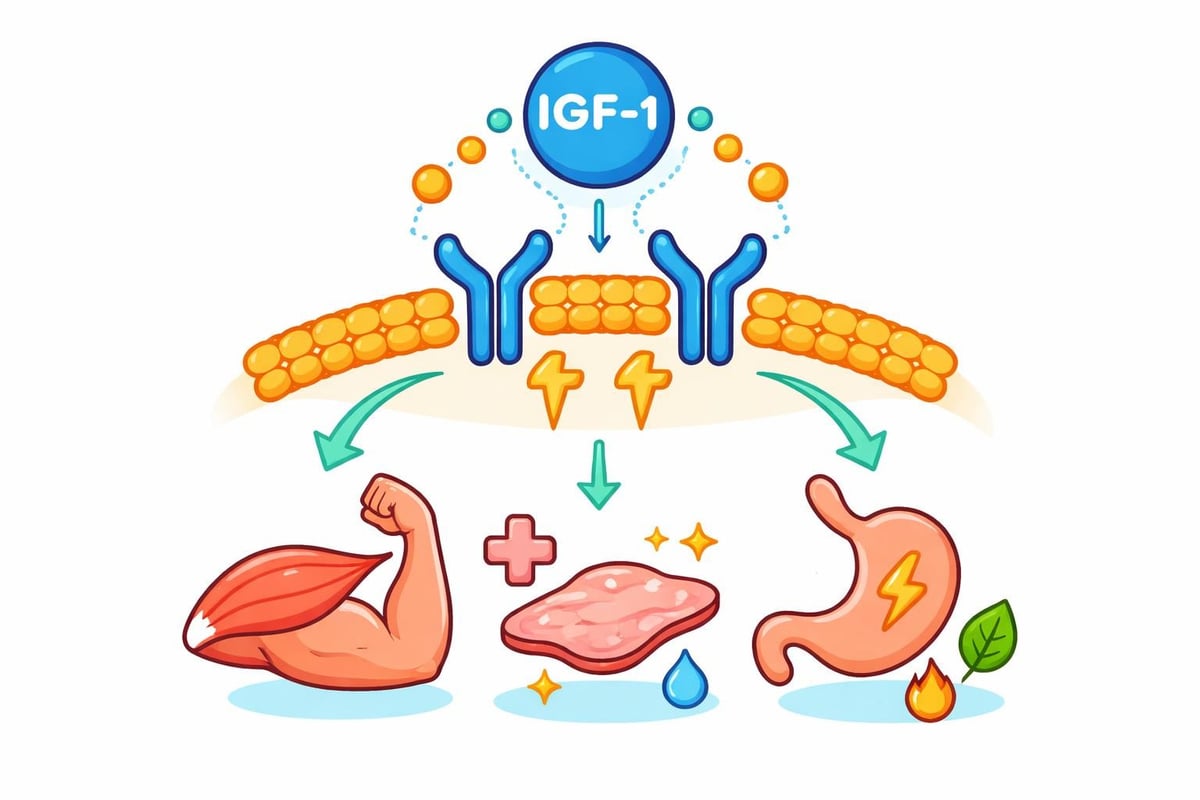
IGF-1 operates through complex signaling pathways that influence cellular proliferation, differentiation, and survival. When you buy IGF 1 for research purposes, you're accessing a peptide that has been extensively studied for its role in numerous physiological processes. Research on IGF-1 and brain health has revealed significant correlations between circulating levels and cognitive function, demonstrating the far-reaching impact of this growth factor.
The peptide consists of 70 amino acids with three disulfide bridges that stabilize its structure. This molecular configuration allows IGF-1 to bind to specific receptors on cell surfaces, triggering cascade reactions that promote growth and repair processes.
Research Categories and Applications
Scientists and researchers utilize IGF-1 across multiple domains:
- Muscle growth and recovery studies: Examining how IGF-1 influences protein synthesis and muscle fiber development
- Metabolic research: Investigating the peptide's role in glucose metabolism and insulin sensitivity
- Neurological studies: Understanding IGF-1’s potential as a therapeutic target for neurodegenerative diseases
- Developmental biology: Analyzing growth patterns and tissue differentiation
- Anti-aging research: Evaluating IGF-1's relationship with cellular senescence and longevity
The breadth of research applications underscores why quality matters when researchers choose to buy IGF 1. Impure or degraded peptides can compromise experimental results and lead to inaccurate conclusions.
Quality Standards When You Buy IGF 1
Not all IGF-1 products meet the rigorous standards required for reliable research. The peptide synthesis process involves multiple steps where contamination or degradation can occur, making supplier selection critical.
Purity Metrics and Testing
Premium IGF-1 products should demonstrate purity levels of 98% or higher. This threshold ensures minimal contamination from synthesis byproducts, residual solvents, or degradation products. When you buy IGF 1 from reputable sources, you should receive:
Certificate of Analysis (COA): Third-party laboratory verification documenting purity, molecular weight, and composition. Soma Peptide provides comprehensive certificates of analysis for transparency and quality assurance.
High-Performance Liquid Chromatography (HPLC): Analytical testing that separates and quantifies peptide components with precision.
Mass Spectrometry: Confirms the exact molecular weight and identifies any structural anomalies.
| Quality Indicator | Standard Level | Why It Matters |
|---|---|---|
| Purity | ≥98% | Ensures accurate dosing and minimal contamination |
| Endotoxin Level | <1.0 EU/mg | Prevents inflammatory responses in biological systems |
| Sterility | No growth detected | Critical for research involving cell cultures or biological models |
| pH Range | 6.5-7.5 | Maintains peptide stability and bioactivity |
Manufacturing and Purification Methods
Advanced purification techniques distinguish premium IGF-1 from lower-grade alternatives. The manufacturing process typically involves solid-phase peptide synthesis (SPPS) followed by multiple purification cycles.
Reverse-phase HPLC removes synthesis byproducts and truncated sequences. Ion-exchange chromatography eliminates charged contaminants. Gel filtration separates molecules based on size, ensuring only properly formed IGF-1 molecules remain in the final product.
When you buy IGF 1, inquire about the purification methods used. Multiple chromatography steps indicate a commitment to quality that translates into more reliable research outcomes.
IGF-1 LR3: An Extended-Release Variant
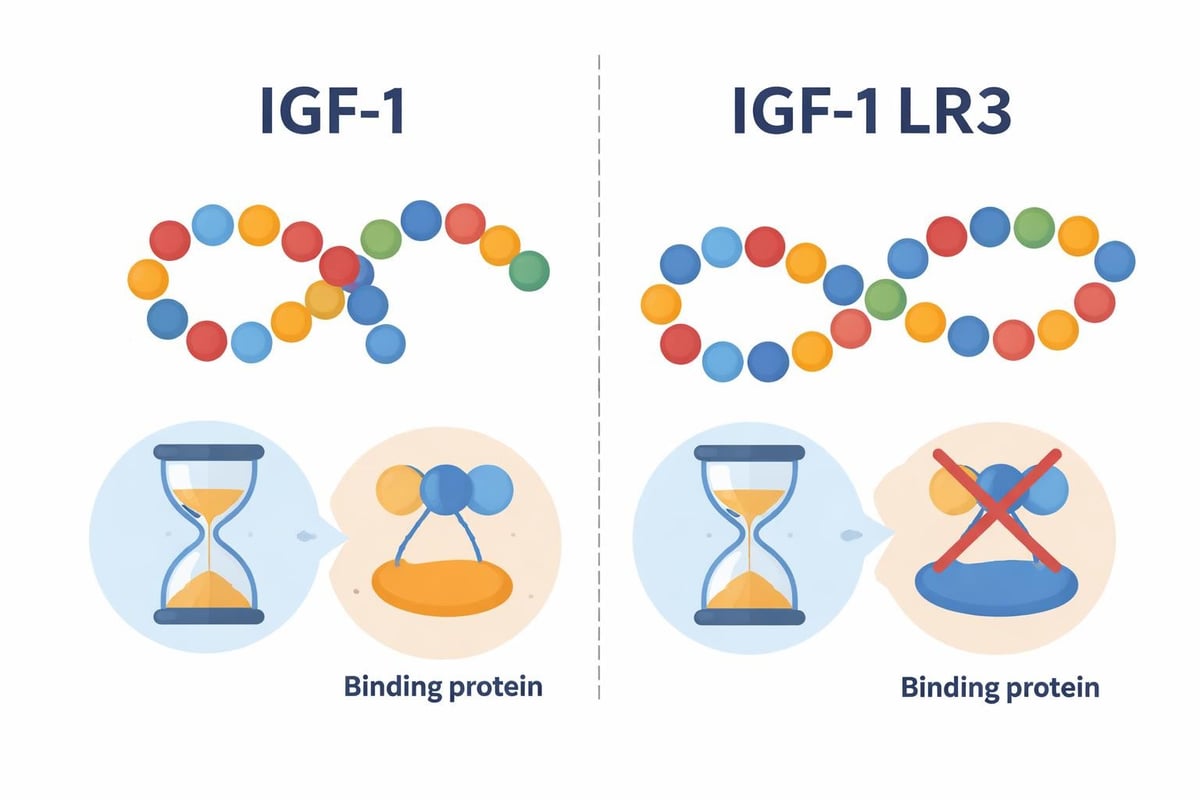
Among the various forms available, IGF-1 LR3 (Long R3 IGF-1) represents a modified version with enhanced stability and extended half-life. This synthetic analog contains 83 amino acids compared to the native 70-amino-acid structure.
Structural Modifications and Benefits
The "LR3" designation refers to two key modifications: substitution of glutamic acid for arginine at position 3 and an N-terminal extension of 13 amino acids. These changes significantly reduce binding to IGF-binding proteins (IGFBPs), which normally sequester and deactivate IGF-1 in circulation.
Researchers often choose to buy IGF 1 LR3 specifically because:
- Extended half-life: Approximately 20-30 hours compared to 12-15 hours for standard IGF-1
- Enhanced bioavailability: Reduced binding to IGFBPs means more free, active peptide
- Systemic circulation: Greater distribution throughout the body rather than localized effects
However, these advantages come with considerations. The side effects and risks associated with IGF-1 LR3 require careful attention in research protocols, particularly regarding dosing and monitoring.
Research Applications for LR3
Studies utilizing IGF-1 LR3 often focus on sustained anabolic effects over extended periods. The prolonged activity window makes it particularly useful for:
- Longitudinal muscle development studies: Tracking growth patterns over weeks or months
- Metabolic intervention research: Examining sustained effects on insulin sensitivity and glucose uptake
- Recovery protocol investigations: Evaluating tissue repair processes that unfold over time
- Comparative efficacy trials: Contrasting outcomes between standard and extended-release formulations
When designing research protocols, scientists must account for the enhanced potency of LR3. The decision to buy IGF 1 in standard or LR3 form depends on specific research objectives and desired timeframes.
Safety Considerations and Potential Effects
Understanding the safety profile of IGF-1 forms an essential component of responsible research and application. The benefits and side effects of IGF-1 have been documented across numerous studies, revealing both therapeutic potential and areas requiring caution.
Documented Benefits in Research
Controlled research environments have identified several positive effects associated with IGF-1:
- Accelerated muscle protein synthesis and hypertrophy
- Enhanced recovery from tissue damage or injury
- Improved bone mineral density in certain populations
- Potential neuroprotective effects in models of cognitive decline
- Modulation of glucose metabolism and insulin sensitivity
Studies examining arginine supplementation’s impact on IGF-1 levels demonstrate that natural modulation of this growth factor occurs through dietary interventions, highlighting its integral role in human physiology.
Areas Requiring Monitoring
Research also reveals potential adverse effects that require vigilant monitoring:
| Potential Effect | Risk Level | Monitoring Approach |
|---|---|---|
| Hypoglycemia | Moderate | Regular glucose testing, especially in metabolic studies |
| Joint discomfort | Low to Moderate | Assessment protocols for mobility and pain indicators |
| Fluid retention | Low | Body composition measurements and edema evaluation |
| IGF-1 receptor overstimulation | Moderate | Dose-response curve establishment and receptor assay |
The relationship between IGF-1 receptor function and cardiovascular health underscores the importance of comprehensive health monitoring in research protocols involving this peptide.
Sourcing IGF-1: What to Look For in Suppliers
The supplier you choose when you buy IGF 1 directly impacts research quality and outcomes. The peptide market in 2026 includes both reputable manufacturers committed to quality and less scrupulous operations prioritizing profit over purity.
Red Flags to Avoid
Certain warning signs indicate a supplier may not meet necessary quality standards:
- Absence of third-party testing documentation
- Prices significantly below market averages (often indicating lower purity)
- Vague or missing information about synthesis and purification methods
- No customer support or technical consultation available
- Lack of proper storage and shipping protocols
- Unclear sourcing or manufacturing locations
Hallmarks of Quality Suppliers
Premium peptide suppliers demonstrate specific characteristics that separate them from inferior alternatives. When you buy IGF 1 from established sources, you should find:
Transparent testing: Complete COAs available for every batch, showing comprehensive analytical results.
Expert support: Access to knowledgeable staff who understand peptide science and can answer technical questions. Soma Peptide maintains a responsive customer service team to assist with product selection and application guidance.
Proper handling: Temperature-controlled storage and shipping with appropriate refrigeration to maintain peptide integrity.
Educational resources: Information about proper reconstitution, storage, and handling procedures.
The Soma Peptide shop exemplifies these quality hallmarks, offering premium-grade peptides backed by rigorous testing and quality assurance protocols.

Proper Storage and Handling Protocols
Once you buy IGF 1, maintaining its stability becomes paramount. Peptides are delicate molecules susceptible to degradation from temperature fluctuations, light exposure, and improper reconstitution.
Lyophilized (Powder) Form Storage
IGF-1 typically arrives in lyophilized form, which offers superior stability compared to liquid formulations:
- Refrigeration: Store at 2-8°C (36-46°F) for up to 12 months
- Freezing: Storage at -20°C (-4°F) extends viability up to 24 months
- Light protection: Keep vials in original packaging or amber glass containers
- Moisture control: Ensure caps remain sealed to prevent hygroscopic absorption
Reconstitution Best Practices
Proper reconstitution preserves peptide structure and activity:
- Use sterile diluent: Bacteriostatic water represents the preferred reconstitution medium
- Control injection technique: Direct the liquid against the vial wall rather than onto the powder
- Gentle mixing: Swirl gently instead of shaking, which can denature the peptide
- Allow dissolution: Let the solution sit for several minutes to ensure complete reconstitution
- Visual inspection: Confirm the solution appears clear without particulates or cloudiness
After reconstitution, refrigerate IGF-1 immediately and use within 30 days for optimal stability. Some researchers divide larger volumes into smaller aliquots to minimize freeze-thaw cycles, which can degrade the peptide over time.
Regulatory Landscape and Compliance
The regulatory environment surrounding peptides continues evolving in 2026. Understanding legal frameworks helps researchers and organizations maintain compliance when they buy IGF 1.
Research Use Designation
IGF-1 products from reputable suppliers carry "for research purposes only" designations. This classification indicates:
- The product meets research-grade quality standards
- It is not approved for human consumption outside clinical trial settings
- Purchasers assume responsibility for compliant use within their jurisdictions
- Documentation may be required to verify legitimate research applications
Quality Control Regulations
Manufacturing facilities producing research peptides should adhere to Good Manufacturing Practices (GMP) or similar quality systems. These frameworks ensure:
Batch consistency: Each production run meets identical specifications for purity and composition.
Contamination prevention: Clean room environments and validated sterilization procedures.
Traceability: Complete documentation from raw materials through final product testing.
Stability testing: Ongoing evaluation to establish accurate expiration dates and storage requirements.
Researchers should verify that suppliers comply with applicable regulations in their manufacturing jurisdictions. The decision to buy IGF 1 should include confirming these compliance measures.
Comparative Analysis: IGF-1 vs. Related Peptides
The peptide landscape includes numerous compounds with overlapping functions. Understanding how IGF-1 compares to related molecules helps researchers select optimal compounds for specific applications.
Growth Hormone Secretagogues
Peptides like CJC-1295 and Ipamorelin stimulate growth hormone release, which subsequently triggers IGF-1 production. The key differences include:
| Peptide | Mechanism | Primary Effects | Half-Life |
|---|---|---|---|
| IGF-1 | Direct receptor activation | Immediate anabolic signaling | 12-15 hours |
| IGF-1 LR3 | Extended direct activation | Sustained anabolic effects | 20-30 hours |
| CJC-1295 | GH release stimulation | Indirect IGF-1 elevation | 6-8 days |
| Ipamorelin | GH pulse enhancement | Pulsatile IGF-1 increases | 2 hours |
Some researchers prefer to buy IGF 1 directly for studies requiring precise control over IGF-1 levels, while others utilize secretagogues to mimic more natural physiological patterns.
Tissue Repair Peptides
Compounds like BPC-157 and TB-500 offer tissue repair properties through different mechanisms than IGF-1. While IGF-1 promotes growth and protein synthesis broadly, these peptides target specific aspects of healing:
- BPC-157: Focuses on angiogenesis and tendon-to-bone healing
- TB-500: Emphasizes cell migration and differentiation in damaged tissues
- IGF-1: Drives overall protein synthesis and cellular proliferation
Research protocols often combine IGF-1 with complementary peptides to address multiple aspects of growth, recovery, or metabolic function simultaneously.
Dosing Considerations in Research Settings
Establishing appropriate dosing protocols represents a critical aspect of IGF-1 research. When you buy IGF 1 for experimental purposes, understanding dose-response relationships helps optimize study design.
Standard IGF-1 Dosing Frameworks
Research literature suggests various dosing ranges depending on study objectives:
- Low-dose protocols: 20-40 mcg daily for metabolic and longevity studies
- Moderate-dose protocols: 50-100 mcg daily for muscle development research
- High-dose protocols: 100-150 mcg daily for intensive anabolic investigations
Frequency of administration typically ranges from once daily to twice daily, with timing considerations based on the research model's activity patterns and metabolic cycles.
IGF-1 LR3 Adjusted Dosing
The enhanced potency of LR3 necessitates dose adjustments:
Reduced frequency: Every other day or 3-4 times weekly rather than daily administration.
Lower absolute doses: Typically 20-50 mcg per administration due to extended half-life.
Longer observation periods: Extended activity windows require adjusted study timelines.
Researchers must account for cumulative effects when designing multi-week or multi-month protocols with LR3 formulations.
Integration with Comprehensive Research Protocols
IGF-1 rarely functions in isolation within research settings. Optimal study design considers the peptide's interaction with other variables and compounds.
Synergistic Combinations
Evidence suggests certain peptide combinations may produce enhanced effects:
- IGF-1 + Growth Hormone Peptides: Mimics natural physiological amplification of the GH-IGF-1 axis
- IGF-1 + Recovery Peptides: Addresses both systemic growth signals and localized repair mechanisms
- IGF-1 + Metabolic Modulators: Examines comprehensive effects on body composition and energy metabolism
The Soma Peptide product range includes various complementary compounds that researchers combine with IGF-1 in multi-factorial study designs.
Timing and Cycling Strategies
Research protocols often incorporate strategic timing:
- Pre-activity administration: Examining IGF-1's influence on performance or metabolic response
- Post-activity dosing: Investigating recovery and repair processes
- Cycling patterns: Alternating periods of IGF-1 administration with rest phases to assess sustained effects and receptor sensitivity
Understanding IGF-1’s role in developmental processes informs timing decisions, particularly in studies examining growth patterns or tissue maturation.
Economic Considerations
The financial investment required when you buy IGF 1 varies considerably based on purity, quantity, and supplier. Understanding pricing structures helps researchers allocate budgets effectively.
Cost Factors
Several variables influence IGF-1 pricing:
- Purity grade: Higher purity commands premium pricing but ensures research reliability
- Quantity purchased: Bulk orders typically reduce per-unit costs
- Peptide variant: IGF-1 LR3 generally costs more than standard IGF-1 due to complex synthesis
- Testing documentation: Products with comprehensive COAs may carry higher prices reflecting quality assurance investments
Budget-conscious researchers must balance cost considerations against quality requirements. Compromising on purity to reduce expenses often proves counterproductive when degraded results necessitate study repetition.
Long-Term Value Assessment
When evaluating whether to buy IGF 1 from various suppliers, consider total cost of ownership:
Product stability: Properly manufactured and stored peptides maintain potency longer, reducing replacement frequency.
Research reliability: High-purity products minimize variables and improve result confidence.
Support resources: Suppliers offering technical consultation add value beyond the physical product.
The initial price per vial represents only one component of total research costs. Failed experiments due to inferior peptides ultimately cost more than premium products that deliver consistent results.
Emerging Research Directions
The scientific understanding of IGF-1 continues expanding in 2026, opening new research avenues and applications.
Neurological Applications
Recent investigations into IGF-1 as a cognitive decline biomarker have sparked interest in neuroprotective applications. Researchers exploring this domain buy IGF 1 to examine:
- Mechanisms of neuronal survival and plasticity
- Potential interventions for age-related cognitive changes
- Interactions between metabolic health and brain function
- Novel therapeutic approaches for neurodegenerative conditions
Metabolic Syndrome Research
The connection between IGF-1 and metabolic health represents another expanding research frontier. Studies investigate:
- IGF-1's influence on insulin sensitivity and glucose metabolism
- Relationships between IGF-1 levels and body composition
- Potential applications in obesity and diabetes research
- Interactions with other metabolic hormones and signaling molecules
Regenerative Medicine
Tissue engineering and regenerative medicine increasingly incorporate IGF-1 into experimental protocols:
- Scaffold-based delivery systems for localized growth factor release
- Combination therapies pairing IGF-1 with stem cell treatments
- Wound healing acceleration in various tissue types
- Cartilage and bone regeneration applications
These emerging directions highlight why demand continues growing among researchers choosing to buy IGF 1 for cutting-edge investigations.
Navigating the IGF-1 landscape requires attention to quality standards, understanding of research applications, and careful supplier selection. Whether exploring muscle development, metabolic function, or regenerative medicine, the foundation of reliable research begins with premium-grade peptides manufactured under stringent quality controls. Soma Peptide provides researchers with access to rigorously tested IGF-1 and complementary compounds, backed by comprehensive certificates of analysis and expert support to ensure your research achieves the highest standards of scientific excellence.