


Melanotan 1 represents a unique position in the peptide landscape as one of the few FDA-approved synthetic peptides with documented clinical applications. Unlike many peptides that remain in research phases, melanotan 1 has undergone rigorous testing and received regulatory approval for specific medical uses. This synthetic analog of alpha-melanocyte-stimulating hormone (α-MSH) has garnered attention for its ability to stimulate melanin production, offering potential benefits beyond cosmetic tanning. Understanding the science, applications, and proper use of this peptide is essential for anyone considering it as part of their wellness strategy.
Understanding Melanotan 1 and Its Mechanism
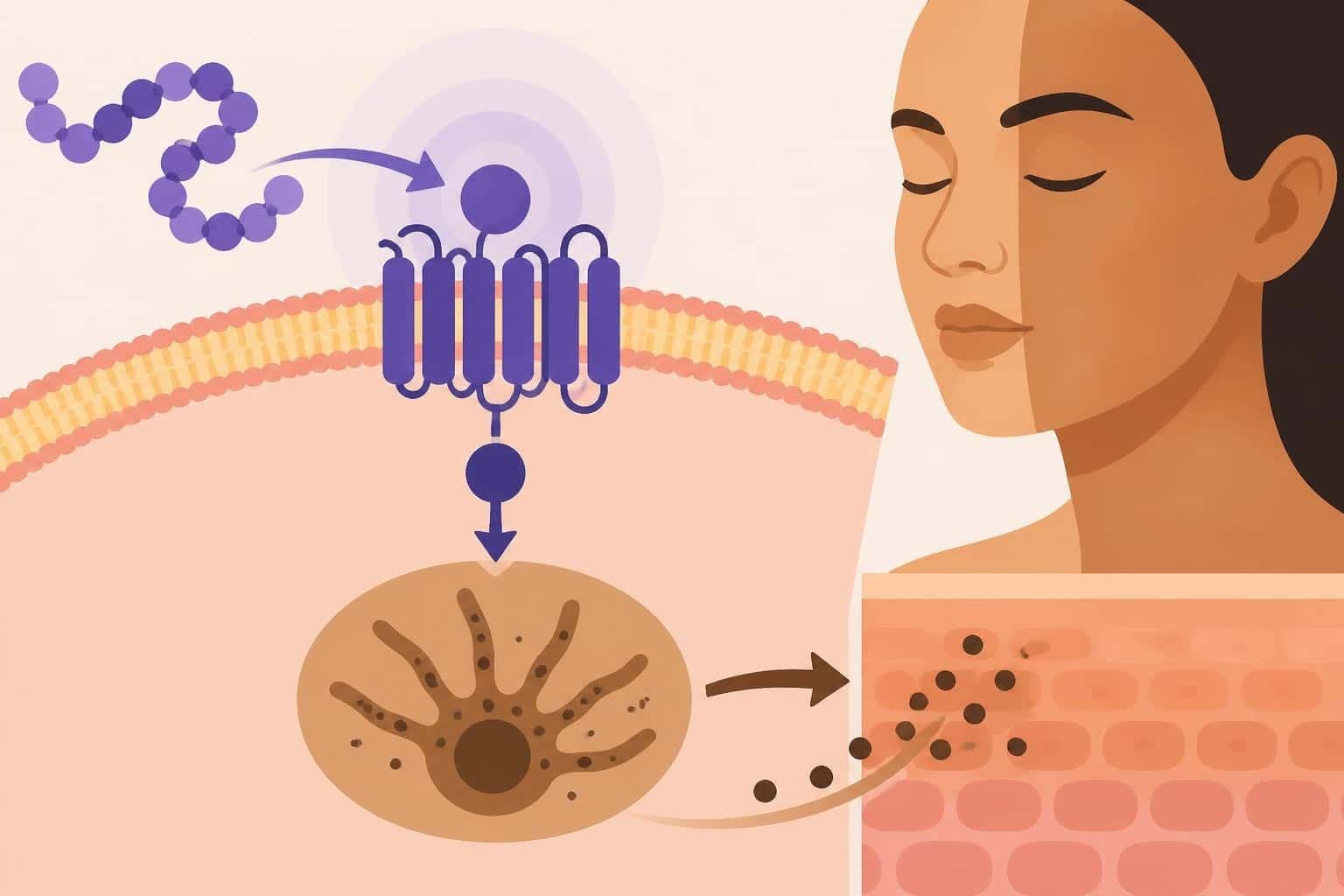
Melanotan 1, also known as afamelanotide, is a synthetic tridecapeptide that mimics the natural hormone alpha-melanocyte-stimulating hormone. The peptide works by binding to melanocortin-1 receptors (MC1R) located on melanocytes in the skin, triggering a cascade of cellular events that result in increased melanin production.
The molecular structure of melanotan 1 differs slightly from naturally occurring α-MSH, incorporating modifications that enhance its stability and duration of action. These structural changes allow the peptide to resist enzymatic degradation more effectively than the endogenous hormone, extending its therapeutic window and reducing the frequency of administration required for clinical effect.
When administered, melanotan 1 activates specific melanocortin receptor pathways that stimulate eumelanin synthesis. Eumelanin is the dark brown to black pigment that provides natural photoprotection against ultraviolet radiation damage. This mechanism offers a fundamentally different approach to skin protection compared to topical sunscreens, creating pigmentation from within the skin rather than applying an external barrier.
Receptor Selectivity and Physiological Effects
The selectivity of melanotan 1 for MC1R receptors distinguishes it from other melanocortin peptides. This specificity results in a more targeted effect on melanin production with fewer systemic side effects compared to broader-acting melanocortin agonists.
Key receptor interactions include:
- MC1R activation: Primary pathway for melanogenesis and skin darkening
- Minimal MC3R/MC4R binding: Reduced appetite suppression effects
- Reduced cardiovascular impact: Lower blood pressure changes than non-selective analogs
- Targeted dermal effects: Concentrated action on skin pigmentation systems
Research demonstrates that the peptide's receptor selectivity profile creates a safer therapeutic window for clinical applications, particularly when compared to earlier melanocortin analogs that exhibited broader receptor binding patterns.

FDA-Approved Applications and Clinical Uses
Melanotan 1 holds FDA approval under the brand name Scenesse for treating erythropoietic protoporphyria (EPP), a rare genetic disorder that causes severe photosensitivity. Patients with EPP experience painful reactions to sunlight due to the accumulation of protoporphyrin IX in their blood and tissues, making even brief sun exposure debilitating.
The peptide's ability to increase melanin production provides these patients with enhanced photoprotection, allowing them to tolerate light exposure that would otherwise be impossible. Clinical trials demonstrated that patients receiving melanotan 1 implants experienced significantly increased sun tolerance and improved quality of life compared to placebo groups.
| Clinical Parameter | Before Treatment | After Treatment | Improvement |
|---|---|---|---|
| Sun tolerance time | 15-30 minutes | 60-120 minutes | 200-300% |
| Pain episodes/month | 12-18 events | 3-6 events | 60-75% reduction |
| Quality of life score | 35/100 | 72/100 | 105% increase |
| Outdoor activities | Severely limited | Moderately enabled | Significant gain |
Beyond EPP treatment, researchers have investigated melanotan 1 for other photosensitivity conditions including polymorphic light eruption, solar urticaria, and actinic prurigo. While these applications remain largely investigational, early data suggests potential therapeutic value for patients who suffer from abnormal reactions to sunlight.
Dosing Protocols and Administration Methods
Understanding proper dosing is critical for anyone considering melanotan 1 use. The peptide’s half-life and administration protocols have been well-established through clinical research, providing clear guidance for therapeutic applications.
For FDA-approved medical use in EPP, melanotan 1 is administered as a subcutaneous implant that releases the peptide slowly over an extended period. Each implant contains 16 mg of afamelanotide and is designed to provide therapeutic levels for approximately 60 days. Patients typically receive implants before and during seasons with increased sun exposure.
Research Dosing Considerations
In research settings, injectable forms of melanotan 1 have been studied using different protocols:
- Loading phase: 0.16 mg daily for 5-7 days to establish baseline pigmentation
- Maintenance phase: 0.16 mg every other day or twice weekly to sustain effect
- Duration: Cycles typically run 4-12 weeks depending on research objectives
- Administration route: Subcutaneous injection, typically in abdominal region
- Timing: Often administered in evening to minimize nausea side effects
The peptide demonstrates accumulative effects, with melanin production increasing progressively over the first 2-3 weeks of consistent administration. This gradual pigmentation pattern more closely mimics natural sun tanning compared to artificial tanning methods.
Functional medicine practitioners, such as those at Rooted Functional Medicine & Longevity Lab, emphasize the importance of comprehensive metabolic assessment before initiating any peptide protocol. Individual response patterns can vary based on genetic factors, existing melanocyte function, and baseline skin phototype.

Comparing Melanotan 1 to Other Melanocortin Peptides
The melanocortin peptide family includes several analogs, each with distinct receptor binding profiles and clinical characteristics. Melanotan 1 differs significantly from melanotan II, the most commonly confused variant, in both structure and effects.
Key distinctions between melanocortin peptides:
- Melanotan 1 maintains higher MC1R selectivity with minimal sexual side effects
- Melanotan II exhibits broader receptor binding including MC3R and MC4R
- Melanotan II demonstrates stronger appetite suppression properties
- Melanotan 1 shows superior safety profile in long-term clinical studies
- Only melanotan 1 has achieved FDA approval for medical applications
The structural differences between these peptides result in markedly different pharmacological profiles. Melanotan 1's longer chain length and specific amino acid sequence create a molecule that binds more selectively to skin melanocortin receptors, reducing unwanted systemic effects that have been observed with shorter, more lipophilic analogs.
Understanding these differences is crucial for anyone exploring research on melanocortin peptide mechanisms and their various applications in dermatological and metabolic contexts.
Benefits Beyond Skin Pigmentation
While melanotan 1 is primarily recognized for its melanogenic properties, research has explored additional potential benefits related to its melanocortin receptor activity. These secondary effects, though less established than its photoprotective properties, represent areas of ongoing scientific interest.
Melanocortin signaling plays roles in multiple physiological systems beyond pigmentation. The MC1R activation that drives melanin synthesis also influences inflammatory pathways, immune responses, and cellular repair mechanisms within skin tissue. Some studies suggest that melanocortin peptides may modulate inflammatory responses in skin, potentially offering benefits for certain inflammatory dermatological conditions.
Photoprotection and DNA Preservation
The increased melanin production induced by melanotan 1 provides measurable photoprotection against ultraviolet radiation. Melanin absorbs UV photons and dissipates the energy as heat, preventing DNA damage that can lead to skin cancer and premature aging.
| Photoprotective Measure | Untreated Skin | Melanotan 1 Treated | Protection Factor |
|---|---|---|---|
| UV absorption capacity | Baseline | 2.5-4x increase | 150-300% |
| DNA damage markers | 100% | 35-45% | 55-65% reduction |
| Sunburn threshold | 1x MED | 2-3x MED | 100-200% increase |
| Melanin density | Normal | Significantly elevated | 200-400% increase |
Research indicates that the pigmentation induced by melanotan 1 provides approximately SPF 3-4 equivalent protection when measured by minimal erythema dose (MED) testing. While this doesn't replace the need for topical sunscreen in high-exposure scenarios, it represents a meaningful baseline defense against daily incidental UV exposure.
Safety Profile and Side Effect Considerations
The safety profile of melanotan 1 has been extensively studied through clinical trials for EPP treatment and broader research applications. Understanding the risks and regulatory status helps users make informed decisions about peptide use.
Common side effects observed during melanotan 1 administration include nausea, flushing, and mild appetite suppression. These effects are typically transient and tend to decrease with continued use as the body adapts to the peptide. Most users report these symptoms are most pronounced during the first few administrations.
Documented side effects by frequency:
- Nausea (30-40% of users, typically mild to moderate)
- Facial flushing (20-30%, usually within first hour post-injection)
- Darkening of existing moles and freckles (common, expected effect)
- Injection site reactions (10-15%, minor redness or irritation)
- Headache (5-10%, generally mild)
More serious adverse events are rare but have been documented in clinical literature. These include potential effects on existing skin lesions, making dermatological monitoring important for individuals with extensive nevus patterns or history of atypical moles.
Contraindications and Precautions
Certain populations should avoid melanotan 1 use or proceed only under medical supervision. Individuals with personal or family history of melanoma should exercise extreme caution, as theoretical concerns exist about melanocortin signaling in existing melanoma cells, though clinical data remains limited.
Pregnancy and lactation represent clear contraindications, as insufficient safety data exists for these populations. Similarly, individuals under 18 should avoid use due to lack of pediatric safety studies and concerns about hormonal development.
Those seeking peptide solutions for other health objectives might explore alternatives better suited to their goals. For instance, individuals focused on metabolic optimization might consider options from Soma Peptide’s weight loss category, which offers peptides specifically designed for metabolic enhancement rather than pigmentation.
Quality Standards and Source Verification
The peptide industry faces significant challenges with product quality and purity variability. For melanotan 1 specifically, distinguishing pharmaceutical-grade material from research-grade or counterfeit products is essential for both safety and efficacy.
Authentic melanotan 1 should meet specific purity standards, typically exceeding 98% as verified by high-performance liquid chromatography (HPLC). The peptide should be supplied as a lyophilized powder requiring reconstitution with bacteriostatic water, and should include documentation such as certificates of analysis (COA) verifying composition and purity.
Quality verification indicators:
- Third-party testing: Independent laboratory analysis confirming identity and purity
- Proper storage conditions: Lyophilized form stored at -20°C or lower
- Documentation: COA with specific batch information and HPLC results
- Sterility testing: Verification of bacterial and endotoxin levels
- Reconstitution stability: Clear solution formation without precipitation
The importance of quality standards extends beyond mere efficacy to fundamental safety. Contaminated or improperly synthesized peptides can contain harmful byproducts, bacterial endotoxins, or incorrect amino acid sequences that may trigger unexpected immune responses or lack therapeutic effect entirely.
Organizations committed to quality, such as Soma Peptide, implement rigorous purification methods and quality control protocols to ensure each batch meets stringent purity standards. These processes include multiple purification steps, extensive analytical testing, and strict adherence to good manufacturing practices.

Reconstitution and Storage Best Practices
Proper handling of melanotan 1 significantly impacts both its efficacy and safety. The peptide arrives as a lyophilized powder that must be reconstituted with sterile bacteriostatic water before administration. Understanding correct reconstitution procedures ensures the peptide remains viable and reduces contamination risk.
To reconstitute melanotan 1, inject bacteriostatic water slowly down the inside wall of the vial containing the lyophilized powder. Avoid injecting directly onto the powder, as this can damage the peptide structure. Gently swirl the vial rather than shaking it vigorously, as excessive agitation can denature the peptide and reduce its effectiveness.
Storage Guidelines for Maximum Stability
Lyophilized (unreconstituted) storage:
- Temperature: -20°C (-4°F) or colder
- Duration: Up to 24 months when properly stored
- Light exposure: Protect from direct light
- Container: Original sealed vial
Reconstituted solution storage:
- Temperature: 2-8°C (refrigerated)
- Duration: Up to 30 days with bacteriostatic water
- Sterility: Use clean technique for all withdrawals
- Container: Keep in original vial with rubber stopper
Temperature fluctuations represent one of the primary causes of peptide degradation. Reconstituted melanotan 1 should never be frozen, as ice crystal formation can irreversibly damage the peptide structure. Similarly, exposure to room temperature should be minimized to brief periods during dose preparation.
Combining Melanotan 1 With Other Protocols
Integration of melanotan 1 into broader health optimization strategies requires thoughtful consideration of complementary approaches and potential interactions. While the peptide functions through distinct melanocortin pathways, understanding how it fits within comprehensive wellness protocols maximizes results while maintaining safety.
Topical antioxidant application represents a synergistic approach to skin health when using melanotan 1. Vitamin C serums, vitamin E, and other antioxidants can complement the photoprotective effects of increased melanin by neutralizing free radicals generated by UV exposure. This combination addresses both prevention of UV damage and mitigation of oxidative stress.
Oral supplementation with compounds supporting melanin synthesis may enhance results. These include L-tyrosine (the amino acid precursor to melanin), copper (a cofactor in melanin production), and antioxidants like astaxanthin that support skin health. However, evidence for these combinations remains largely theoretical rather than clinically proven.
Complementary skin health strategies:
- Retinoid therapy: Evening application for collagen synthesis and cell turnover
- Hyaluronic acid: Hydration support for optimal skin barrier function
- Niacinamide: Anti-inflammatory and barrier-strengthening properties
- Mineral sunscreen: Additional physical UV protection for high-exposure activities
- Collagen peptides: Oral supplementation for structural skin support
For individuals exploring peptides for skin rejuvenation and tissue repair, GHK-Cu offers complementary benefits through different mechanisms. This copper-binding peptide supports collagen production and tissue remodeling, potentially working synergistically with melanotan 1's photoprotective effects to support comprehensive skin health.
Research Applications and Future Directions
The scientific exploration of melanotan 1 continues to expand beyond its approved indication for EPP. Current research on tanning and additional applications investigates potential uses in various photodermatoses and conditions involving abnormal skin responses to light.
Polymorphic light eruption (PLE), affecting approximately 10-15% of the population in temperate climates, represents one area of active investigation. This condition causes itchy rashes upon sun exposure, typically in spring when UV levels increase. Early studies suggest melanotan 1 may reduce PLE episodes by providing enhanced photoprotection before symptomatic UV exposure occurs.
Solar urticaria, a rare condition causing hives within minutes of sun exposure, has also been studied as a potential application. The rapid melanin-independent photoprotective effects of melanocortin signaling may offer relief for these patients, though research remains preliminary.
Emerging Research Areas
Investigators are exploring melanocortin pathways in contexts beyond dermatology. The anti-inflammatory properties of MC1R activation have prompted studies in inflammatory skin conditions, wound healing enhancement, and even neuroprotection. While these applications remain experimental, they highlight the broader potential of melanocortin biology.
Research into optimal dosing strategies continues to evolve. Studies examining pulsed versus continuous administration, loading dose variations, and individual response prediction based on genetic markers may eventually allow more personalized protocols tailored to specific patient characteristics and objectives.
Legal Status and Regulatory Landscape
Understanding the regulatory status of melanotan 1 is essential for compliant and safe use. The legal framework as of 2026 distinguishes between FDA-approved pharmaceutical formulations and research-grade materials available through various channels.
Melanotan 1 under the brand name Scenesse holds FDA approval specifically for EPP treatment, administered only through qualified healthcare providers as a subcutaneous implant. This pharmaceutical formulation undergoes strict quality control and is dispensed through regulated medical channels.
Research-grade melanotan 1 exists in a different regulatory category. These materials are intended for laboratory research purposes and are not approved for human consumption. The legal acquisition and use of research peptides varies by jurisdiction and should be thoroughly understood before purchase or use.
Regulatory distinctions to understand:
- FDA-approved pharmaceutical formulations require prescription and medical supervision
- Research-grade peptides are sold for laboratory use only
- International regulations vary significantly by country
- Importing peptides across borders may violate customs regulations
- Unauthorized human use of research materials carries legal and health risks
Consumers should exercise caution with online vendors offering melanotan 1 for cosmetic tanning purposes, as these products may not meet pharmaceutical standards and could contain impurities, incorrect concentrations, or even entirely different substances. The lack of regulatory oversight in the research peptide market creates substantial quality and safety variability.
Individual Response Variability and Expectations
Response to melanotan 1 varies considerably based on individual factors including baseline skin type, genetic variations in MC1R function, and existing melanocyte density. Understanding realistic expectations based on personal characteristics helps users evaluate whether the peptide aligns with their goals.
Individuals with Fitzpatrick skin types I and II (very fair to fair skin) typically experience more dramatic visible changes, as their baseline melanin production is lower. These individuals may see significant darkening over 4-6 weeks of consistent use. However, they also face higher risks of uneven pigmentation and should approach dosing more conservatively.
Those with darker baseline skin types (IV-VI) may notice less dramatic visible changes, as their melanocytes already produce substantial melanin. For these individuals, the benefits may be more evident in enhanced photoprotection and reduced sunburn risk rather than obvious color change.
| Skin Type | Baseline Response | Typical Timeline | Expected Change |
|---|---|---|---|
| Type I | High sensitivity | 2-3 weeks visible | 3-4 shades darker |
| Type II | Good response | 2-4 weeks visible | 2-3 shades darker |
| Type III | Moderate response | 3-5 weeks visible | 1-2 shades darker |
| Type IV | Subtle response | 4-6 weeks visible | Minimal visible change |
Genetic variations in the MC1R gene significantly influence individual response patterns. Individuals with certain MC1R variants associated with red hair and extreme photosensitivity may respond differently than those with more common MC1R genotypes. These genetic factors partially explain why response to identical dosing protocols can vary substantially between users.
Monitoring and Long-Term Considerations
Responsible use of melanotan 1 includes appropriate monitoring for both desired effects and potential adverse outcomes. Regular dermatological assessment becomes particularly important for individuals with extensive mole patterns or family history of skin malignancies.
Photographic documentation of skin changes provides objective tracking of pigmentation progression and helps identify concerning developments such as rapid changes in existing moles. Images should be taken in consistent lighting conditions at regular intervals throughout the protocol.
Recommended monitoring parameters:
- Monthly full-body skin examination for mole changes
- Documentation of new or changing lesions
- Tracking of side effect patterns and severity
- Assessment of sun tolerance and burn frequency
- Evaluation of overall treatment goals and satisfaction
Long-term use considerations include the sustainability of repeated cycles and the potential for diminishing returns. Some users report that maintenance becomes easier after initial pigmentation is established, requiring lower or less frequent dosing to sustain results. Others find that response diminishes over time, possibly due to receptor downregulation or other adaptive mechanisms.
The decision to continue, modify, or discontinue melanotan 1 should be based on ongoing assessment of benefits versus risks, achievement of photoprotective goals, and absence of concerning dermatological changes. Regular consultation with healthcare providers familiar with peptide therapeutics ensures informed decision-making throughout the treatment course.
Melanotan 1 represents a scientifically validated approach to enhanced photoprotection through increased melanin production, with established clinical applications and a growing body of research supporting its mechanism and effects. Whether exploring peptides for specific therapeutic needs or broader wellness optimization, working with quality sources and proper protocols remains paramount. Soma Peptide provides premium-quality peptides backed by rigorous testing and purity standards, ensuring you receive products that meet the highest industry benchmarks for safety and efficacy.