


Fragment 176-191 reliably triggers fat breakdown in isolated fat cells and rodent models, but no controlled human trial has confirmed the same effect in people. Its close cousin, AOD-9604, went through six clinical trials and still failed to beat placebo on weight loss. If you’re weighing fragment 176-191 benefits against that reality, the honest takeaway is: talk to a clinician before relying on it, and treat diet, exercise, and approved therapies as your first line, not your backup plan.
TL;DR:
- Human trials of the engineered AOD-9604 analog, derived from fragment 176-191, failed to demonstrate significant weight loss compared to placebo in large studies.
- The unmodified fragment 176-191 has never completed a large, controlled human efficacy trial despite promising animal and cell study results.
- The short half-life of the raw fragment requires frequent dosing, and no approved or well-supported dosing protocol exists for humans.
- Safety data from AOD-9604 trials show it is well tolerated with no more adverse effects than placebo, but long-term safety for the unmodified peptide remains unknown.
- Sourcing quality peptides requires verified certificates of analysis; most marketing claims relate to analogs tested in limited human trials with no regulatory approval for weight loss.
Table of Contents
- What is fragment 176-191, and how does AOD-9604 fit in?
- What do cell and animal studies show about fat breakdown?
- What happened when researchers tested this in humans?
- How does fragment 176-191 work at the biological level?
- Is fragment 176-191 safe, and what side effects have shown up?
- What do dosing and half-life practicalities look like?
- What resources help you evaluate sourcing and purity?
- How does fragment 176-191 compare to other fat-loss peptides?
- Why has human research on this fragment stayed so limited?
- Who should actually consider this peptide, and what’s the safer path first?
- Where to find high-purity research peptides and educational guides
- Sources
- FAQ
What is fragment 176-191, and how does AOD-9604 fit in?
Fragment 176-191 is a synthetic peptide built from the last 16 amino acids of human growth hormone, the section researchers call the C-terminal lipolytic domain. It was isolated because that specific stretch of the hGH molecule appeared to trigger fat breakdown without the growth-promoting effects tied to full-length growth hormone.
The discovery traces back to structure-function mapping work in the early 1990s, when researchers including Wu and Ng identified this fragment as the minimal segment needed to stimulate lipolysis in isolated fat cells and reduce weight gain in obese mice, according to a summary of that foundational research from PeptideInsight. That single finding launched two decades of follow-up work, most of it never reaching human trials with the unmodified peptide itself.
AOD-9604 enters the picture as an engineered, more stable version of the same fragment, built specifically to survive longer in the body and to be tested in real clinical programs. A few points worth separating clearly:
- Fragment 176-191 (the unmodified peptide) has never completed a large controlled human efficacy trial.
- AOD-9604 has, and its trial results are the closest thing to human data this molecule family has.
- Neither version carries regulatory approval as a weight-loss therapeutic anywhere.
- Both remain classified as research compounds, not consumer health products.
That distinction matters for anyone reading marketing claims about “frag 176-191 results,” because most of the human safety and efficacy data circulating online actually comes from AOD-9604 trials, not the raw fragment.
What do cell and animal studies show about fat breakdown?
The preclinical case for fragment 176-191 fat loss is genuinely strong, and it’s the reason researchers kept pursuing this molecule for so long. In isolated adipocytes (fat cells grown outside the body), the fragment consistently does two things at once: it switches on fat-burning machinery and shuts down fat-storage machinery.
Here’s how that plays out mechanically:
- Hormone-sensitive lipase (HSL) activation. The fragment stimulates HSL, the enzyme that breaks stored triglycerides down into free fatty acids for the body to burn.
- Acetyl-CoA carboxylase (ACC) inhibition. At the same time, it blocks ACC, an enzyme fat cells need to build new fat. Less ACC activity means less new fat gets laid down even while lipolysis is running.
- Fat oxidation increase. The combined effect in animal models is a measurable rise in how much fat tissue gets used for fuel rather than stored.
Pro Tip: When you see a peptide described as having a “dual mechanism,” check whether that means it does two complementary things (like this fragment) or two unrelated things bundled together. This distinction affects how predictable the biological effect might be.
Rodent studies back this up with numbers that look impressive on paper. Obese mice and Zucker rats given the fragment showed reduced adipose tissue mass, slower weight gain, and higher fat oxidation compared to untreated controls, with some models reporting weight-gain reductions exceeding 50% versus control animals, based on findings summarized by PeptideInsight. That’s a real, reproducible signal in animal biology.
The catch is translational. Rodents and humans don’t share identical fat metabolism pathways, and the fragment’s chronic effects in mice depend heavily on beta-3 adrenergic receptor signalling, a receptor that varies significantly across species and even across individual humans. A mechanism that works cleanly in a lab mouse doesn’t automatically survive the jump to a 180-pound adult with a completely different receptor density profile.
What happened when researchers tested this in humans?
Here’s the part most marketing pages skip past quickly: the human data belongs almost entirely to AOD-9604, not to fragment 176-191 itself, and the AOD-9604 program ultimately failed its primary goal.
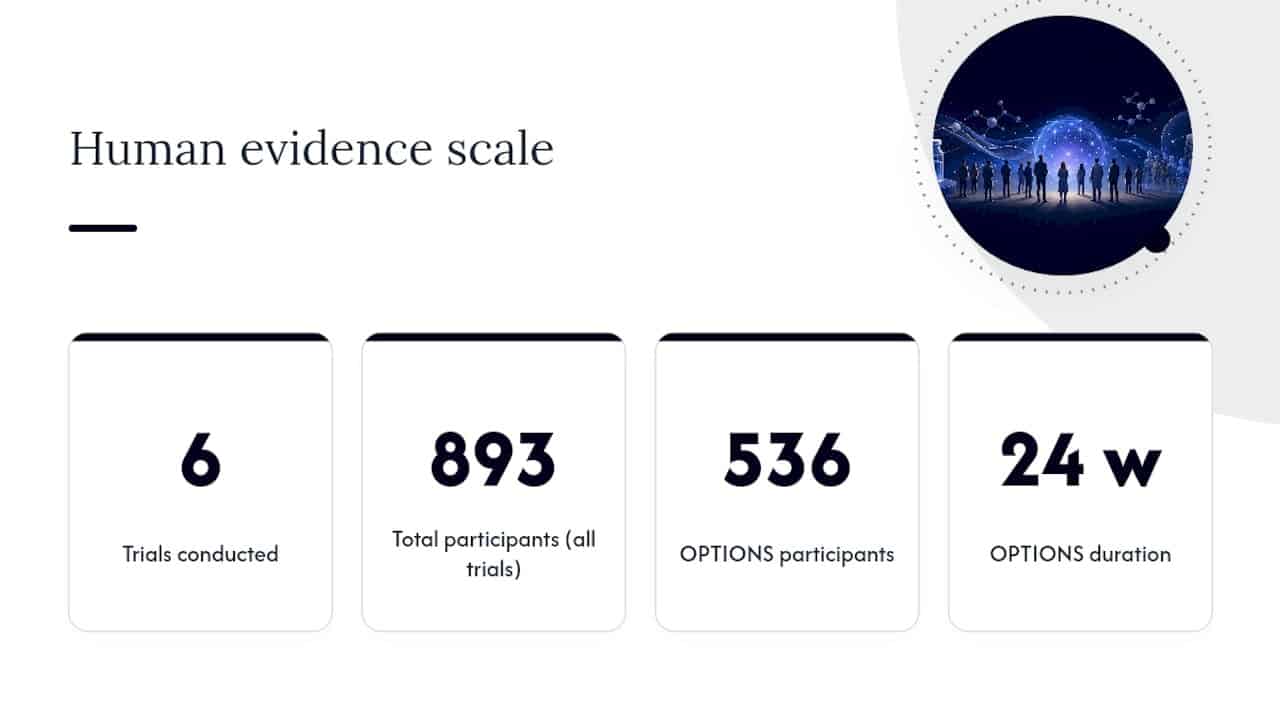
The AOD-9604 clinical program ran six randomized trials involving roughly 893 participants combined, according to an evidence review from PeptideStat. Across those trials, a few consistent patterns emerged:
- Safety looked good. Reported adverse events were similar to placebo across the aggregated trial data.
- Tolerability was high. Participants generally didn’t report the injection-site or systemic issues that derail other peptide programs.
- Efficacy fell short. The pivotal Phase IIb trial, known as OPTIONS, enrolled approximately 536 participants over 24 weeks and failed to show statistically significant weight loss compared to placebo.
- The developer discontinued the weight-loss program in 2007 following that result.
That’s not a minor footnote. A well-powered, multi-site trial of an engineered, more stable analog of this exact fragment came up empty on the one outcome it was designed to prove. The unmodified fragment 176-191 has never been tested in anything close to that scale in humans. So when someone asks whether “frag 176-191 results” hold up in real people, the honest answer is that the best-tested version of this molecule family already tried and didn’t clear the bar.
How does fragment 176-191 work at the biological level?
The mechanism explains why the fragment looked so promising in the first place, and also why it doesn’t behave like full growth hormone. Two enzyme systems do most of the work.
Hormone-sensitive lipase activation kicks off the breakdown of stored fat into usable fatty acids, while acetyl-CoA carboxylase inhibition slows the construction of new fat molecules. Running both processes simultaneously is what researchers sometimes call a “double hit”: you’re draining the tank and closing the refill valve at the same time. That combination is a big part of why the isolated-cell and rodent data looked so consistent.
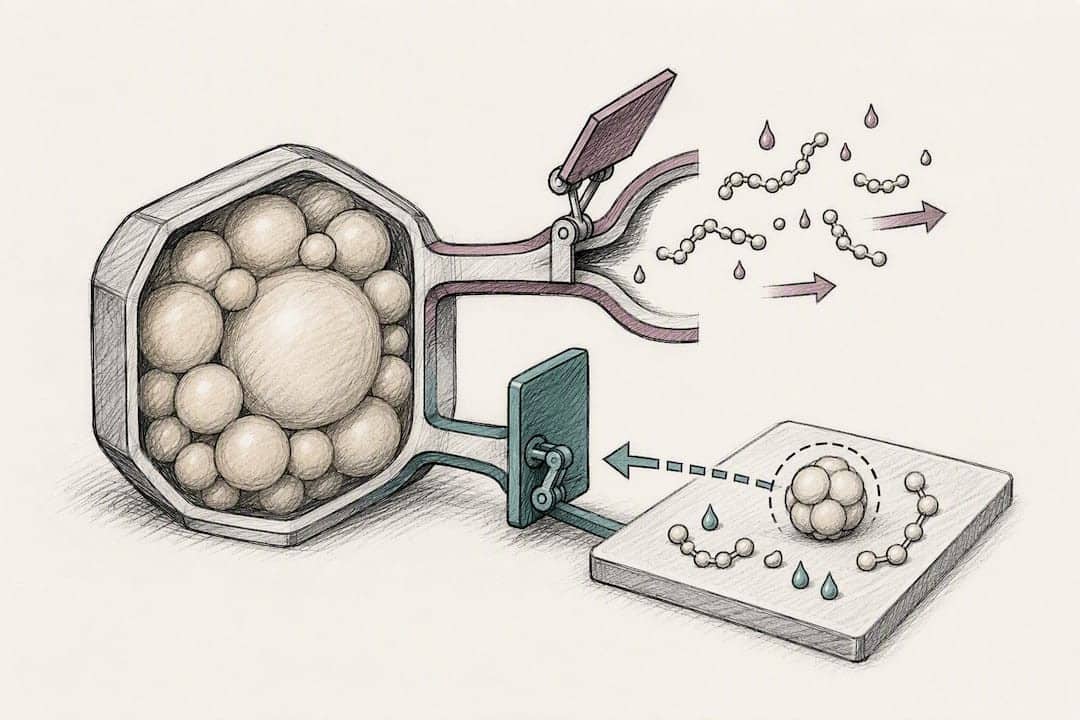
Beta-3 adrenergic receptor signalling turns out to be essential for the chronic version of this effect. Studies in beta-3 AR knockout mice found that the long-term weight-reduction response disappeared entirely when that receptor was removed, even though short-term energy expenditure effects persisted without it, per mechanistic research summarized by PeptideSciences101. That’s a meaningful caveat: humans express beta-3 AR at different densities depending on genetics and body composition, which means the fragment’s real-world effect could vary widely from person to person even if the biology holds up.
The reason fragment 176-191 avoids growth-hormone side effects comes down to structure. Full-length hGH binds the growth hormone receptor through two separate binding sites; the fragment retains neither, so it can’t trigger the growth-promoting or IGF-1-raising cascade that comes with GH receptor activation. That’s the theoretical basis for treating it as a “fat-loss-only” fragment of hGH, and it’s the same structural logic that keeps HGH peptide therapy discussions careful to distinguish fragments from full-sequence growth hormone.
Is fragment 176-191 safe, and what side effects have shown up?
The safety data splits cleanly into two buckets: what’s reassuring, and what’s simply unknown.
On the reassuring side, animal studies consistently report no growth-promoting effects and no signs of insulin resistance from the fragment, with supportive euglycemic clamp data suggesting normal glucose handling in treated animals. In humans, the AOD-9604 trials found the analog’s safety profile “indistinguishable from placebo” across markers including IGF-1, glucose, insulin, HbA1c, liver function, and kidney function, according to PeptideInsight’s review of that trial data.
That’s a genuinely good safety signal for the tested analog. But several gaps remain worth flagging:
- No long-term human data exists for the unmodified fragment itself, only for AOD-9604.
- Research-grade peptides sold outside pharmaceutical supply chains carry real purity and contamination risk.
- Injection-site technique and product handling introduce their own risks separate from the peptide’s biology.
- The World Anti-Doping Agency prohibits many growth-hormone-related peptides, including this one, for competing athletes, per PeptideInsight’s regulatory summary.
Pro Tip: If you’re evaluating any research peptide for personal use, ask for a batch-specific certificate of analysis, not a generic product page claim. Purity numbers mean little without lab documentation tied to the exact lot you’re holding.
What do dosing and half-life practicalities look like?
Pharmacokinetics is where fragment 176-191’s practical limitations show up most clearly. The unmodified fragment has a short half-life, reported at roughly 30 to 60 minutes, according to pharmacokinetic data compiled by Peptide Reference. AOD-9604 was engineered specifically to be more stable than that, which is a big part of why it, not the raw fragment, became the trial candidate.
That short window forces frequent dosing in research protocols, typically once or twice daily by subcutaneous injection, in ranges around 250 to 500 mcg per dose, often cycled over 8 to 12 weeks, per the same Peptide Reference summary. No validated therapeutic dose exists for humans; these figures come from research protocols, not clinical guidelines.
In translational peptide research generally, engineered analogs with better stability tend to get prioritized for human testing precisely because a molecule that clears the bloodstream in under an hour creates real bioavailability problems. Rodent-level effects measured with continuous infusion pumps don’t automatically translate to a person doing two subcutaneous injections a day. That gap between lab protocol and real-world dosing is one of the most underappreciated reasons preclinical promise hasn’t converted into confirmed human results.
What resources help you evaluate sourcing and purity?
If you’re researching this peptide category regardless of the evidence gaps, sourcing quality becomes the variable you can actually control.
A few resources worth checking if you’re comparing options in this space:
- The HGH Frag guide covers fragment 176-191 specifically, including sourcing and product details.
- The peptides growth hormone overview places this fragment within the broader GH-peptide category for comparison.
- The HGH peptides guide walks through general safety and sourcing considerations across the category.
Independent verification of any certificate of analysis, rather than taking a product description at face value, remains the single most useful habit for anyone buying research peptides. Ask directly for the batch-specific document, not a stock image of a lab report.
How does fragment 176-191 compare to other fat-loss peptides?
Fragment 176-191 occupies a specific niche: it’s mechanistically targeted at fat cells rather than at appetite or blood sugar, which separates it from the peptide categories getting the most attention right now. GLP-1 and dual-agonist compounds like tirzepatide work primarily by suppressing appetite and slowing gastric emptying, and that category has the deepest, most consistent human trial evidence of any weight-loss peptide class available today.
Growth-hormone-releasing compounds such as CJC-1295 take a different route again, stimulating the body’s own GH pulses rather than acting directly on fat cells, which brings a broader set of downstream effects (and a broader set of monitoring considerations) than a fragment designed to skip GH receptor activation entirely.
Set side by side, the honest comparison looks like this: fragment 176-191 has the cleanest theoretical mechanism (fat cells only, no GH receptor involvement) but the thinnest human trial record. GLP-1-class compounds have the deepest human evidence but work through an entirely different pathway (appetite and glucose regulation, not direct lipolysis). Growth-hormone secretagogues sit in between, with more human use history than the fragment but a broader physiological footprint. None of that makes fragment 176-191 a poor research candidate, it makes it a molecule whose biology outpaced its human validation, which is a very different problem than a molecule that simply doesn’t work.
Why has human research on this fragment stayed so limited?
Three structural problems explain the gap between fragment 176-191’s lab results and its human evidence, and none of them are minor.
First, the molecule itself was rarely the one put into human trials. Researchers moved to AOD-9604 specifically because the unmodified fragment’s short half-life made it a poor clinical candidate, so most of the “human data” people cite for fragment 176-191 is actually data about a different, modified molecule.
Second, even the AOD-9604 trials that did happen had a defined ceiling. Six trials and roughly 893 total participants is a reasonable safety dataset, but the pivotal efficacy trial, OPTIONS, ran 24 weeks with about 536 people; that’s enough to detect a strong effect, not necessarily a modest one, and it’s a single failed trial rather than a pattern across multiple efficacy studies.
Third, no independent trials have re-tested the unmodified fragment using modern dosing technology, continuous delivery, or updated endpoints since interest in AOD-9604 faded. That leaves a genuine open question rather than a closed case: absence of proof isn’t proof of absence, but it’s also not something readers should mistake for quiet confirmation.
Who should actually consider this peptide, and what’s the safer path first?
The honest editorial position here is straightforward: the biology is real, the human proof isn’t, and that gap should shape your decisions more than any product description does. Fragment 176-191 deserves its reputation as an interesting research molecule, not as a validated fat-loss solution.
If you’re still exploring this space, don’t skip a conversation with a clinician who understands peptide research, and prioritize sourcing with verified certificates of analysis over price. Harm reduction matters more than optimization when the human efficacy data simply isn’t there yet.
Put proven levers first: structured diet changes, resistance and cardio training, sleep, and, where appropriate, approved pharmacotherapies with actual trial backing. Research peptides belong in that conversation as a secondary interest, not a shortcut.
— Soma Peptide
Where to find high-purity research peptides and educational guides
There are other places to buy research peptides online, but purity documentation is usually the first thing that separates a serious supplier from a storefront. Soma Peptide’s catalogue lists weight-loss, muscle-growth, recovery, and other peptide categories, each backed by the company’s claim of exceeding 99% purity with third-party certificates of analysis available for verification.
If fat loss and body composition are your focus, the best peptides for weight loss guide walks through the wider category so you can weigh fragment 176-191 against better-validated options like GLP-1 compounds before deciding anything. Whatever you’re considering, request the batch-specific certificate of analysis, read the relevant product page in full, and reach out to Soma Peptide’s support team with any sourcing questions before you check out.
Sources
For readers who want to verify these claims directly rather than take any single summary at face value:
- HGH Fragment 176-191: Research Evidence & Safety Profile | PeptideInsight
- HGH Fragment 176-191 Peptide: Evidence and Limits | PeptideStat
- HGH Fragment 176-191 — Dosage, Half-Life & Research | Peptide Reference
This article is general information, not a substitute for advice from a qualified doctor. Consult a qualified healthcare professional about your own circumstances before acting on anything here.
FAQ
What is fragment 176-191 used for?
Fragment 176-191 is a research peptide studied for its ability to stimulate fat breakdown and reduce fat storage in isolated cells and animal models. It is not approved as a therapeutic product and is used almost exclusively in laboratory and personal research settings rather than clinical medicine.
Can HGH fragment 176-191 help with weight loss?
Its engineered analog, AOD-9604, was tested in a 24-week Phase IIb trial with about 536 participants and failed to show statistically significant weight loss versus placebo.
What are the potential side effects of taking HGH fragment 176-191?
Human trial data on this specific fragment doesn’t exist, but the closely related AOD-9604 showed a safety profile in six trials that was reported as indistinguishable from placebo across glucose, insulin, and IGF-1 markers. Unknowns for the unmodified fragment include long-term effects, product purity from unregulated sources, and injection-related risks.
What peptide is best for belly fat?
No single peptide has strong, consistent human trial evidence specifically for belly fat reduction, though GLP-1 class compounds have the deepest human weight-loss trial record of any peptide category available today. Fragment 176-191 has promising animal data for fat reduction generally, but lacks the human efficacy trials needed to make a specific belly-fat claim; readers can compare categories through Soma Peptide’s weight-loss peptide guide.