



CJC-1295 reliably raises growth hormone (GH) by roughly 2–10× baseline for up to six days after a single injection, and IGF-1 by approximately 1.5–3× for 9–11 days. Repeated dosing can sustain IGF-1 elevation for up to 28 days. Those are the biomarker facts, and they are well-documented in human pharmacology trials. The downstream benefits most people are interested in, including muscle gain, fat loss, faster recovery, and better skin, are biologically plausible given what GH and IGF-1 do, but direct clinical outcome trials for CJC-1295 specifically are limited in size and scope.
The honest summary: CJC-1295 changes the hormonal environment in a measurable, reproducible way. Whether that translates into the body composition or recovery outcomes you are hoping for depends heavily on your baseline endocrine state, your training and nutrition, and how you monitor the protocol.
Who is most likely to see measurable effects?
- People with clinically low baseline GH or IGF-1 levels
- Those enrolled in a structured, clinician-supervised programme with baseline labs and follow-up testing
- Individuals who have already optimized sleep, resistance training, and protein intake
CJC-1295 is not approved for general anti-aging or performance use. Consult a clinician before considering it.
Key takeaways
CJC-1295 produces well-documented GH and IGF-1 biomarker changes, but direct clinical outcome evidence for muscle gain, fat loss, or recovery remains limited, making clinician oversight and quality sourcing the two non-negotiable requirements.
| Point | Details |
|---|---|
| Biomarker effects are real | A single dose raises GH 2–10× for ~6 days and IGF-1 1.5–3× for 9–11 days in human trials. |
| Outcome evidence is limited | No controlled trials have measured body composition, recovery, or sleep with CJC-1295 specifically. |
| DAC vs. no-DAC matters | The DAC form’s 5.8–8.1 day half-life means weekly dosing but concentrated exposure and stricter monitoring needs. |
| Safety monitoring is required | Baseline and follow-up IGF-1, fasting glucose, and HbA1c are the minimum monitoring standard. |
| Soma Peptide | Supplies CJC-1295 with greater than 99% purity and independent COAs for clinician-supervised use. |
Table of Contents
- How CJC-1295 works on the growth hormone axis
- 1. CJC-1295 benefits for muscle growth and lean mass
- 2. Faster recovery between training sessions
- 3. Improved sleep quality
- 4. Body composition and fat loss
- 5. Skin quality and anti-aging effects
- 6. Bone density support
- 7. Potential cognitive and mood effects
- CJC-1295 with DAC vs. CJC-1295 no-DAC (Mod GRF 1-29)
- How CJC-1295 is commonly stacked with ipamorelin
- CJC-1295 dosage, administration, and expected timelines
- Side effects, safety concerns, and who should avoid CJC-1295
- Regulatory status and how to source CJC-1295 safely
- What the clinical studies actually show
- How to decide whether CJC-1295 is right for you
- Soma Peptide’s perspective on CJC-1295
- Considering CJC-1295 with clinician approval? Start with verified purity
- Sources
- FAQ
How CJC-1295 works on the growth hormone axis
CJC-1295 is a synthetic analogue of growth hormone-releasing hormone (GHRH), the peptide your hypothalamus naturally secretes to signal the pituitary to release GH. The native GHRH molecule is cleared from plasma within minutes. CJC-1295 solves that problem with a chemical modification called a Drug Affinity Complex (DAC).
The DAC mechanism
Albumin binding via the DAC is what separates CJC-1295 from every earlier GHRH analogue. After subcutaneous injection, the DAC moiety forms a covalent bond with circulating serum albumin, the most abundant protein in blood. Albumin has a half-life of roughly 19 days, so anything attached to it gets a dramatically extended plasma residence time. For CJC-1295 with DAC, the estimated half-life in humans is extended to several days, compared with minutes for native GHRH.
Key pharmacokinetic highlights from human studies:
- GH elevation: 2–10× above baseline, sustained for approximately six days after a single dose
- IGF-1 elevation: 1.5–3× above baseline, lasting 9–11 days after a single dose; cumulative elevation up to 28 days with repeated dosing
- Pulsatility preserved: CJC-1295 stimulates the pituitary to release GH in pulses rather than producing a flat, continuous elevation. This matters because pulsatile GH secretion is associated with more physiologically normal downstream signalling compared to exogenous GH administration, which suppresses the body’s own secretion entirely.
The no-DAC form (also called Modified GRF 1-29 or Mod GRF 1-29) lacks the albumin-binding chemistry. Its half-life is measured in minutes to a few hours, requiring more frequent dosing to maintain any sustained GH effect. More on that distinction in the next section.
1. CJC-1295 benefits for muscle growth and lean mass
The mechanism here runs through IGF-1. When GH rises, the liver produces more IGF-1, which binds receptors in skeletal muscle and signals protein synthesis and satellite cell activation. That is the pathway that makes CJC-1295 interesting for muscle growth and lean mass preservation.
The evidence is class-level rather than CJC-1295-specific. The human trials that exist measured GH and IGF-1 changes, not muscle cross-sectional area or strength. What the literature does show is that the magnitude of IGF-1 elevation produced by CJC-1295 is in a range that, in other GH-axis studies, correlates with lean mass changes over months. That is a plausible but indirect chain of evidence. Evidence level: moderate (biomarker mechanism strong; direct outcome data weak).
2. Faster recovery between training sessions
GH secretion peaks during slow-wave sleep and plays a documented role in tissue repair, collagen synthesis, and muscle protein turnover. CJC-1295 amplifies the GH pulse that already occurs nocturnally, which is the biological rationale for improved recovery that users and practitioners frequently report.
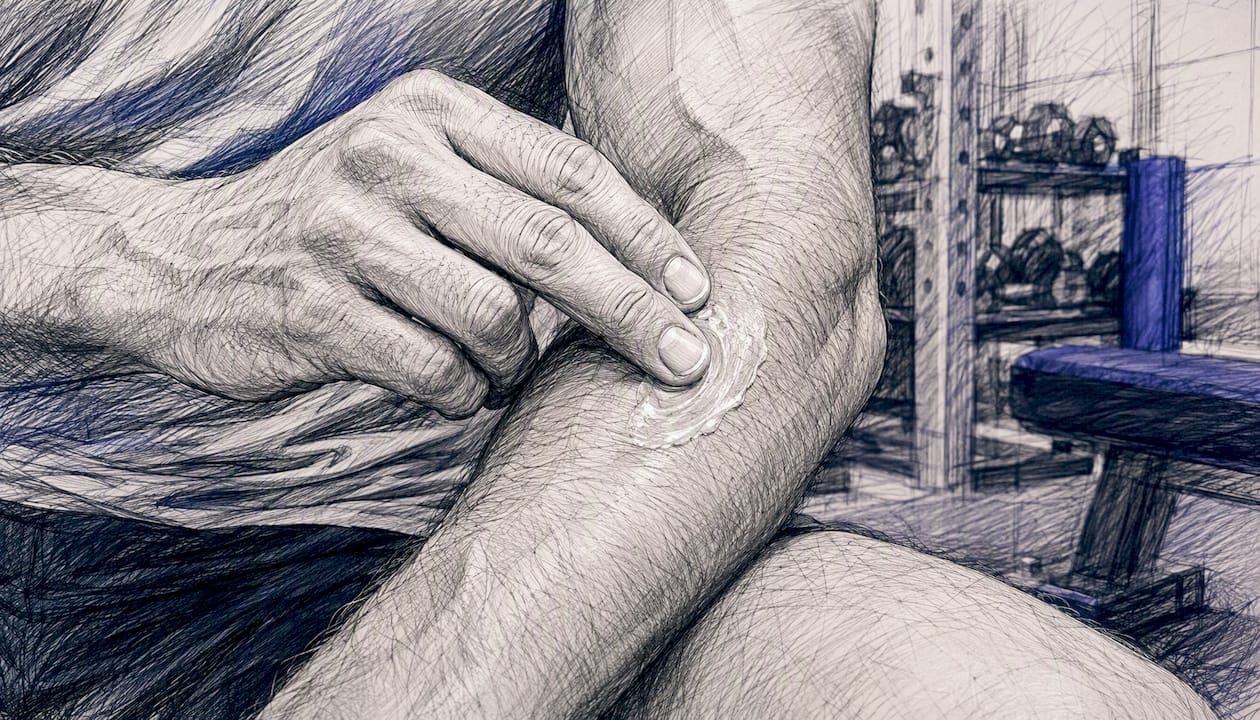
Objective data on recovery metrics, such as creatine kinase clearance rates or muscle damage markers, are not available from CJC-1295 trials. The trials were pharmacokinetic in design. User-reported improvements in soreness and training frequency are consistent with the mechanism but remain anecdotal. Evidence level: weak to moderate (strong biological rationale; no controlled outcome data).
3. Improved sleep quality
This one follows directly from the GH-sleep relationship. Slow-wave sleep is when the largest natural GH pulse occurs, and GH itself appears to reinforce sleep architecture. Amplifying that nocturnal pulse with a GHRH analogue could, in theory, deepen slow-wave sleep and improve subjective sleep quality.
Practitioners who use CJC-1295 in clinical settings often report that patients note better sleep within the first few weeks. There are no polysomnography studies of CJC-1295 specifically. The effect, if real, is likely most pronounced in people whose GH secretion has declined with age. Evidence level: weak (plausible mechanism; no objective sleep trial data).
4. Body composition and fat loss
GH has well-established lipolytic effects: it promotes fat mobilisation, particularly from visceral adipose tissue, partly by opposing insulin’s fat-storage signalling. Raising GH through a GHRH analogue should, in theory, shift the metabolic balance toward fat oxidation over time.
The distinction worth making is between a biomarker change and a measured fat-loss outcome. CJC-1295 trials did not measure body fat percentage or waist circumference. Studies of exogenous GH in GH-deficient adults do show body composition improvements, and CJC-1295 produces GH elevations in a comparable range. For people exploring fat loss peptides, that is a reasonable extrapolation, but it is an extrapolation. Evidence level: moderate for mechanism; weak for direct CJC-1295 fat-loss outcome data.
5. Skin quality and anti-aging effects
IGF-1 promotes fibroblast activity and collagen production. Declining GH and IGF-1 with age correlates with thinner skin, reduced elasticity, and slower wound healing. Restoring IGF-1 toward younger-adult ranges is the theoretical basis for anti-aging claims.
Long-term controlled trials examining skin thickness, elasticity, or wound healing with CJC-1295 do not exist. The cosmetic anti-aging narrative is extrapolated from GH-deficiency replacement studies and basic IGF-1 biology. It is biologically coherent but not proven in this specific context. Evidence level: weak (mechanistic rationale only).
Pro Tip: If anti-aging effects are your primary goal, the realistic expectation from CJC-1295 is a gradual, modest improvement in skin texture and recovery over three to six months, not a dramatic visible change. Clinicians typically track IGF-1 levels rather than cosmetic outcomes as the primary marker of response.
6. Bone density support
GH and IGF-1 both stimulate osteoblast activity and bone matrix formation. In GH-deficient adults, GH replacement therapy is associated with improvements in bone mineral density over 12–24 months. CJC-1295 produces IGF-1 elevations in a range that could support similar effects.
No bone density trials for CJC-1295 exist. This benefit is entirely extrapolated from GH-deficiency replacement literature and basic bone biology. It is worth mentioning because it is a legitimate mechanistic claim, but it should not be presented as a documented outcome. Evidence level: weak (class-level extrapolation only).
7. Potential cognitive and mood effects
GH receptors are present in the brain, and IGF-1 crosses the blood-brain barrier. Some GH-deficiency replacement studies report improvements in energy, mood, and cognitive performance alongside the metabolic changes. Whether CJC-1295-driven IGF-1 elevation produces the same effects is unknown.
Practitioners occasionally report that patients describe improved mental clarity and motivation within the first month. This could reflect better sleep, improved metabolic function, or a direct central effect. No controlled data exists for CJC-1295 on cognitive endpoints. Evidence level: anecdotal.
CJC-1295 with DAC vs. CJC-1295 no-DAC (Mod GRF 1-29)
These are two distinct molecular forms with meaningfully different pharmacokinetic profiles and practical implications.
| Feature | CJC-1295 with DAC | CJC-1295 no-DAC (Mod GRF 1-29) |
|---|---|---|
| Half-life | 5.8–8.1 days | 30 minutes or less |
| Injection frequency | Once weekly (typical) | Daily or multiple times daily |
| GH stimulation pattern | Prolonged, sustained elevation | Short, sharp pulse |
| IGF-1 elevation duration | Up to 28 days (repeated dosing) | Hours; requires consistent daily dosing |
| Monitoring complexity | Higher (concentrated exposure) | Lower per dose; cumulative exposure adds up |
| Best suited for | Convenience; sustained GH axis stimulation | Mimicking natural pulsatile GH release more closely |
The no-DAC form is sometimes preferred by clinicians who want tighter control over GH exposure, since each injection’s effect dissipates quickly. The DAC version offers obvious convenience, but that extended exposure also means that if a side effect emerges, you cannot simply stop and have it clear within hours. That asymmetry matters for monitoring.
Animal data in GHRH knockout mice showed that once-daily dosing normalised growth and body composition, while 48–72-hour intervals produced only partial results. This suggests that dosing interval is not trivial, even for long-acting forms.
Key practical differences:
- DAC form: weekly injection, sustained IGF-1 elevation, requires IGF-1 monitoring every 4–6 weeks during initial use
- No-DAC form: daily injection, shorter effect window, easier to titrate and adjust
- Neither form has been studied head-to-head in a controlled human trial
How CJC-1295 is commonly stacked with ipamorelin
CJC-1295 acts on the GHRH receptor. Ipamorelin acts on the ghrelin receptor (GHSR-1a), a completely separate receptor pathway that also stimulates GH release from the pituitary. Combining them hits two independent GH-releasing mechanisms simultaneously, which is the rationale for the pairing.
Why practitioners use this combination:
- Additive GH release: the two pathways are complementary, not redundant. Combining a GHRH analogue with a ghrelin receptor agonist produces greater GH output than either alone in most protocols.
- Selectivity of ipamorelin: unlike some other ghrelin-receptor agonists, ipamorelin has a relatively selective GH-releasing effect with minimal impact on cortisol or prolactin at typical doses.
- Timing flexibility: ipamorelin’s short half-life allows it to be timed around training or sleep without the prolonged exposure of the DAC form.
Risks of stacking:
- Overlapping GH/IGF-1 signalling increases the importance of monitoring IGF-1 and fasting glucose. Supraphysiological IGF-1 is associated with insulin resistance.
- More variables make it harder to attribute effects or side effects to a specific compound.
- Stacking is not validated in controlled human trials. The rationale is mechanistic and practitioner-derived.
Stacking adds value when baseline GH is clearly low and a clinician is actively monitoring labs. It adds risk when used without oversight, because the combined GH stimulus is harder to calibrate.
CJC-1295 dosage, administration, and expected timelines
Administration route: subcutaneous injection, typically into abdominal fat or the lateral thigh. Rotate sites to avoid local tissue changes. Inject slowly and allow the site to absorb fully before applying pressure.
Dosing ranges from trials and clinical practice:
- The Teichman et al. human trial used doses of 30, 60, 90, and 120 mcg/kg for the DAC form, with the 60 mcg/kg range producing robust GH and IGF-1 responses without disproportionate side effects.
- Clinical practice often uses fixed doses in the range of 1,000–2,000 mcg (1–2 mg) per week for the DAC form, though this varies by clinician and individual response.
- No-DAC (Mod GRF 1-29) is typically dosed at 100–200 mcg per injection, one to three times daily.
Timeline for expected effects:
| Timepoint | What typically happens |
|---|---|
| — | GH begins rising; Cmax reached within hours |
| Days 1–6 | GH remains elevated 2–10× above baseline |
| Days 9–11 | IGF-1 peaks and remains elevated 1.5–3× |
| Weeks 4–8 | IGF-1 stabilises at new elevated baseline with repeated dosing |
| Months 2–4 | Earliest window for trend changes in recovery, body composition, or sleep quality |
Patient monitoring checklist:
- Baseline IGF-1 (serum), fasting glucose, HbA1c, and blood pressure before starting
- IGF-1 recheck at 4–6 weeks to confirm response and avoid supraphysiological elevation
- Fasting glucose at 8–12 weeks (GH has anti-insulin effects)
- Symptom log: injection site reactions, fluid retention, headache, joint discomfort
- Annual review of any personal or family cancer history before continuing long-term
For a detailed breakdown of what to expect at each stage, the CJC-1295 results guide covers practical timelines and response variability.
Side effects, safety concerns, and who should avoid CJC-1295
The human trials reported a clear side-effect profile. Common acute reactions included:
- Injection site redness, pain, or swelling
- Headache (transient, typically resolving within hours)
- Facial flushing and warmth
- Diarrhoea or nausea (less common)
- Water retention or mild oedema, particularly in the early weeks
These are consistent with GH-axis stimulation and tend to attenuate as the body adjusts.
Potential serious risks tied to sustained GH/IGF-1 elevation:
- Glucose intolerance: GH is a counter-regulatory hormone to insulin. Sustained elevation can impair glucose handling, particularly in people with pre-diabetes or insulin resistance.
- Oedema: fluid retention can worsen in people with cardiovascular or renal conditions.
- Theoretical tumour growth risk: IGF-1 is a mitogenic signal. In people with active or recent cancer, elevating IGF-1 is contraindicated. This is a theoretical concern based on IGF-1 biology, not a documented outcome from CJC-1295 trials specifically.
- Somatotroph proliferation: animal data showed evidence of pituitary cell proliferation with long-term CJC-1295 use. The clinical significance in humans is unknown.
Contraindications and high-risk groups: Active or recent cancer (any type), pregnancy or breastfeeding, uncontrolled diabetes or significant insulin resistance, children and adolescents without specialist paediatric endocrinology oversight, and anyone with a history of acromegaly or pituitary tumour. People with cardiovascular disease or renal impairment should proceed only with specialist supervision.
Red flags — stop and consult a clinician if you experience:
- Rapid or unexplained swelling in the hands, feet, or face
- Significant changes in fasting blood glucose or new symptoms of hyperglycaemia (thirst, frequent urination)
- Persistent severe local reactions at injection sites
- Unusual joint pain or carpal tunnel-like symptoms
- Any new lump or unexplained tissue change
Pro Tip: Clinicians minimise metabolic risk by checking fasting glucose and HbA1c before starting, keeping IGF-1 within the upper-normal reference range for the patient’s age rather than pushing it to a young-adult maximum, and scheduling a glucose recheck at 8–12 weeks. Dose reduction is the first response to any glycaemic signal.
Regulatory status and how to source CJC-1295 safely
CJC-1295 is not approved by Health Canada, the FDA, or most comparable regulatory agencies for anti-aging, performance, or general wellness use. It exists in a regulatory grey zone in many markets, where it may be legally compounded for specific patients under a clinician’s prescription but is not an approved drug product available over the counter.
The FDA’s guidance on bulk drug substances used in compounding under Section 503A of the FD&C Act illustrates the level of regulatory scrutiny applied to peptide substances in compounding contexts. Similar frameworks apply in Canada under Health Canada’s compounding regulations. The practical implication: sourcing from an unregulated supplier carries real quality and legal risk.
Sourcing checklist:
- Verify a Certificate of Analysis (COA) from an independent third-party laboratory, not just the supplier’s own testing
- Confirm purity is stated as a percentage with the testing method specified (HPLC is the standard)
- Check that batch numbers on the COA match the product you receive
- Confirm the supplier operates under clinician oversight or prescription requirements
- Review Health Canada’s current guidance on peptide compounding before purchasing in Canada
Where people typically obtain CJC-1295: compounding pharmacies (with a prescription), research-grade suppliers (legal status varies by jurisdiction and intended use), and online vendors. The quality gap between these categories is significant. Research-grade suppliers vary enormously in actual purity, and without independent COA verification, stated purity figures are unverifiable.
What the clinical studies actually show
The canonical human evidence base for CJC-1295 is small. The most cited trial is Teichman et al. (2006), published in the Journal of Clinical Endocrinology and Metabolism.
| Study | Design | Key results | Limitations |
|---|---|---|---|
| Teichman et al. 2006 | Randomised, placebo-controlled, single and multiple ascending dose; healthy adults | GH 2–10× for ≈6 days; IGF-1 1.5–3× for 9–11 days; sustained IGF-1 up to 28 days with repeat dosing; half-life 5.8–8.1 days | Small sample; pharmacokinetic endpoints only; no body composition, sleep, or recovery outcomes measured |
| GHRH knockout mouse study (Alba et al.) | Controlled animal model; daily vs. 48–72 h dosing intervals | Once-daily dosing normalised growth; interval-dependent efficacy confirmed | Animal model; not directly generalisable to humans |
The PubMed literature for CJC-1295 is thin compared to approved GH therapies. A broader review of the evidence confirms that while biomarker activity is consistent and reproducible, direct outcome evidence for anti-aging, muscle gain, fat loss, or recovery is limited, and long-term safety has not been characterised at the scale required for drug approval.
The PMC literature on GH pulsatility provides useful mechanistic context, but it reinforces the same point: the pharmacology is well-understood; the clinical outcomes are not.
Evidence gaps that matter:
- No long-term (greater than 6 months) human safety data
- No controlled trials measuring body composition, muscle mass, or recovery metrics
- No head-to-head comparison with approved GH-axis therapies
- No data in populations with comorbidities (diabetes, cardiovascular disease, cancer history)
How to decide whether CJC-1295 is right for you
This is a decision that belongs in a clinician’s office, not a supplement forum. Here is a practical framework for approaching it.
Pre-decision checklist:
- Get baseline labs: serum IGF-1, fasting glucose, HbA1c, blood pressure, and a lipid panel
- Review personal and family cancer history with your doctor
- Confirm your GH/IGF-1 status is actually low for your age, not just lower than you would like
- Assess whether sleep, resistance training, and protein intake are already optimised. These are the primary drivers of GH secretion and muscle preservation, and Harvard Health research consistently supports lifestyle fundamentals as the first line for muscle mass preservation.
Questions to ask a prescribing clinician:
- What IGF-1 target range are we aiming for, and how will we know if we overshoot?
- How long is the monitored trial, and what are the exit criteria?
- What happens to my natural GH secretion if I stop after 6 or 12 months?
- Are there approved alternatives (e.g., sermorelin, tesamorelin for specific indications) that carry a better-characterised safety profile?
When to prefer alternatives:
- If your IGF-1 is already in the normal range for your age, the risk-benefit ratio for CJC-1295 is unfavourable
- If you have any of the contraindications listed above, approved therapies with better safety data are the appropriate starting point
- If lifestyle factors (sleep, training, nutrition) have not been addressed, they will produce more reliable results with no side-effect profile
Numbered action steps:
- Run baseline labs (IGF-1, fasting glucose, HbA1c, blood pressure)
- Book a consultation with an endocrinologist or clinician experienced in peptide protocols
- Discuss goals, monitoring plan, and exit strategy before starting
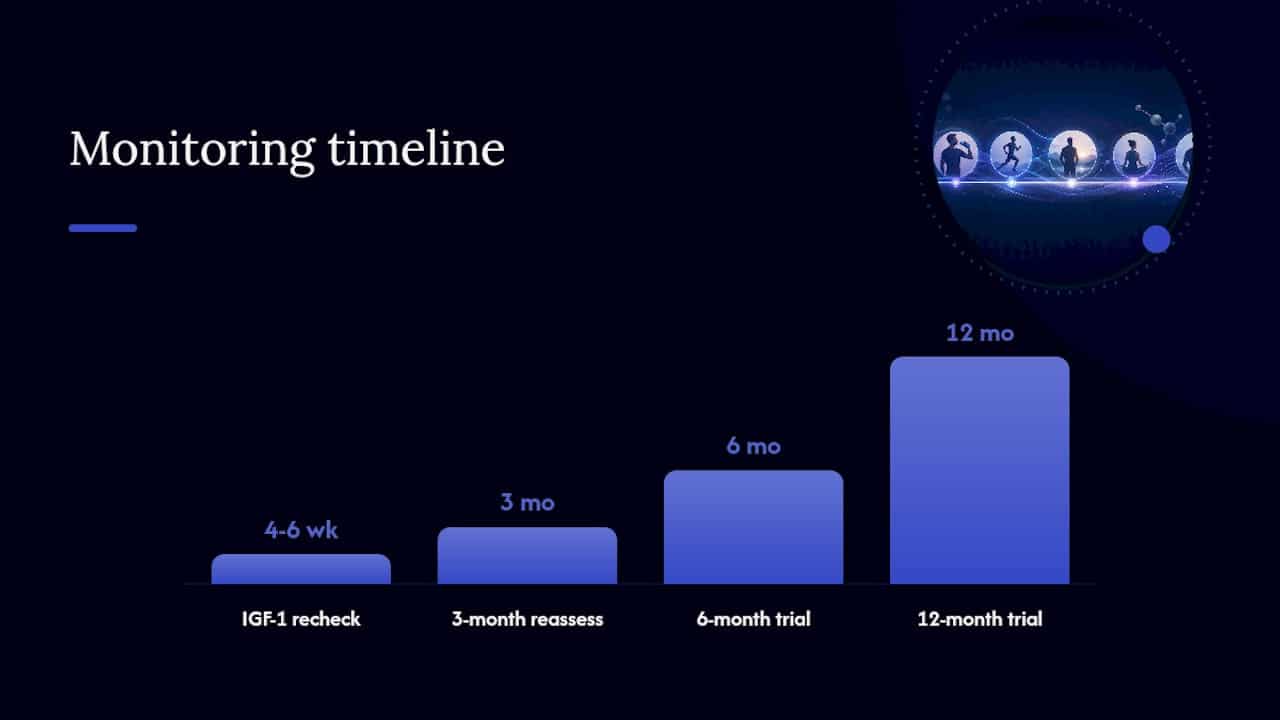
- If proceeding, begin at the lower end of the dosing range and recheck IGF-1 at 4–6 weeks
- Reassess at 3 months: if IGF-1 is in target range and no adverse signals, continue; if not, adjust or stop
For context on how CJC-1295 fits within the broader HGH peptide landscape, that resource covers the full range of GH-axis options and their comparative evidence.
Soma Peptide’s perspective on CJC-1295
The biomarker pharmacology of CJC-1295 is one of the better-documented stories in the peptide space. The Teichman trial data is real, the GH and IGF-1 elevations are reproducible, and the mechanism is coherent. What gets oversold is the leap from “IGF-1 went up” to “you will gain muscle and lose fat.” That leap requires clinical outcome trials that do not yet exist at meaningful scale.
The honest position is this: CJC-1295 is a pharmacologically active compound with a plausible benefit profile and a real side-effect profile. It is not a supplement. It is not risk-free. And the quality of what you put in your body matters enormously when you are working with a compound that modifies your endocrine axis. That distinction is not a marketing point. It is a safety point.
Soma Peptide’s position is that clinician oversight is not optional for CJC-1295 use. The monitoring requirements are real, the contraindications are real, and the evidence gaps are real. Anyone who tells you otherwise is selling something harder than the peptide itself.
Considering CJC-1295 with clinician approval? Start with verified purity
If you have worked through the decision framework above, confirmed your baseline labs, and have clinician approval to proceed, the next question is sourcing.
Quality points that matter for GH-axis peptides:
- Greater than 99% purity confirmed by third-party HPLC testing
- Batch-specific COAs available before purchase
- Ancillary supplies (bacteriostatic water, syringes, alcohol pads) available alongside peptides
- Clinician support resources for those working within a supervised protocol
For readers exploring the full range of options, the best peptides for muscle growth guide covers CJC-1295 alongside related compounds with comparative context. If weight management is the primary goal, the best peptides for weight loss resource provides a similarly evidence-weighted overview.
Browse Soma Peptide’s peptide catalogue to review available compounds, purity documentation, and ancillary supplies.
Sources
- Prolonged stimulation of growth hormone (GH) and insulin‑like growth factor I secretion by CJC‑1295, a long‑acting analog of GH‑releasing hormone, in healthy adults
- Once‑daily administration of CJC‑1295, a long‑acting growth hormone‑releasing hormone (GHRH) analog, normalizes growth in the GHRH knockout mouse
- Bulk drug substances used in compounding under section 503A of the FD&C Act | FDA
This article is general information, not a substitute for advice from a qualified doctor. Consult a qualified healthcare professional about your own circumstances before acting on anything here.
FAQ
What are the main CJC-1295 benefits supported by human data?
The clearest documented effects are hormonal: a single injection raises GH approximately 2–10× above baseline for up to six days and IGF-1 approximately 1.5–3× for 9–11 days. Downstream benefits like muscle gain, fat loss, and improved recovery are biologically plausible but have not been measured in controlled outcome trials.
How long does it take to see results from CJC-1295?
IGF-1 stabilises at an elevated baseline within four to eight weeks of repeated dosing. Trend changes in recovery, body composition, or sleep quality, if they occur, typically become apparent between months two and four of a monitored protocol.
How many times a week should I take CJC-1295?
The DAC form is typically injected once weekly due to its 5.8–8.1 day half-life. The no-DAC form (Mod GRF 1-29) requires daily or multiple-times-daily injections because its half-life is under 30 minutes. Dosing frequency should be confirmed with a prescribing clinician.
Does CJC-1295 increase testosterone?
CJC-1295 acts on the GH axis, not the HPG (hypothalamic-pituitary-gonadal) axis that governs testosterone. It does not directly raise testosterone. Any indirect effect through improved body composition or sleep quality is speculative and not documented in trials.
Is CJC-1295 legal to buy in Canada?
CJC-1295 is not an approved drug product in Canada and is not available over the counter. It may be legally compounded for individual patients under a clinician’s prescription through a licensed compounding pharmacy. Purchasing from unregulated online sources carries both legal and quality risk. Confirm current Health Canada guidance before proceeding.