


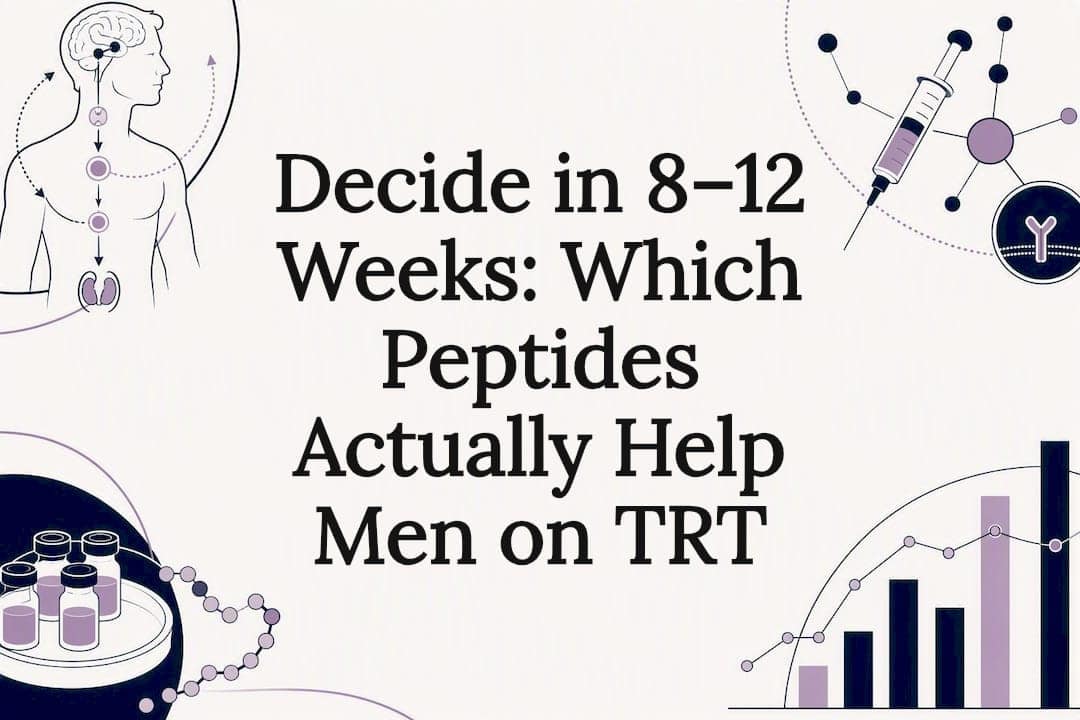
Peptides do not replace testosterone replacement therapy for confirmed hypogonadism, and no reputable evidence suggests they should. Some peptides can complement TRT for specific, measurable goals like recovery, visceral fat, or fertility preservation, but they work differently and answer different questions. If your labs confirm low testosterone, start with TRT. If your levels are normal and you have a targeted gap, get baseline labs and talk to a clinician before adding anything else.
TL;DR:
- Peptides that act on the hypothalamic-pituitary-gonadal axis, such as hCG and enclomiphene, can help preserve or restore testosterone and fertility during TRT.
- Growth hormone secretagogues like CJC-1295 and ipamorelin mainly influence the GH/IGF-1 pathway and do not directly increase testosterone or fertility.
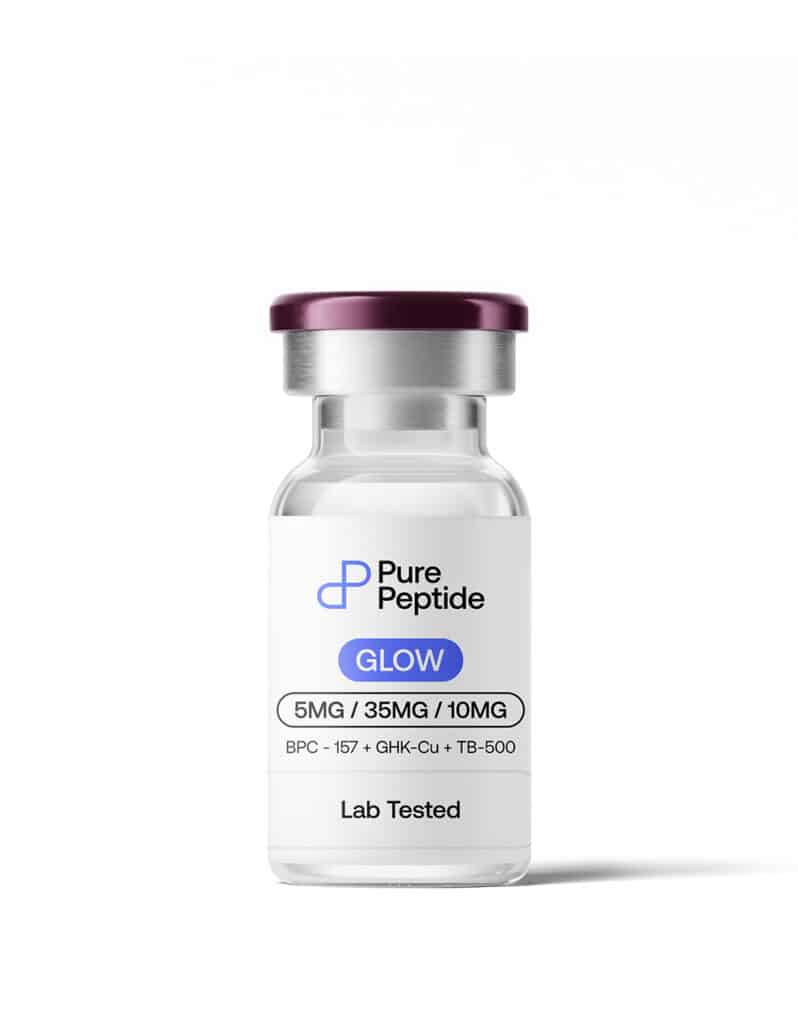
- Peptides like BPC-157 and TB-500 show limited human evidence and primarily rely on animal data, making them less reliable for tissue repair.
- Monitoring should include baseline labs for testosterone, LH, FSH, PSA, glucose, lipids, and IGF-1 when stacking peptides with TRT, with regular follow-up every 3 to 6 months.
- Sourcing quality peptides with purity above 99% is critical to safety and efficacy, and clinical oversight remains essential for personalized protocol adjustments.
Table of Contents
- How TRT and peptides with TRT work: two different axes
- Which peptides affect testosterone or fertility?
- Do CJC-1295, ipamorelin, and tesamorelin actually help recovery?
- What does the evidence on BPC-157 and TB-500 actually show?
- Safety checks and labs to run when combining peptides with TRT
- How to trial a peptide safely while already on TRT
- Pure Peptide’s take on quality standards for testosterone-adjacent peptides
- When I’d recommend peptides with TRT, and when I wouldn’t
- If you’re ready to explore peptides alongside TRT
- Sources
- FAQ
How TRT and peptides with TRT work: two different axes
TRT and most peptides marketed alongside it don’t operate on the same biological wiring, and that’s the whole reason people get confused about stacking them. Testosterone replacement works on the hypothalamic pituitary gonadal axis (the HPG axis), while most recovery peptides work on the growth hormone and IGF-1 pathway. Confusing the two leads to unrealistic expectations about what a “TRT peptide stack” can actually deliver.
When you inject exogenous testosterone, your hypothalamus and pituitary sense elevated hormone levels and cut back on luteinizing hormone (LH) and follicle stimulating hormone (FSH). That’s classic negative feedback. Less LH means less signal reaching the testes, which lowers intratesticular testosterone and impairs sperm production. This is well documented in clinical reviews of testosterone therapy, and it’s the single biggest reason men on long-term TRT often see shrinking testicles and reduced fertility. TRT solves a hormone deficiency; it doesn’t preserve the axis that produces that hormone naturally.
Growth hormone secretagogues sit on a completely separate pathway. CJC-1295 and ipamorelin stimulate the pituitary to release more of your own growth hormone, which the liver then converts into IGF-1. Tesamorelin works the same way, through the growth hormone releasing hormone receptor. None of these touch testicular testosterone production directly, which is exactly why they’re sometimes layered onto TRT rather than used instead of it.
A third group acts directly on the reproductive axis itself, upstream or downstream of where TRT intervenes:
- hCG mimics LH and stimulates the testes directly, bypassing the suppressed pituitary signal.
- Kisspeptin acts even further upstream, on the hypothalamus, and can trigger LH release when the axis is still responsive.
- Gonadorelin is synthetic GnRH, delivered in pulses to stimulate the pituitary the way your body naturally does.
- Enclomiphene blocks estrogen receptor feedback at the hypothalamus, tricking your brain into producing more LH and FSH on its own.
The practical consequence: only peptides that act on LH, FSH, or the testes themselves can meaningfully raise testosterone or protect fertility. Growth hormone secretagogues, BPC-157, TB-500, and PT-141 cannot do either, no matter how they’re marketed. Kisspeptin’s effect on gonadotropin release depends entirely on a hypothalamus and pituitary that still respond to signals, which is a meaningful caveat for men who’ve been on suppressive TRT doses for years. Mechanism predicts outcome here more reliably than marketing copy does.
Which peptides affect testosterone or fertility?
Not every peptide sold alongside TRT touches your hormone axis at all, and sorting out which ones actually do is the difference between a useful addition and an expensive placebo.
hCG is the most clinically established option for men who want to stay fertile while on TRT. It stimulates Leydig cells in the testes directly, mimicking LH, and keeps intratesticular testosterone production running even while your pituitary’s own LH output is suppressed. Clinics commonly pair low-dose hCG with TRT specifically for this reason, particularly for men planning to have children or maintain testicular volume. It doesn’t reverse TRT’s suppression of the pituitary itself; it works around it.
Enclomiphene takes a different route. As a selective estrogen receptor modulator, it blocks estrogen’s negative feedback at the hypothalamus, which pushes LH and FSH output back up. For men with secondary hypogonadism whose testes still function normally, enclomiphene can restore natural testosterone production without an exogenous hormone at all. It’s not a fit for primary testicular failure, and it doesn’t work once someone is already fully suppressed on TRT unless TRT is being discontinued.
Kisspeptin and gonadorelin represent the more physiological end of the spectrum. Both act upstream of the pituitary, closer to where your body’s own regulatory signals originate. Early human studies show kisspeptin can trigger genuine LH surges, and gonadorelin, delivered in the right pulsatile pattern, mimics natural GnRH release closely enough to sustain pituitary responsiveness. The catch is dosing complexity: constant, non-pulsatile GnRH exposure actually downregulates the pituitary rather than stimulating it, so these require more precise protocols than a simple daily injection.
PT-141 belongs in a different category entirely. It affects libido through melanocortin receptors in the central nervous system, not through testosterone at all. Men sometimes add it to a TRT regimen for sexual function, but it will do nothing for testicular function, sperm count, or hormone levels. Confusing a libido peptide with a fertility-preserving one is a common and avoidable mistake.
A few practical notes on access:
- Most of these compounds are used off label in North America, meaning they lack an approved indication for testosterone support specifically.
- Reputable clinics prescribing hCG, gonadorelin, or enclomiphene alongside TRT typically require baseline labs and follow-up monitoring, not just a prescription handed over cold.
- Sourcing matters: peptide purity and dosing accuracy vary enormously between suppliers, which is a bigger safety issue than most men realize until something goes wrong.
Do CJC-1295, ipamorelin, and tesamorelin actually help recovery?
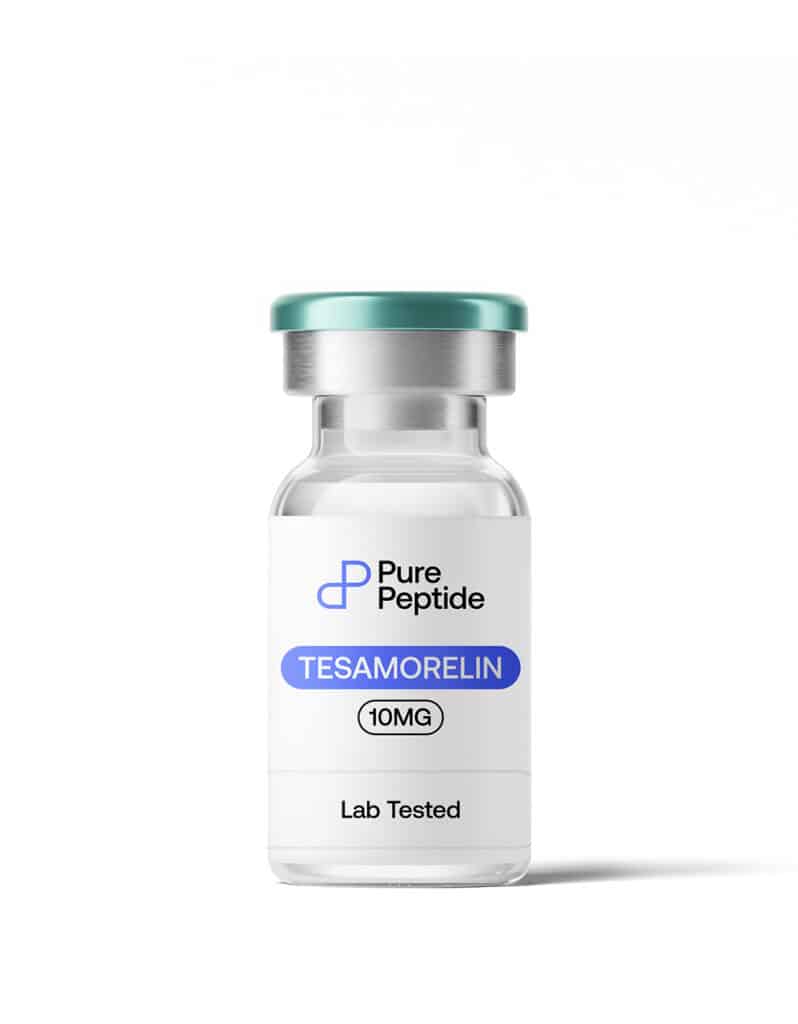
Tesamorelin has the strongest human evidence of any peptide discussed here, but that evidence is narrower than most marketing suggests. It’s FDA approved specifically for reducing visceral fat in HIV associated lipodystrophy, and randomized trials show it reduces visceral adipose tissue by a measurable percentage versus placebo over several weeks with the specific population studied, according to a review of GH secretagogue trials. That’s a real, measurable effect, but it comes from a specific patient population, not from healthy men on TRT chasing a leaner midsection.
CJC-1295 and ipamorelin are usually used together, and the pharmacology explains why: CJC-1295 extends the half-life of the GH pulse while ipamorelin triggers it selectively, without the appetite-stimulating side effects of older secretagogues like GHRP-6. Small human trials confirm both raise GH and IGF-1 levels, with modest signals toward improved body composition over short study periods. The key word is modest. These aren’t dramatic transformations; they’re incremental shifts that show up on labs before they show up in the mirror.
Layered onto TRT, the realistic expectation is an incremental boost to recovery and sleep quality, not a second engine for muscle growth. Men already running optimized testosterone levels tend to see smaller relative gains from adding GH secretagogues than men who are GH-deficient to begin with. The PMC review is consistent on this point: benefit size correlates with how depleted the underlying axis was before treatment started, and readers curious about the specific mechanism can dig into HGH peptide therapy protocols for a deeper breakdown.
Adverse effects worth tracking:
- Water retention and mild joint stiffness, common in the first few weeks as IGF-1 rises.
- Insulin resistance signals, since elevated GH can nudge fasting glucose upward over time.
- Injection site reactions, generally minor but worth noting for anyone new to subcutaneous dosing.
None of these are dealbreakers on their own, but they’re reasons to check fasting glucose and lipids alongside your regular TRT labs, not skip that step because “it’s just a peptide.”
What does the evidence on BPC-157 and TB-500 actually show?
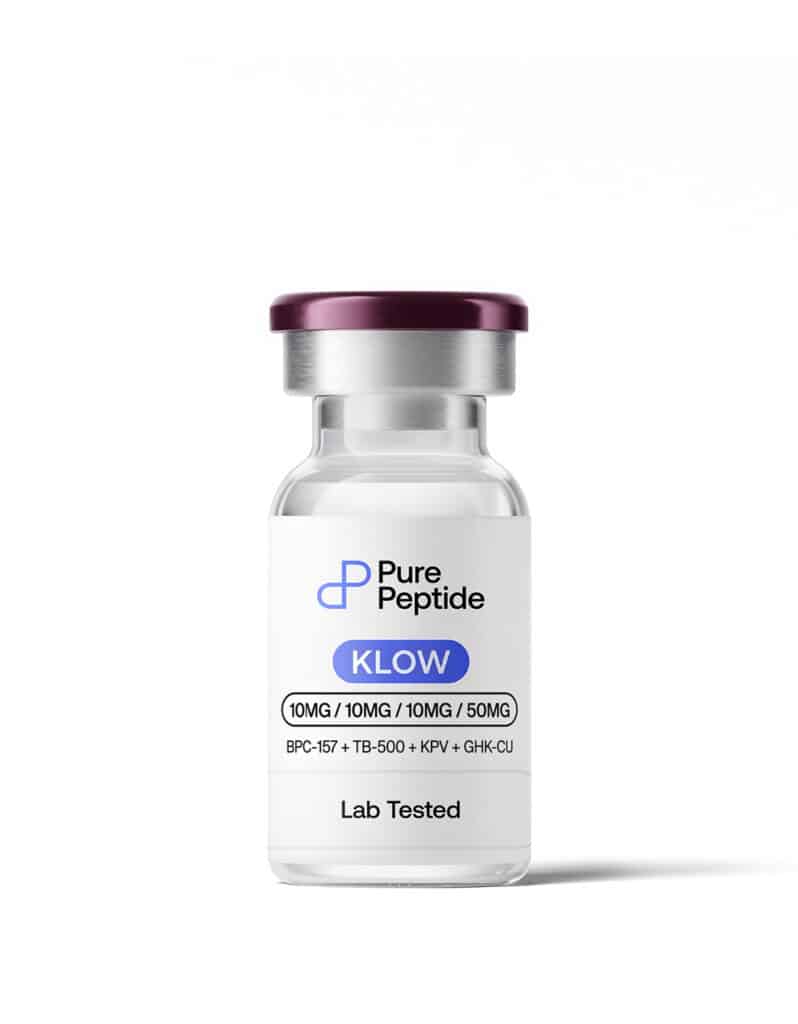
BPC-157 and TB-500 are the two most talked-about repair peptides, and they’re also the two with the thinnest human evidence base of anything covered here. Most of what’s known comes from animal studies showing effects on angiogenesis and collagen formation in injured tissue, documented in preclinical and early human research. That’s a real biological signal, but it’s a long way from a randomized human trial proving faster tendon healing in an active 40-year-old man.
Clinical anecdotes and small observational reports exist, and some are genuinely encouraging. They’re also exactly the kind of evidence that’s easy to misread, because injuries often improve on their own regardless of what’s injected alongside physiotherapy and rest. Without a control group, it’s impossible to know how much of the improvement is the peptide and how much is time.
Sourcing risk is the other half of this conversation. BPC-157 and TB-500 sit in a largely unregulated corner of the market, and purity, concentration accuracy, and contamination all vary between suppliers in ways a buyer can’t see or test at home.
- Preclinical signals for tissue repair are consistent across multiple animal studies.
- High-quality randomized human trials are absent.
- Small case series suggest benefit but can’t rule out natural healing or placebo effect.
- Third-party purity testing matters more here than for almost any other peptide category.
Pro Tip: Trial one recovery peptide at a time, for a fixed window of 8 to 12 weeks, with a specific injury or metric you’re tracking. If you can’t point to an objective change by the end of that window, that’s your stop signal, not a reason to add a second compound on top.
Safety checks and labs to run when combining peptides with TRT
Stacking peptides onto TRT means you’re now moving several hormonal systems at once, and that raises the number of labs worth tracking, not just their frequency. A review on peptide stacking makes the point plainly: combined interventions widen the monitoring net because the HPG axis, the GH/IGF-1 axis, and metabolic markers can all shift in the same treatment window.
A practical monitoring sequence looks like this:
- Baseline before starting anything: total and free testosterone (two morning draws), LH, FSH, hematocrit, PSA, fasting glucose, and a lipid panel.
- Add IGF-1 to the panel if you’re introducing CJC-1295, ipamorelin, or tesamorelin.
- Recheck at 8 to 12 weeks after any dose change, new peptide, or TRT adjustment.
- Move to periodic monitoring, typically every 3 to 6 months, once levels stabilize.
Specific numbers that should prompt action rather than a shrug: a hematocrit climbing above the upper normal laboratory limit, a PSA rise that’s accelerating rather than flat, or an IGF-1 reading above your lab’s upper reference limit. Any of those warrants a conversation with your prescriber before continuing, not after your next scheduled visit.
Statistic to keep in mind: TRT’s safety profile now rests on genuinely large trial data, including randomized outcome data from TRAVERSE, while no peptide-TRT combination has been tested at that scale. That gap in evidence size is the single biggest reason to treat any stack as an experiment, not a settled protocol.
Contraindications worth taking seriously: active malignancy (especially prostate or breast cancer history), uncontrolled diabetes, and, if fertility is on the table, any peptide affecting a partner’s reproductive plans deserves a separate conversation with a clinician, not an afterthought tacked onto a TRT visit.
How to trial a peptide safely while already on TRT
Adding a peptide to an existing TRT regimen works best as a deliberate experiment, not an impulse buy after a podcast recommendation.
- Establish your baseline first. Write down your actual symptoms (fatigue, libido, recovery time, body composition), get two morning testosterone readings, check LH and FSH, and run a DEXA scan if body composition is the target.
- Introduce exactly one peptide. Not two, not a “stack” from day one. Start at the lowest reported effective dose.
- Set your endpoint before you start, not after. Decide what “working” looks like in objective terms: an IGF-1 number, a DEXA percentage, a subjective recovery score you actually track weekly.
- Give it 8 to 12 weeks before drawing conclusions. Shorter than that and you’re mostly measuring noise and placebo effect.
- Recheck labs and compare against your written baseline, not your memory of how you felt three months ago.
- Decide: continue, stop, or escalate. If fertility is the actual goal and a peptide isn’t moving LH or sperm parameters, that’s when a fertility-preserving strategy like hCG or gonadorelin deserves a real conversation with your clinician, reviewed here in more depth.
Pro Tip: Keep a simple spreadsheet with one column per lab value and one row per test date. Six months from now, you’ll want that record more than you want to trust your recollection of how you felt in week three.
Pure Peptide’s take on quality standards for testosterone-adjacent peptides
High-purity peptides for performance, recovery, and hormone-related goals require a high quality bar that matters more than most buyers realize until they’ve compared a poorly sourced batch against a properly purified one. Pure Peptide’s formulations are built to exceed 99% purity through advanced purification methods, which matters directly for compounds like the GH secretagogues and fertility-adjacent peptides discussed throughout this article: contamination or inaccurate concentration can quietly undermine both safety and any lab-based tracking you’re doing.
Every product is framed around a specific, documented goal, whether that’s fat reduction, muscle recovery, or anti-aging, rather than a vague promise to “optimize hormones.” That specificity matters because, as covered above, mechanism determines outcome. A peptide that isn’t built or dosed for your actual target won’t deliver it no matter how clean the batch is.
None of this replaces clinical oversight. Pure Peptide’s role is providing clinically tested compounds you can trust the composition of; your prescriber’s role is deciding whether a given compound belongs in your protocol at all, and at what dose, based on your actual labs.
When I’d recommend peptides with TRT, and when I wouldn’t
I’d recommend adding a peptide when there’s a specific, measurable gap left after TRT has stabilized. Visceral fat that hasn’t budged despite good testosterone levels, recovery that’s still lagging, or an active fertility plan are all legitimate reasons to consider a targeted addition, provided you accept the monitoring that comes with it.
I wouldn’t recommend stacking anything if your TRT dose isn’t dialed in yet, or if your main concern is long-term safety uncertainty rather than a specific unmet goal. Adding variables to an unstable baseline just makes it harder to know what’s actually working. Every recommendation here should trace back to a lab number, not a feeling. Peptides are precise tools for narrow problems, not a general upgrade to how TRT works.
— Pure Peptide
If you’re ready to explore peptides alongside TRT
Talk to your clinician before adding anything, and bring your actual lab numbers to that conversation rather than a general question about “what’s popular.” Once you’ve got clarity on your specific goal, whether it’s recovery, body composition, or fertility planning, purity and sourcing become the next variable worth getting right.
A testosterone peptide guide is available that breaks down profiles for the compounds discussed above, and a peptides for muscle collection covers options specifically suited to recovery and body composition goals once TRT is stable.
Sources
This article draws on a handful of core clinical references rather than general marketing claims:
- NCBI overview: testosterone therapy and endocrine effects
- PubMed: kisspeptin and gonadotropin effects
This article is general information, not a substitute for advice from a qualified doctor. Consult a qualified healthcare professional about your own circumstances before acting on anything here.
FAQ
What’s the best peptide to take with TRT?
There’s no single “best” peptide; it depends entirely on the gap you’re trying to close. hCG or gonadorelin fit fertility preservation, while CJC-1295 with ipamorelin or tesamorelin fit recovery and visceral fat goals.
Can you use peptides with testosterone therapy?
Yes, some peptides are used alongside TRT for specific goals like fertility preservation or recovery, but they require separate lab monitoring and don’t replace the need for TRT itself if you have confirmed hypogonadism.
Can I take BPC-157 while on TRT?
There’s no known direct interaction between BPC-157 and testosterone therapy, but BPC-157’s human evidence is limited to small observational data, so treat any recovery claims cautiously and track outcomes objectively.
What does Joe Rogan use for TRT?
Public statements from public figures about personal protocols aren’t a reliable clinical reference, and specific regimens vary widely between individuals based on their own labs and goals. The safer approach is basing any protocol on your own baseline testing rather than a celebrity routine.
Do peptides raise testosterone on their own?
Only peptides acting on the reproductive axis, like hCG, kisspeptin, gonadorelin, or enclomiphene, can meaningfully influence testosterone or LH and FSH output. Growth hormone secretagogues and repair peptides like BPC-157 do not affect testosterone levels at all.