



Oral bioactive collagen peptides carry the strongest human evidence for joint pain relief, backed by randomized controlled trials at 5 grams per day over 12 weeks. BPC-157, TB-500, GHK-Cu, and substance P hydrogel complexes show genuinely promising results in animal models, but none has completed a conclusive human trial for joint repair specifically. If you’re weighing any of these, talk to a clinician, ask for third-party purity testing, and lean on the proven options for anything you plan to use routinely.
TL;DR:
- Human trials support oral bioactive collagen peptides at 5 grams daily for 12 weeks to reduce joint pain and stiffness with statistically significant results.
- Animal studies show BPC-157 and TB-500 promote healing in tendons, ligaments, and cartilage, but no conclusive human joint repair trials have been completed.
- Delivery method influences effectiveness: oral supplements are convenient but limited by digestion, whereas hydrogels extend peptide residence time in joints, especially for cartilage.
- Many promising peptides remain preclinical, with the strongest evidence for collagen peptides, and investigational compounds should only be used under medical guidance with verified quality.
- Sourcing certified, third-party tested peptides reduces contamination and mislabeling risks, while long-term safety data for experimental peptides is still lacking.
Table of Contents
- What are joint repair peptides and how strong is the evidence for each?
- How do these peptides actually work on damaged tissue?
- What’s the best way to take joint repair peptides: oral, injected, or hydrogel?
- How strong is the human evidence versus the animal evidence?
- How can you reduce risk if you’re considering these peptides?
- How does Soma Peptide align with this evidence?
- Publisher perspective: responsible use and the path forward for peptide therapies
- Where to start if you want evidence-aligned joint support
- Sources
- FAQ
What are joint repair peptides and how strong is the evidence for each?
The term “joint repair peptides” covers a mixed bag: some are oral supplements with actual clinical trial data, others are injectable research compounds tested almost exclusively in rodents. Lumping them together does readers a disservice, so here’s what separates one from another.
Bioactive collagen peptides (BCP) sit in a different category from everything else on this list because they’ve been through real Phase III trials in humans. Two randomized, placebo-controlled, multi-centre studies gave participants 5 grams per day of specific collagen peptide formulations for 12 weeks and measured activity-related joint pain, stiffness, and movement restriction. The results showed statistically significant improvement over placebo, with a p-value under 0.05. That’s the closest thing to a settled clinical answer anywhere in this space. Formulations like Fortigel are the most studied version of this ingredient class, and they work orally, through the gut, not through direct injection into a joint.
BPC-157 is the compound most people mean when they say “peptides for joints,” and it has the deepest body of preclinical research of any candidate here. Animal studies, mostly in rats, report improved healing in tendon, ligament, and cartilage injury models, with the compound’s proposed effects on angiogenesis and growth hormone receptor activity showing up across multiple surgical injury studies. Researchers have injected it both locally and systemically in these models. What BPC-157 does not have is a completed human clinical trial proving it repairs joint tissue in people. If you want the deeper mechanistic story, Soma Peptide’s breakdown of BPC-157 tendon healing research covers the animal data in more detail.
TB-500 (a synthetic fragment of thymosin beta-4) gets grouped with BPC-157 constantly, and for good reason: it shows similar preclinical patterns, with animal studies pointing to improved cell migration and tissue remodelling after injury. It’s almost always studied and used alongside BPC-157 rather than alone, and the combined-use literature reflects that pairing more than solo TB-500 data.
GHK-Cu, a copper-binding tripeptide better known in skincare circles, also appears in orthopaedic peptide reviews for its reported role in extracellular matrix remodelling and wound healing signalling. The evidence here is mechanistic and preclinical, drawn from the same orthopaedic peptide literature that covers BPC-157 and TB-500, not from dedicated human joint trials.
Substance P and SAP-SP hydrogels represent a newer, more engineered approach. Instead of injecting free peptide, researchers embed substance P in a self-assembling hydrogel that stays put in the joint capsule for weeks rather than clearing in hours. In animal osteoarthritis models, these hydrogels recruited the body’s own mesenchymal stem cells, reduced inflammation, and improved cartilage regeneration markers. It’s one of the more sophisticated delivery concepts in the field, precisely because plain substance P injections wouldn’t last long enough to matter.
A few other peptides deserve a mention without overselling their relevance. Myostatin inhibitor peptides, including MIF1 and MIF2, show promise for muscle regeneration in mouse injury models, which matters for the muscle and tendon tissue surrounding a joint but says nothing about cartilage repair itself. Worth knowing about, not worth confusing with a cartilage therapy.
- Bioactive collagen peptides: human RCT evidence, oral route, 12-week trials
- BPC-157: extensive animal-model evidence, injectable, no completed human trials
- TB-500: preclinical evidence, typically studied/used alongside BPC-157
- GHK-Cu: mechanistic and preclinical evidence, ECM remodelling focus
- Substance P (SAP-SP hydrogels): preclinical, engineered for extended joint residence
- Myostatin inhibitors: preclinical, muscle-focused, not a direct cartilage therapy
How do these peptides actually work on damaged tissue?
Every peptide on that list claims to help joints through a different biological lever, and knowing which lever it pulls tells you a lot about whether the claim is plausible for your specific problem.
Angiogenesis, the growth of new blood vessels, is the mechanism most associated with BPC-157. Tendons and ligaments are chronically undersupplied with blood, which is part of why they heal slowly in the first place. A peptide that promotes new vessel growth into that tissue has a genuine biological reason to speed things along, and the orthopaedic peptide reviews point to VEGF-mediated pathways as the likely route.
Extracellular matrix (ECM) remodelling is the mechanism behind GHK-Cu and a chunk of the collagen peptide story. The ECM is the scaffolding that gives cartilage and tendon their structure, made mostly of collagen and proteoglycans. Peptides that stimulate fibroblasts to lay down more of that scaffolding, or that regulate the enzymes breaking it down, theoretically shift the balance toward repair instead of degradation.
Collagen synthesis stimulation is the most direct mechanism behind oral BCP’s clinical results. Ingested collagen peptides appear to signal chondrocytes and fibroblasts to ramp up their own collagen production, rather than simply supplying raw building blocks. That’s a meaningful distinction. It’s a signalling effect, not a delivery-truck effect, which also explains why the response takes weeks rather than days.
Macrophage phenotype shifting is a less intuitive concept but arguably the most important one for chronic joint conditions. Macrophages can behave in an inflammatory mode (M1) or a repair-promoting mode (M2), and chronic osteoarthritis tends to get stuck with too many M1 macrophages hanging around, perpetuating inflammation. Substance P hydrogels appear to nudge that balance toward the M2, repair-oriented phenotype in animal models, which is part of why they reduce inflammatory markers alongside improving cartilage scores.
Signalling network modulation, specifically through the PI3K/Akt and mTOR pathways along with IGF-1 activity, is the mechanistic thread tying several of these peptides together. Researchers increasingly frame joint peptide therapy less as “feeding” the joint nutrients and more as flipping molecular switches that push cells toward a pro-regenerative state. That’s a genuine shift in how the field thinks about joint biology.
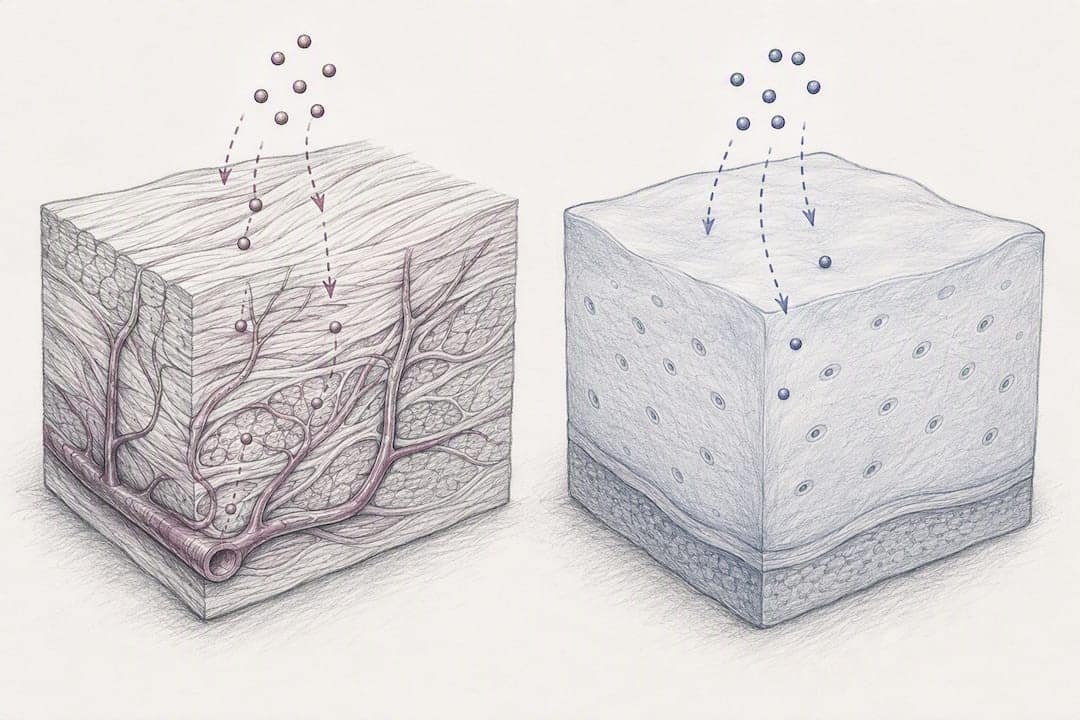
Here’s the catch that gets glossed over in most peptide marketing: a mechanism that works beautifully in tendon doesn’t automatically transfer to cartilage. Tendon has some blood supply, so angiogenesis-driving peptides have a route in. Cartilage is largely avascular. There’s no blood vessel network for a systemic peptide to travel along, which is exactly why cartilage-focused researchers have gravitated toward hydrogel carriers instead of relying on the bloodstream to deliver the payload. The mechanism might be sound; the delivery is what usually fails first.
What’s the best way to take joint repair peptides: oral, injected, or hydrogel?
Delivery method decides whether a promising mechanism ever reaches the tissue that needs it, and that’s the piece most casual peptide discussions skip entirely.
Oral administration is what the bioactive collagen peptide trials used, and it’s the route with the cleanest data. Swallowing a peptide is convenient and produces systemic exposure, meaning it can influence joints throughout the body rather than just one. The tradeoff is bioavailability: digestive enzymes break most peptides down before they ever reach circulation intact, and cartilage’s avascular nature limits how much of anything gets there even when a peptide survives digestion. Bioactive collagen peptides are specifically formulated and hydrolyzed to survive this process better than a generic protein source would, which is part of why they were chosen for those trials in the first place.
Intra-articular injection solves the bioavailability problem by putting the peptide directly where you want it. That comes with its own set of practical risks: injection into a joint carries an infection risk if not done under sterile conditions, requires accurate needle placement (often imaging-guided for anything beyond the knee), and, without a carrier system, the peptide clears out of the joint capsule within hours. A simple injected peptide in saline doesn’t stick around long enough to do much.
Carrier and hydrogel systems exist specifically to fix that clearance problem. Self-assembled peptide-substance P hydrogels and hyaluronic-acid-based scaffolds can retain a peptide payload in the joint for weeks rather than hours, giving it time to actually recruit stem cells and shift the local inflammatory environment. This is the direction most serious cartilage-repair research is heading, because without an extended-residence carrier, injectable peptides for cartilage are working against a clock they can’t win.
Realistic timelines differ sharply by route:
- Oral collagen peptides: benefits reported around the 12-week mark in the RCTs, taken daily at 5 grams.
- Simple intra-articular injection without a carrier: effect window measured in hours to a few days before clearance, requiring repeat dosing.
- Hydrogel-carried intra-articular delivery: sustained peptide presence over weeks to months in animal studies, though this remains a research-stage approach without established human dosing protocols.
Pro Tip: If you’re considering any injectable peptide protocol, ask specifically how the compound is meant to be delivered and for how long it stays active in the target tissue. A peptide with a great mechanism but a two-hour half-life and no carrier system is unlikely to do much for a joint.
How strong is the human evidence versus the animal evidence?
Grading peptides by evidence level matters more here than almost anywhere else in supplement science, because the gap between “worked in a rat” and “works in a person’s knee” is enormous, and the marketing rarely admits it.
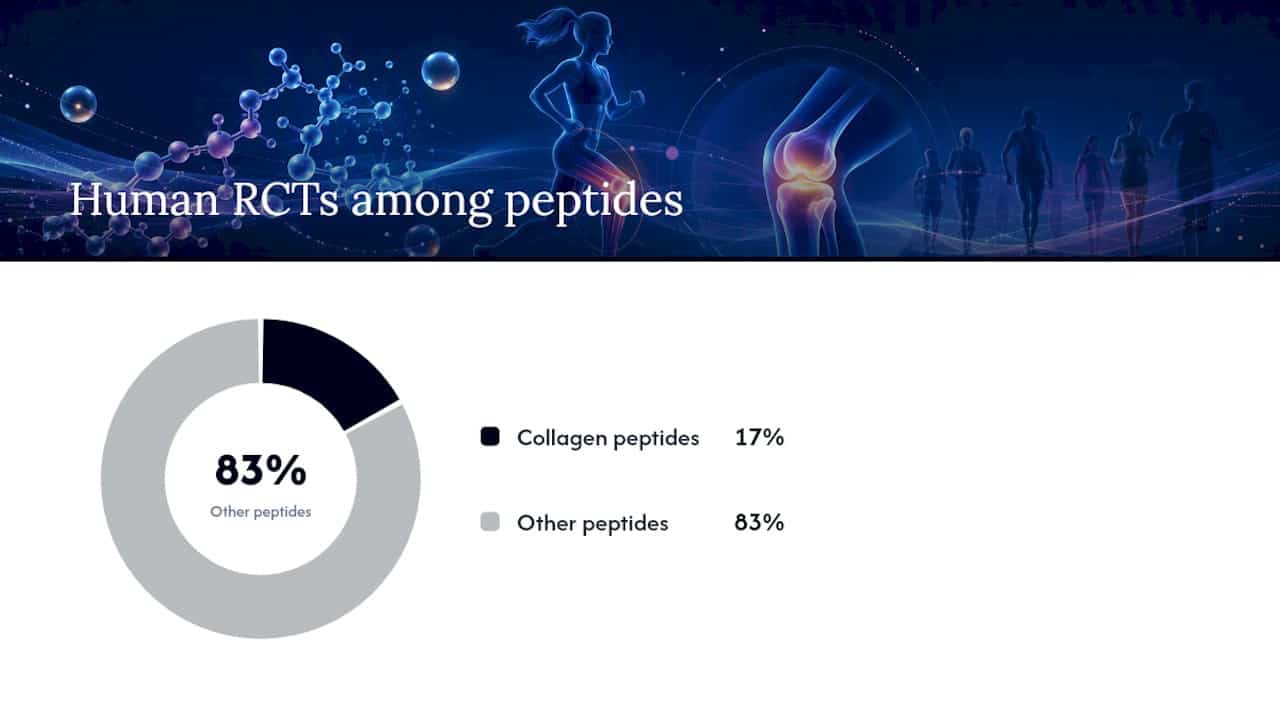
Bioactive collagen peptides are the only entry on this list with completed human RCTs behind them. The two Phase III studies referenced throughout the peptide-joint literature ran participants through 12 weeks of 5 grams per day, tracking activity-related joint pain, stiffness, and movement restriction against placebo. Both trials reported statistically significant improvement in the treatment group. That’s a real result, from a real controlled trial design, not an internet testimonial.
One detail that should temper enthusiasm even for the collagen peptide data: placebo groups in these joint pain trials improved by roughly 25% on activity-related pain scores. Joint pain trials are notoriously prone to large placebo effects, which is exactly why the double-blind, placebo-controlled design matters so much, and why anecdotal reports of any peptide “working” carry so little weight on their own.
Everything else on the list sits firmly in preclinical territory. Here’s the honest breakdown:
- BPC-157: broad rodent evidence across tendon, ligament, and cartilage injury models; no completed human RCT for joint repair.
- TB-500: preclinical evidence, usually studied in combination with BPC-157 rather than in isolation.
- GHK-Cu: mechanistic and preclinical support for ECM remodelling; no dedicated human joint trial.
- Substance P / SAP-SP hydrogels: multiple animal OA models plus human synoviocyte cell assays showing reduced inflammation and improved cartilage markers, but no in-vivo human trial yet.
- Myostatin inhibitors (MIF1/MIF2): preclinical mouse muscle-regeneration data; relevant to peri-articular tissue, not cartilage directly.
It’s worth being specific about what “preclinical” means here rather than treating it as a vague disclaimer. Most of the BPC-157 and TB-500 studies use small rodent cohorts, often 6 to 12 animals per group, with short follow-up windows measured in weeks. That design is standard for early-stage research, but it limits how confidently anyone can translate the findings to a chronic, decades-long human degenerative joint condition. A rat’s surgically created tendon injury and a fifty-five-year-old’s worn knee cartilage are not the same problem on the same timeline.
There are no large, completed human clinical trials for BPC-157, TB-500, GHK-Cu, or substance P hydrogels specifically targeting joint repair as of now. That’s the trial data that would actually settle the debate, and it doesn’t exist yet for those compounds. Anyone claiming otherwise, whether a forum post or a product page, is overstating what the research supports.
How can you reduce risk if you’re considering these peptides?
Sourcing quality is the single biggest controllable risk factor in this entire category, and it’s the one most people skip while worrying about the wrong thing.
Research-grade peptides sold without third-party verification carry real risk of contamination, incorrect concentration, or outright mislabeling. A product claiming 99% purity means nothing without a Certificate of Analysis (COA) from an independent lab confirming it. This matters more for injectable peptides than oral supplements, since anything going into a joint or under the skin bypasses the body’s normal digestive screening.
Adverse effects and unknowns reported in the literature include:
- Injection site reactions (redness, swelling) reported in animal and limited human-use contexts for peptides like BPC-157 and TB-500.
- Unknown long-term effects from chronic use, since most preclinical studies run for weeks, not years.
- Risk of infection with any intra-articular injection performed outside a clinical setting.
- Theoretical concerns around angiogenesis-promoting peptides in anyone with a history of vascular tumours, though this hasn’t been directly studied in the joint-repair context.
Before starting any peptide protocol, whether it’s an oral collagen supplement or an investigational injectable, bring these questions to a clinician:
- What specific joint condition am I addressing, and does the evidence for this peptide match that condition (tendon versus cartilage versus systemic inflammation)?
- What’s the plan for monitoring response, and at what point would we call it a failure and reassess?
- Has this product been third-party tested, and can I see the COA and safety data sheet (SDS)?
- Are there interactions with medications I’m already taking, including NSAIDs or corticosteroid injections?
Pro Tip: Ask any supplier directly for both a COA and an SDS before purchase. A legitimate research-grade supplier will provide both without hesitation. If they can’t, that’s your answer.
Regulatory status varies by product and jurisdiction, and readers should not assume research peptides carry the same oversight as approved pharmaceuticals. In Canada, prescription-only compounds and health product claims fall under Health Canada’s regulatory framework, and research peptides marketed for laboratory or investigational use are not the same as approved therapeutics. When in doubt, a licensed clinician is the right person to interpret how a specific product fits your situation, not a product label.
How does Soma Peptide align with this evidence?
Soma Peptide’s approach starts from the same principle this article does: separate what’s clinically proven from what’s promising but still investigational, and be transparent about which bucket a given product sits in.
Every formulation is manufactured to exceed 99% purity, verified through third-party testing rather than taken on faith. For readers weighing oral options aligned with the collagen peptide RCT data, or investigational compounds like BPC-157 for research purposes, that purity standard applies across the catalogue, not just the flagship products.
What Soma Peptide provides to support informed decisions:
- Certificates of Analysis (COA) available for products, confirming purity and composition.
- Safety Data Sheets (SDS) to support conversations with a clinician before use.
- Product pages that lay out the research background for each compound rather than relying on vague marketing claims, including BPC-157’s applications and safety considerations and tendon-repair-specific research.
Readers should still request documentation directly and confirm it matches the batch they’re purchasing. Purity claims are only as good as the paperwork behind them, and Soma Peptide’s customer support team can walk through COA and SDS documentation for any specific product before you buy.
Publisher perspective: responsible use and the path forward for peptide therapies
The temptation in this space is to treat preclinical promise as clinical proof, mostly because the science sounds sophisticated and the anecdotes are loud. It isn’t proof. BPC-157’s rat data is genuinely interesting, and the mechanistic case for substance P hydrogels is elegant, but interesting and elegant are not the same as validated in a fifty-year-old with degenerative knee cartilage.
Our position is straightforward: prioritize the evidence hierarchy, not the marketing hierarchy. Oral bioactive collagen peptides earned their place through actual randomized trials, and that should count for more than a compelling theory. Investigational peptides deserve continued research and cautious, clinician-guided use, not blanket claims of efficacy they haven’t earned yet.
Soma Peptide’s product decisions follow that same hierarchy: purity verified through testing, evidence stated honestly by compound, and no pretending a preclinical finding is a clinical guarantee. That’s the standard the whole category should be held to.
— Soma Peptide
Where to start if you want evidence-aligned joint support
If the collagen peptide RCT data is what convinced you, Soma Peptide’s peptides for muscle category page covers recovery-focused formulations built around that same research-backed foundation, with purity documentation for every batch. For readers exploring the investigational side, the tendon and soft-tissue focused pages walk through what the current animal-model research actually shows, without inflating it into a guarantee.
Whichever route fits your situation, the same three steps apply: talk to a clinician about your specific joint condition before starting anything, request the COA and SDS for any product you’re considering, and treat preclinical compounds as research tools rather than proven treatments. Soma Peptide’s customer support team can provide documentation for any product in the catalogue, and the full peptide selection is organized by use case if you want to compare recovery-oriented options side by side before deciding what, if anything, makes sense to add to your routine.
This article is general information, not a substitute for advice from a qualified doctor. Consult a qualified healthcare professional about your own circumstances before acting on anything here.
Sources
- Efficacy of specific bioactive collagen peptides in the treatment of joint pain – Osteoarthritis and Cartilage
- Self-assembled peptide-substance P hydrogels alleviate inflammation and ameliorate the cartilage regeneration in knee osteoarthritis | Biomaterials Research
FAQ
Which peptide is best for joint repair?
Oral bioactive collagen peptides have the strongest human evidence, backed by RCTs showing benefit at 5 grams per day over 12 weeks. BPC-157 has the most extensive preclinical animal data among injectable options, but it lacks completed human joint trials.
Do peptides really help joints?
Bioactive collagen peptides have demonstrated statistically significant improvement in joint pain and stiffness in placebo-controlled human trials. Other joint-focused peptides like BPC-157 and substance P hydrogels show promising results in animal studies but remain unproven in humans specifically for joint repair.
What’s the downside of taking peptides?
Sourcing quality is the biggest practical risk, since unverified products can carry incorrect concentrations or contamination. Long-term safety data is limited for most investigational peptides, and intra-articular injection outside a clinical setting carries infection risk.
Can BPC-157 heal joints?
BPC-157 shows encouraging tendon, ligament, and cartilage healing effects in rodent injury models, largely through proposed angiogenesis pathways. No completed human clinical trial has confirmed these effects translate to joint repair in people, so it remains an investigational compound rather than a proven treatment.