

Combined CJC-1295 and Ipamorelin reliably raises GH and IGF-1 blood markers, and most people report better sleep and faster recovery within a couple of weeks. Body-composition changes, like modest fat loss and lean muscle gains, take longer and depend heavily on training and diet. Anti-aging claims about skin and hair are backed mostly by anecdote, not trials. Anyone considering the stack needs supervised dosing and lab monitoring, not just a purity-tested product.
TL;DR:
- The combination reliably increases GH and IGF-1 levels within one to two months, with daily sleep improvements seen in as little as two weeks.
- Body-composition changes, like fat loss and muscle gains, are modest, require several weeks to months, and depend heavily on training and diet.
- No significant clinical trials confirm anti-aging benefits for skin and hair, making these claims anecdotal and unconfirmed by current research.
- Dosing protocols vary between DAC (weekly, longer-lasting) and no-DAC (multiple daily doses), with the choice depending on user preference for natural pulsatile hormone release or convenience.
- Proper supervision, lab monitoring, high-purity sourcing, and baseline testing are essential for safe and effective use of these peptides; self-experimentation is risky.
Table of Contents
- What are CJC-1295 and Ipamorelin?
- How does the CJC-1295 and Ipamorelin stack actually work?
- What benefits should you realistically expect, and when?
- DAC or no-DAC: which one fits your goals?
- How is the stack typically dosed and timed?
- What side effects and risks should you watch for?
- What do the clinical trials actually prove?
- What should you ask your doctor before starting?
- Where responsible peptide use actually starts
- Where to find high-purity CJC-1295 and Ipamorelin
- Sources
- FAQ
What are CJC-1295 and Ipamorelin?
CJC-1295 is a growth hormone releasing hormone (GHRH) analogue. It binds the same pituitary receptor as your body’s natural GHRH, prompting somatotroph cells to release growth hormone. Ipamorelin works differently: it’s a selective agonist at the ghrelin receptor (GHS-R1a), triggering GH release through a separate pathway while largely sparing cortisol and prolactin, unlike older growth hormone releasing peptides such as GHRP-6. That selectivity is one reason Ipamorelin is often preferred over older secretagogues in current protocols.
CJC-1295 comes in two structurally distinct forms, and mixing them up is a common mistake:
- DAC (Drug Affinity Complex): binds to albumin in the blood, extending its active life to several days.
- No-DAC: clears the body within hours, closer to how natural GHRH behaves.
Both peptides are typically administered by subcutaneous injection, reconstituted with bacteriostatic water before use. Sourcing matters here more than most buyers realize: a peptide that’s degraded, underdosed, or contaminated won’t produce the hormone response studies describe, regardless of protocol. Soma Peptide formulates its CJC-1295 and Ipamorelin products above 99% purity, which is the baseline you want before worrying about dosing schedules at all.
How does the CJC-1295 and Ipamorelin stack actually work?
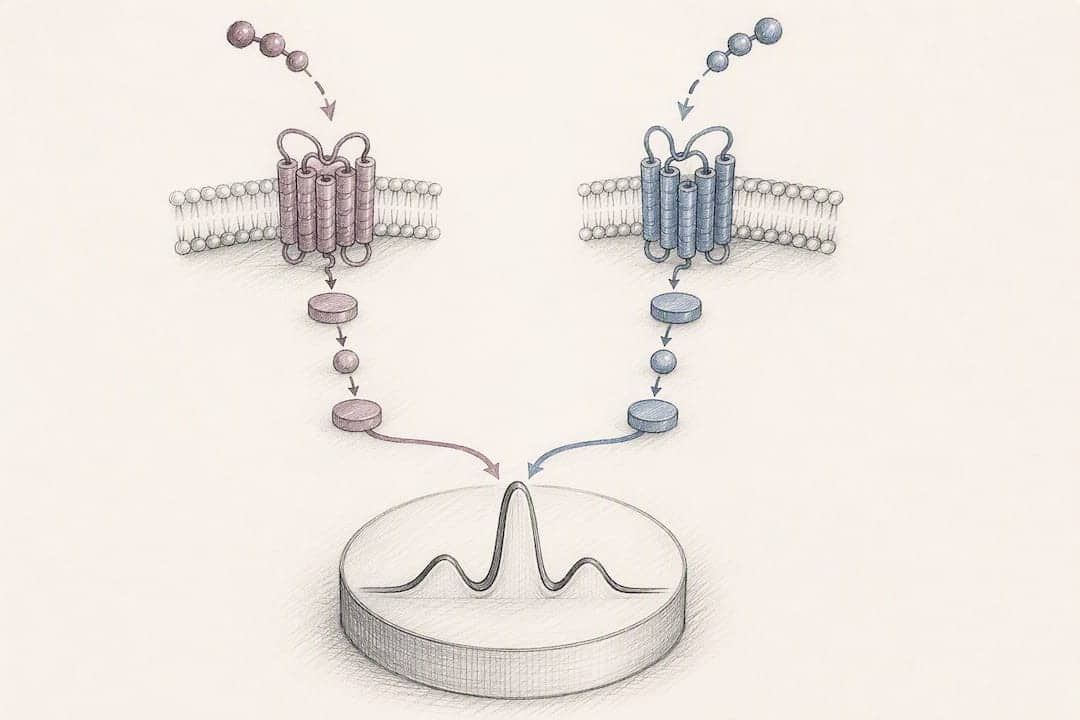
The logic behind stacking these two peptides comes down to receptor biology. CJC-1295 activates the GHRH receptor; Ipamorelin activates the separate ghrelin receptor. Somatotrophs respond to both signals independently, and when triggered together, they produce a larger, more coordinated GH pulse than either peptide manages alone.
That’s the theoretical case for CJC-1295 and muscle growth claims you’ll see repeated across forums. The actual clinical evidence backs the hormone response, not the muscle outcome directly. A randomized, placebo-controlled trial found that CJC-1295 produced GH increases lasting roughly six days after a single injection, with IGF-1 elevations persisting for up to about two weeks, and repeated dosing showed cumulative effects on IGF-1 levels.
Two things matter for how you interpret that data:
- Pulsatility versus flooding. Natural GH release happens in bursts, mostly during deep sleep. Preserving that rhythm, rather than creating a constant elevated baseline, is thought to be more physiologic, though the long-term clinical significance of one pattern over the other hasn’t been settled in humans.
- Biomarker movement isn’t the same as a body-composition outcome. GH and IGF-1 rising on a lab report is the proximate, well-documented effect. Whether that translates into visible fat loss or muscle depends on far more variables.
What benefits should you realistically expect, and when?
Sleep and recovery tend to show up first, often within one to two weeks, which tracks with the physiological link between GH pulses and slow-wave sleep. People frequently describe deeper sleep and less next-day soreness before anything shows on a scale or in the mirror.
Hormone changes are the most measurable part of the picture. IGF-1 elevation typically confirms on bloodwork within about one to two months of consistent protocol use. This is the biomarker clinicians actually track, and it’s a far more reliable checkpoint than how you feel week to week.
Body composition is where expectations need the most adjustment. Modest fat loss and lean mass gains take several weeks to appear, and only meaningfully when paired with resistance training and adequate protein intake. The peptide stack isn’t doing that work on its own; it’s shifting the hormonal environment your training and diet operate in. If you’re specifically chasing composition changes, it’s worth reading how CJC-1295 factors into weight loss protocols and realistic biomarker targets before you start.
Skin, hair, and nail improvements sit in a different category entirely: reported anecdotally by users and plausible given GH’s role in collagen synthesis, a topic well covered in the role of peptides in anti‑aging, but not something current trials have measured directly for this stack. Treat those claims as a possible side benefit, not a reason to start.
| Benefit | Typical onset | Evidence strength |
|---|---|---|
| Sleep quality, recovery | 1 to 2 weeks | Physiological rationale, consistent anecdotal reports |
| GH and IGF-1 elevation | 4 to 8 weeks | Confirmed by RCT data |
| Fat loss, lean mass | 8 to 12+ weeks | Modest, training and diet dependent |
| Skin, hair, nails | Variable | Largely anecdotal |
DAC or no-DAC: which one fits your goals?
The choice between DAC and no-DAC CJC-1295 isn’t cosmetic. It changes how the hormone signal behaves in your body.
DAC’s albumin binding stretches its half-life to an estimated 5.8 to 8.1 days in dose-escalation trials, meaning one or two injections a week can sustain elevated IGF-1. The trade-off is a steadier, less pulsatile GH signal, closer to a low continuous bleed than a sharp nighttime spike. For people who struggle with injection frequency or adherence, that convenience is real.
No-DAC clears in hours, so it needs dosing multiple times daily to stay effective, usually timed around sleep and training. Many clinicians favour it for physiology-focused goals because it preserves the pulsatile pattern natural GH release follows, rather than flattening it into a plateau.
Neither option is universally correct. The decision usually comes down to:
- How much injection burden you can realistically sustain long term
- Whether your goal leans toward convenience or closer-to-natural signalling
- What your prescriber wants to monitor and how often
If you’re leaning toward the pulsatile route, no-DAC dosing protocols lay out the practical differences in more detail.
How is the stack typically dosed and timed?
Protocols reported in clinical practice generally fall into two patterns: pulsatile no-DAC dosing once or twice daily, or less frequent DAC dosing two to three times weekly. These are patterns observed in practice, not prescriptions, and dosing decisions belong with a prescriber who can adjust for your labs and goals.
- Pre-bed timing gets priority. Administering the pulsatile combination shortly before sleep, ideally fasted, lines up with your body’s largest natural GH pulse during slow-wave sleep, which is why most protocols anchor the primary dose there.
- Some protocols add a second dose. A morning or pre-workout injection is sometimes layered on for those training fasted, though this adds injection burden without clearly proven extra benefit.
- Cycles commonly run 8 to 12 weeks with monitoring, followed by a break, rather than continuous indefinite use.
- Reconstitution matters. Peptides are mixed with bacteriostatic water and injected subcutaneously, typically into abdominal fat.
- Baseline and follow-up labs (IGF-1, fasting glucose) should bracket the cycle, not just happen once at the start.
Pro Tip: Book your IGF-1 and fasting glucose bloodwork before your first injection, not after a few weeks in. Without a true baseline, you won’t know if a lab change four weeks later reflects the peptide or normal fluctuation.
What side effects and risks should you watch for?
Most reported side effects are mild and localized: injection-site redness, mild water retention, headaches, and occasional flushing in the first week or two as the body adjusts to elevated GH signalling. These usually settle without stopping the protocol.
The bigger concerns sit around contraindications. Active or recent cancer history, pregnancy, and uncontrolled diabetes are firm reasons not to start, since sustained IGF-1 elevation is a growth signal that theoretically could accelerate abnormal cell proliferation. Specialist oversight for anything altering GH and IGF-1 is standard guidance precisely because of this risk profile, not a formality.
Two things deserve blunt honesty:
- Most human trials run weeks, not years. Long-term safety data for sustained combined secretagogue use simply doesn’t exist yet at scale.
- Regulatory status matters. Many peptide applications remain off-label uses, which shifts more responsibility onto supervised, individualized risk assessment rather than standardized dosing charts.
Routine labs, glucose monitoring, and a prescriber who reviews your full history aren’t optional extras here.
What do the clinical trials actually prove?
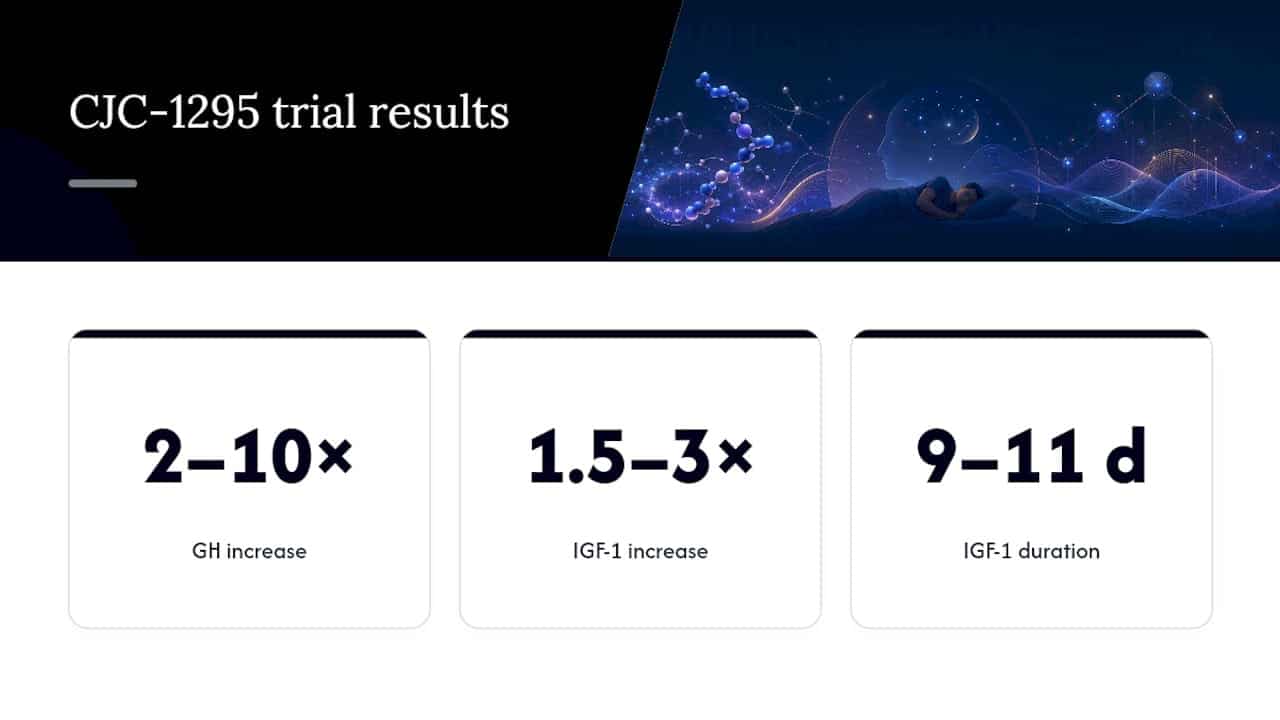
The strongest human data comes from a randomized, placebo-controlled trial of CJC-1295 alone, which documented dose-dependent GH increases (roughly 2 to 10 times baseline for several days) and IGF-1 elevations of 1.5 to 3 times baseline lasting 9 to 11 days, with cumulative effects across repeated doses. That’s solid pharmacodynamic evidence for the hormone response itself.
What it does not show: no large RCT has validated the combined CJC-1295 and Ipamorelin stack against hard clinical endpoints like reduced mortality, proven cognitive benefit, or reliable fat-loss outcomes. The mechanistic case is genuinely strong, but biomarker movement isn’t a substitute for outcome trials. Anyone selling this stack as a proven anti-aging solution is overstating what the research supports.
What should you ask your doctor before starting?
Walk into a consultation with specifics, not just interest.
- Request baseline IGF-1, fasting glucose, and general metabolic panel labs before day one.
- Ask what follow-up schedule they’ll use and what specific values would prompt stopping.
- Clarify whether they recommend DAC or no-DAC dosing for your goals and why.
- Confirm any personal or family cancer history is documented and reviewed first.
- Establish an exit plan: cycle length and what a taper or stop looks like.
Pro Tip: If a source of the peptide won’t tell you the purity testing method, or a “clinic” won’t order baseline labs before selling you a protocol, that’s a red flag worth walking away from, no matter how good the sales pitch sounds.
Where responsible peptide use actually starts
Soma Peptide’s view is that this stack has a real, evidence-backed place for select adults under proper supervision, but it’s never a substitute for sleep, training, and nutrition. Chase realistic biomarker timelines, not hype. Get labs before and during use, and treat muscle-focused peptide protocols as one tool among several, not the whole plan.
— Soma Peptide
Where to find high-purity CJC-1295 and Ipamorelin
Once you’ve talked to a prescriber and decided the stack fits your situation, sourcing quality becomes the next real decision. Generic-brand peptides sold with vague purity claims are the single biggest reason people don’t see the hormone response the research actually predicts. Soma Peptide formulates its CJC-1295 and Ipamorelin above 99% purity, tested to back that claim rather than just print it on a label.
Beyond the product itself, Soma Peptide’s peptide protocols for muscle and recovery page walks through practical dosing patterns and what to track alongside your prescriber’s plan. If your goal leans more toward composition change than recovery, the muscle growth peptide guide breaks down which combinations pair well with resistance training. Browse the current product lineup and start with a baseline bloodwork plan before your first order ships.
This article is general information, not a substitute for advice from a qualified doctor. Consult a qualified healthcare professional about your own circumstances before acting on anything here.
Sources
- PubMed record for Teichman et al., 2005
- PMC review article on GH physiology and clinical contexts
- NCI Dictionary of Cancer Terms — ipamorelin
FAQ
What are the benefits of taking CJC-1295 and Ipamorelin together?
The combination reliably raises GH and IGF-1 levels and commonly improves sleep quality and recovery within one to two weeks. Body-composition benefits like fat loss and lean muscle gain are modest and take several weeks to months, depending heavily on training and diet.
How long does it take to see results from CJC-1295 and Ipamorelin?
Sleep and recovery improvements are often noticeable within a couple of weeks, while IGF-1 elevation typically confirms on bloodwork within about one to two months. Visible body-composition changes usually take several weeks to months.
What are the downsides of Ipamorelin?
Ipamorelin’s most common side effects are mild, including injection-site irritation, temporary water retention, and occasional headaches. It’s generally considered to carry a lower risk of cortisol and prolactin spikes than older growth hormone releasing peptides, but it still requires monitoring for glucose and IGF-1 changes.
Does CJC-1295 raise testosterone?
CJC-1295 is not designed to raise testosterone directly; its documented effect is on growth hormone and IGF-1 levels, not the hypothalamic-pituitary-gonadal axis. Any testosterone change reported anecdotally isn’t supported by the current pharmacodynamic trial data on CJC-1295.