




Tesamorelin commonly causes injection-site reactions, arthralgia and fluid retention; the most serious risks are hypersensitivity and changes in blood sugar that need to prompt medical attention. Most patients experience mild, manageable symptoms that surface early and fade with continued use. Routine blood glucose and IGF-1 monitoring catches the rare complications before they become dangerous. Anyone with active cancer or who is pregnant should not start this therapy at all.
TL;DR:
- Most patients experience mild joint pain, injection site irritation, and swelling early in treatment, which usually improve with over-the-counter pain relievers and site rotation.
- Severe reactions like hypersensitivity, significant fluid retention, or blood sugar spikes require immediate medical attention and discontinuation of the drug.
- Tesamorelin is contraindicated for individuals with active cancer, pregnant women, critically ill patients, and those with pituitary issues or recent major surgery.
- Regular monitoring of blood glucose and IGF-1 levels is essential, with baseline and follow-up tests to prevent dangerous metabolic disturbances.
- Fat reduction effects depend on ongoing treatment, as visceral fat tends to re-accumulate after stopping the drug, and mild side effects usually resolve quickly post-therapy.
Table of Contents
- Common tesamorelin side effects and how to manage them
- Serious side effects that need immediate medical attention
- Who should not take tesamorelin
- Blood sugar and IGF-1 monitoring: what tests you’ll need
- Injection-site care: reducing redness, itching, and bruising
- What happens after you stop tesamorelin
- Clinical evidence summary: what the trials actually showed
- How to talk to your healthcare team about side effects
- Soma Peptide’s perspective on tesamorelin safety
- Where to find high-purity peptides and injection supplies
- Sources
- FAQ
Common tesamorelin side effects and how to manage them
Most people who start tesamorelin notice something in the first few weeks. It’s rarely dangerous, but it’s worth knowing what’s normal versus what needs a phone call.
The most frequently reported effects, according to prescribing information filed with DailyMed’s EGRIFTA SV documentation, include:
- Joint pain (arthralgia), often in the hands, wrists, or knees
- Redness, itching, or irritation at the injection site
- Muscle aches (myalgia)
- Pain in the arms or legs
- Swelling in the hands, feet, or ankles (peripheral oedema)
Injection-site reactions are the single most common complaint. Joint and muscle aches typically respond to standard over-the-counter pain relievers like acetaminophen or ibuprofen. Swelling in the hands or feet is worth tracking day to day. If it’s mild and stays that way, it’s usually not urgent, but a sudden increase or numbness alongside it deserves a call to your prescriber.
Serious side effects that need immediate medical attention
Three categories of reaction separate “annoying” from “urgent,” and every patient should know how to spot them fast.
Hypersensitivity reactions occurred in a small percentage of patients in clinical trials, according to DailyMed’s prescribing data. Warning signs include:
- Hives or a widespread rash
- Facial or throat swelling
- Difficulty breathing or swallowing
Stop the injection immediately and seek emergency care if any of these appear. This isn’t a “wait and see” situation.
Severe fluid retention can show up as new or worsening carpal tunnel symptoms (tingling, numbness, or weakness in the hands) or unexplained joint swelling that wasn’t there before treatment. Signs of elevated blood sugar or new-onset diabetes, such as excessive thirst, frequent urination, or unexplained fatigue, also warrant urgent evaluation, per MedlinePlus drug information.
People with pre-existing diabetes, borderline glucose control, or a history of fluid-retention issues face higher risk from these particular complications, which is exactly why baseline screening matters before treatment starts.
Who should not take tesamorelin
Tesamorelin isn’t appropriate for everyone, and a good prescriber will screen for these issues before writing the first prescription.
- Active malignancy or recent cancer history: because tesamorelin stimulates growth hormone release, it’s contraindicated for anyone with active cancer. Disease needs to be inactive and stable before a clinician would even consider this therapy.
- Pregnancy and breastfeeding: tesamorelin carries a risk of fetal harm and is contraindicated during pregnancy, per MedlinePlus.
- Critical illness: growth hormone therapies have been linked to increased mortality in critically ill patients, so tesamorelin is typically discontinued in that setting.
- Pituitary or recent major surgery concerns: because of the drug’s growth-promoting mechanism, these situations get extra scrutiny before treatment begins.
None of this is a checklist for a patient to self-diagnose. It’s context for the conversation your prescriber needs to have with you before the first dose.
Blood sugar and IGF-1 monitoring: what tests you’ll need
IGF-1 rises predictably on tesamorelin because that’s the whole point. The drug stimulates the pituitary to release growth hormone, and IGF-1 is the downstream marker that reflects how active that stimulation is. Keeping it within a therapeutic range is how clinicians confirm the drug is working without pushing growth-factor signalling too far.
Expect a monitoring routine that looks something like this:
- Baseline testing before your first dose: fasting glucose, HbA1c, and an initial IGF-1 level.
- Follow-up glucose checks at regular intervals, since tesamorelin can affect glucose metabolism in sensitive patients.
- Periodic IGF-1 testing, often every few months, to confirm levels stay in a safe range.
- Dose adjustment or a temporary hold if glucose or IGF-1 results come back abnormal, sometimes with a referral to an endocrinologist.
Pro Tip: Bring a simple symptom log to every follow-up appointment. Note swelling, joint pain, fatigue, or thirst by date. It gives your clinician real data instead of a vague “I’ve been feeling off,” and it speeds up the decision on whether a lab abnormality is a fluke or a pattern.
Injection-site care: reducing redness, itching, and bruising
Rotating your injection sites is the single biggest thing you can do to cut down on local reactions, according to guidance from Drugs. Sticking with one spot week after week is asking for irritation.
- Rotate between different areas of the abdomen rather than reusing the same spot.
- Use clean technique every time. Alcohol swab, clean hands, fresh needle.
- A brief cool compress after injecting can ease stinging or itching.
- Avoid vigorous exercise on the injected area for a few hours afterward.
Our guide to peptide injection sites and technique covers the practical mechanics in more detail. If redness spreads, feels warm, or comes with fever, that’s no longer a normal reaction. Call your clinician.
What happens after you stop tesamorelin
Visceral fat reduction from tesamorelin is maintenance-dependent. Once treatment stops, that fat often re-accumulates over time, so the results aren’t necessarily permanent without continued therapy or lifestyle support.
- Mild side effects like injection-site irritation and joint aches typically resolve within days to weeks of stopping.
- IGF-1 levels usually normalize once the drug clears your system.
- Anything that doesn’t settle, especially fluid retention or persistent joint symptoms, needs a follow-up visit rather than a wait-and-see approach.
Talk to your clinician about a follow-up schedule before you stop, not after.
Clinical evidence summary: what the trials actually showed
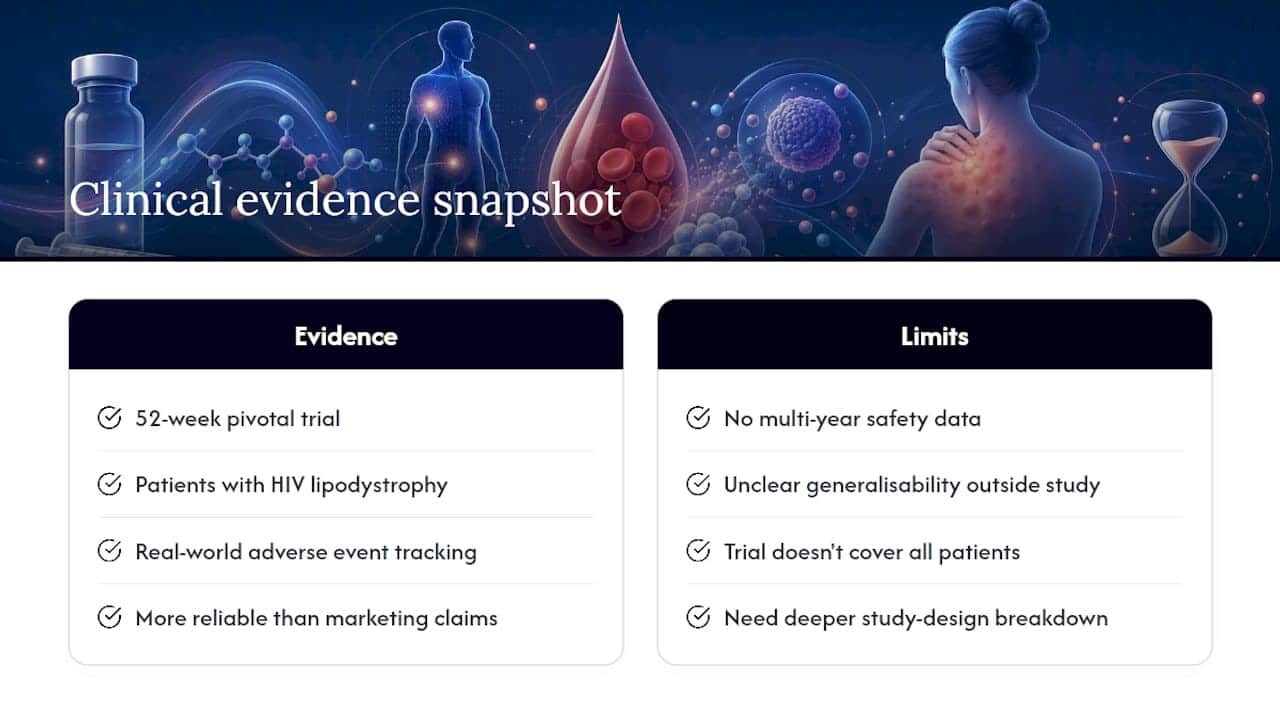
The safety and efficacy picture for tesamorelin comes largely from a pivotal 52-week trial in patients with HIV-associated lipodystrophy. The results, along with real-world adverse event tracking, give a clearer picture of what to expect than marketing claims ever could.
What the trial doesn’t tell you is how safety holds up over years of use, or how these numbers translate for someone using tesamorelin outside that studied population. Our breakdown of tesamorelin’s fat-loss trial data digs into the study design in more depth.
How to talk to your healthcare team about side effects
A short prep list makes your next appointment far more useful than showing up and hoping the right questions come up on their own.
- Report any joint pain, swelling, or injection-site changes, even if they seem minor.
- Share your full health history, especially any cancer history, pregnancy status, or existing diabetes.
- Ask directly: how often will my glucose and IGF-1 get checked, and what result would trigger a dose change?
- Ask what threshold of fluid retention or joint symptoms means “call the office” versus “go to emergency.”
Facial swelling, difficulty breathing, or chest tightness always means emergency services, not a callback request.
Soma Peptide’s perspective on tesamorelin safety
Blood glucose and IGF-1 monitoring, dose decisions, and eligibility screening belong entirely to you and your prescriber. Our role is education and clean, well-documented supply, including injection ancillaries done right.
— Soma Peptide
Where to find high-purity peptides and injection supplies
Reading about side effects is one thing. Actually sourcing a product you can trust is another problem entirely, and it’s one a lot of suppliers handle poorly. Our role is education and supplying peptides and related ancillaries.
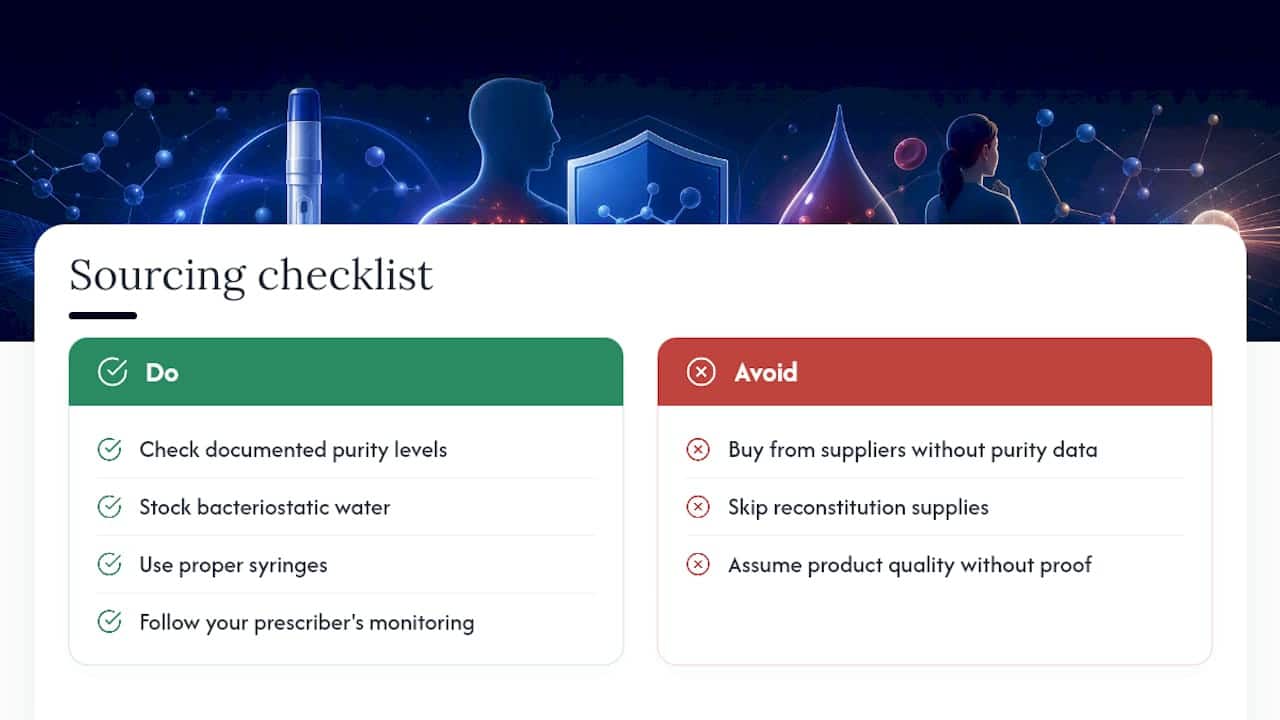
If you’re researching sourcing options after reading about how tesamorelin behaves in the body, our peptides for muscle guide walks through what documented purity actually looks like and how it connects to the reconstitution supplies you’ll need on hand, from bacteriostatic water to proper syringes. None of this replaces your prescriber’s monitoring plan. What it does is make sure the product itself isn’t the variable you have to worry about.
Browse Soma Peptide’s peptide selection to see documented purity levels and available ancillaries before your next order.
Sources
For deeper reading beyond this guide, the MedlinePlus tesamorelin drug page covers patient-facing safety information, and the pivotal 52-week clinical trial details the efficacy data behind VAT reduction claims.
This article is general information, not a substitute for advice from a qualified doctor. Consult a qualified healthcare professional about your own circumstances before acting on anything here.
- Tesamorelin Injection: MedlinePlus Drug Information
- DailyMed – EGRIFTA SV (tesamorelin) prescribing information
FAQ
What are the risks of taking tesamorelin?
The main risks are hypersensitivity reactions, severe fluid retention, and elevated blood sugar or new-onset diabetes. Common but less serious risks include injection-site reactions, joint pain, and muscle aches.
Why was tesamorelin restricted for certain patients?
Tesamorelin is contraindicated in people with active cancer and in pregnant patients because of the theoretical risk of stimulating tumour growth and documented fetal harm. It’s also generally avoided in critically ill patients due to mortality risks seen with growth hormone therapies in that setting.
What should I avoid while taking tesamorelin?
Avoid using cloudy or particulate injection solution, and tell your prescriber about any other medications affecting blood sugar or growth hormone pathways before combining them. Also avoid injecting into the same site repeatedly, since rotation reduces local reactions.
What happens after you stop taking tesamorelin?
Visceral fat reduction is maintenance-dependent, so fat often re-accumulates once treatment stops. Most mild side effects like injection-site irritation resolve within days to weeks, though persistent symptoms should be followed up with your clinician.
How often will I need blood tests on tesamorelin?
Expect baseline fasting glucose, HbA1c, and IGF-1 testing before starting, followed by periodic follow-up checks throughout treatment. Your prescriber sets the exact cadence based on your individual risk factors.