Bacteriostatic water is sterile water carrying 0.9% benzyl alcohol as a preservative, and its job is to dissolve or dilute injectable drugs, especially ones drawn from the same vial more than once. That preservative is the whole point: it slows bacterial growth inside a multi-dose vial across repeated needle punctures, which sterile water cannot do on its own.
The correct use case is narrow and worth memorizing:
- Reconstituting a freeze-dried (lyophilized) drug, like a peptide, that you plan to draw from several times over days or weeks.
- Diluting a concentrated injectable before subcutaneous or intramuscular use, only when the drug’s own monograph allows a preserved diluent.
- Any workflow where a vial’s rubber stopper gets punctured repeatedly, since fewer punctures on a preservative-free product simply means less risk.
One contraindication overrides everything else: bacteriostatic water is not for neonates or infants, and it is not a substitute for preservative-free sterile water when a drug’s label demands one. Get that part wrong and the consequences are not theoretical, which the next section explains in plain terms.
Key Takeaways
Bacteriostatic water safely supports multi-dose reconstitution when the drug’s monograph permits a preserved vehicle, but it is never appropriate for neonates or IV use without confirmed isotonicity.
| Point | Details |
|---|---|
| Confirm monograph compatibility | Check that your specific drug or peptide approves a benzyl alcohol-preserved vehicle before reconstituting. |
| Respect the neonatal exclusion | Never use bacteriostatic water in neonates; preservative-free sterile water is the required alternative. |
| Track cumulative exposure | Log every benzyl alcohol-containing product you use, since exposure adds up across multiple preserved medications. |
| Practise strict aseptic technique | Swab the stopper, use fresh needles, and inspect for cloudiness or particulates before every draw. |
| Follow the 28-day convention | Refrigerate opened vials and discard around 28 days post-puncture unless your label states otherwise. |
| Choose quality ancillaries | Soma Peptide supplies USP-labelled bacteriostatic water and reconstitution ancillaries alongside product-specific storage guidance. |
Table of Contents
- What bacteriostatic water actually contains
- When is bacteriostatic water the right choice?
- Who should avoid bacteriostatic water, and why
- How do you keep the vial clean during repeated use?
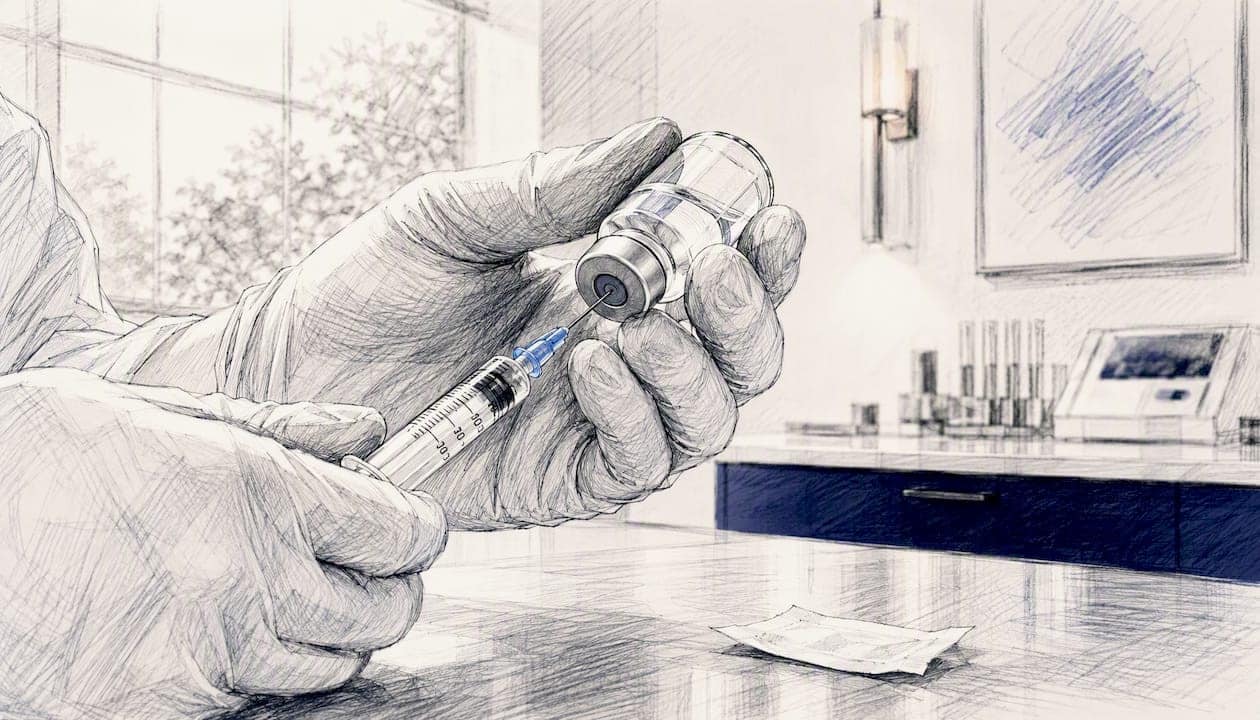
- How do you actually reconstitute a vial step by step?
- How long does an opened vial last, and how should it be stored?
- What do people get wrong about bacteriostatic water?
- What quality signals should guide your choice of bacteriostatic water?
- Are regulatory standards for bacteriostatic water the same everywhere?
- Can bacteriostatic water affect a drug’s stability once mixed?
- An editorial take on getting this right
- Where Soma Peptide fits into your reconstitution routine
- Where to verify the details yourself
- Sources
- FAQ
What bacteriostatic water actually contains
Bacteriostatic Water for Injection, USP is a nonpyrogenic sterile water formulated with 0.9% benzyl alcohol, or 9 mg per mL, as its preservative. That single ingredient is what separates it from plain sterile water, and it is the reason the product tolerates being entered by a needle dozens of times without turning into a bacterial culture.
The pH typically is approximately 5.7, with an accepted range from about 4.5 to 7.0 varying by manufacturer. That mild acidity helps preserve stability and is not something you need to adjust or worry about during normal use.
Labels vary slightly between manufacturers. Some list 9 mg/mL of benzyl alcohol while others show closer to 11 mg/mL, which matters if you’re tracking cumulative preservative exposure across multiple products. Always check the actual concentration printed on your vial rather than assuming a round number.
Statistic Callout: Benzyl alcohol concentration in USP-grade bacteriostatic water typically runs at 9 mg/mL, with an accepted range up to roughly 11 mg/mL across different manufacturers.
Packaging is almost always a multi-dose vial sealed with a rubber stopper designed for repeated needle entry. If your product is labelled “Bacteriostatic Water for Injection, USP,” that USP designation signals it meets the official pharmacopeial standard for sterility, preservative content, and pH, and it’s worth confirming that wording is actually on your label before you rely on the product for multi-dose work.
When is bacteriostatic water the right choice?
Bacteriostatic water earns its place in three recurring situations, all tied to one theme: repeated access to the same vial.
- Reconstituting lyophilized drugs. Peptides, certain hormone preparations, and some vaccines arrive as a freeze-dried powder that needs a liquid vehicle before injection, and the drug’s own monograph will state whether a preserved diluent is acceptable.
- Diluting concentrated injectables. Some drugs ship at a concentration too strong for direct use and need dilution before intramuscular, subcutaneous, or intravascular administration, again only where the manufacturer permits it.
- Supporting genuine multi-dose workflows. If you’re withdrawing small doses across several weeks rather than using the whole vial in one sitting, the preservative is doing real work every time that needle goes back in.
A practical peptide-reconstitution guide notes that bacteriostatic water has become the standard solvent for peptide vials precisely because most peptide protocols involve repeated withdrawals over roughly a month, not a single-use event. That’s the pattern to watch for: if you’ll be back in that vial tomorrow, next week, and the week after, preservative matters.
Who should avoid bacteriostatic water, and why
The single most important warning in this entire topic concerns infants. Benzyl alcohol has been linked to a cluster of toxic reactions in neonates known as “gasping syndrome,” which historically involved severe metabolic and respiratory complications in premature and low-birth-weight infants given benzyl alcohol-preserved solutions. Preservative-free sterile water for injection is the correct alternative for neonates and very young infants, full stop.
Beyond that hard line, a few groups warrant extra caution:
- People with significant liver or kidney impairment, since benzyl alcohol is metabolized and cleared through those organs, and reduced function can allow it to build up.
- Anyone using multiple benzyl alcohol-preserved products at once, because exposure is cumulative across every preserved medication in your regimen, not just the one you’re currently reconstituting.
- Pregnant or breastfeeding individuals, since benzyl alcohol can cross the placenta and has been detected in breast milk, which is a reason to discuss preserved versus preservative-free options with a clinician rather than assume either is automatically fine.
- Anyone preparing an IV admixture, since manufacturer guidance is explicit that bacteriostatic water should not be used for intravenous injection unless the final solution is approximately isotonic, and some drug makers prohibit preserved water for IV use entirely.
Statistic Callout: Benzyl alcohol preservative in bacteriostatic water is present at roughly 9 mg per mL, the same concentration flagged in neonatal toxicity warnings that keep this vehicle out of infant care entirely.
The thread running through all of this is compatibility. Every drug has its own monograph, and that document, not general internet advice, decides whether a preserved vehicle is acceptable for that specific compound.
How do you keep the vial clean during repeated use?
Aseptic technique is not optional, and most contamination problems trace back to a shortcut somewhere in this list.
- Inspect the seal before you touch the vial. If it’s broken, cloudy, or looks tampered with, don’t use it.
- Swab the rubber septum with an alcohol pad every single time, even if you swabbed it an hour ago.
- Use a new sterile syringe and needle for each draw; never reuse a needle to save money.
- Avoid touching the needle tip to anything other than the swabbed septum.
- Minimize how much air you push in and pull out of the vial with each entry, since every exchange is an opportunity for contamination.
Before drawing any dose, hold the vial up to good light and look for cloudiness, floating particles, or any discolouration. Product labelling explicitly warns to discard the solution if you see any of these, and this isn’t a step to skip because the vial “looked fine yesterday.”
There’s a common misunderstanding worth correcting here: bacteriostatic means the preservative slows bacterial growth, not that it kills anything already present. A peptide reference resource puts it plainly: the mechanism is inhibitory, not sterilizing, so a vial that’s already been contaminated through sloppy technique isn’t “cleaned up” by the benzyl alcohol sitting inside it. Prevention is the entire strategy, not damage control.
Pro Tip: Keep a simple log of every product you’re using that contains benzyl alcohol, even ones that seem unrelated (some topical and oral medications carry it too). If you’re combining several preserved products, your cumulative daily exposure adds up faster than most people expect.
If you have any doubt about whether a preserved vehicle suits your situation, a pharmacist can check the specific drug’s monograph in a few minutes.
How do you actually reconstitute a vial step by step?
The sequence is the same regardless of what you’re dissolving, though the volume and specific drug details always come from that product’s own monograph.
- Confirm you have the correct vehicle. Check the drug’s monograph to verify bacteriostatic water is approved for that compound, rather than sterile water or saline.
- Check sterility and expiry. Look at the seal and the printed expiry date on both the bacteriostatic water and the drug vial.
- Swab both stoppers with a fresh alcohol pad and let them air dry for a few seconds.
- Draw the appropriate volume of bacteriostatic water into a sterile syringe.
- Insert the needle and direct the stream against the vial wall, not straight onto the powder. Spraying liquid directly onto a lyophilized cake creates foam and can mechanically stress the compound.
- Swirl gently, don’t shake. Vigorous agitation can denature delicate proteins like peptides; a slow swirl or gentle roll between your palms dissolves the cake just as effectively.
- Inspect the finished solution for clarity before drawing any dose.
- Label the vial with the reconstitution date and refrigerate if the product monograph calls for it.
Here’s the part people get wrong most often: the volume of bacteriostatic water you add sets the concentration of the drug, not the amount of drug in the vial. Adding more water doesn’t make the vial weaker in total content, it just spreads the same amount of active compound across more liquid, which changes how much volume you draw for a given dose.
Pro Tip: Choose your reconstitution volume so a typical dose lands on a whole or half unit on your syringe. If you’re using an insulin syringe with 100 units marked across 1 mL, doing the math ahead of time so your usual dose falls on a clean number, say 10 or 20 units, cuts down on measurement error far more than trying to eyeball a fraction of a tiny mark. This approach is standard practice among people managing regular peptide protocols, since consistent syringe units beat guessing at volumes between the lines every time.
How long does an opened vial last, and how should it be stored?
Unopened bacteriostatic water is shelf-stable until the printed expiry date, provided it’s stored as the label directs, typically at room temperature away from light. That part is straightforward.
Once you puncture the stopper for the first time, the clock changes. Many multi-dose preserved vials are commonly used for up to about 28 days after that first puncture, though the exact window always depends on what’s printed on your specific product’s label, so treat 28 days as a common convention rather than a universal rule.
- Refrigerate the vial after first use, generally at temperatures within a low refrigerator range, unless the label says otherwise.
- Never freeze bacteriostatic water or a reconstituted peptide vial; freezing can damage both the vehicle and delicate protein structures.
- Keep the rubber stopper clean and recap it between uses rather than leaving it exposed.
- Write the first-use date directly on the vial the moment you puncture it, so you’re never guessing later.
- Discard immediately if you notice cloudiness, floating particles, discolouration, or unexpected precipitation, regardless of how many days are left on your 28-day estimate.
What do people get wrong about bacteriostatic water?
A handful of misconceptions cause most of the avoidable problems in this space, and they’re worth naming directly.
“Bacteriostatic water does something on its own.” It doesn’t. It’s a vehicle, not a treatment. Injecting it by itself has no therapeutic purpose and isn’t something a clinician would ever direct outside of specific diagnostic contexts.
“The preservative means the vial can’t get contaminated.” Wrong, and dangerously so. The preservative inhibits growth of organisms that get introduced; it does nothing to reverse contamination that’s already occurred through poor technique.
“Sterile water works just as well for a multi-dose vial.” It doesn’t, because sterile water for injection carries no preservative at all and is meant for single, immediate use. Using it in a vial you plan to re-enter repeatedly raises contamination risk with every subsequent puncture.
“Benzyl alcohol is harmless in any amount for anyone.” Also wrong. It’s well tolerated by most healthy adults in the doses found in a single vial, but cumulative exposure across multiple preserved products, plus the hard exclusion for neonates, means “harmless” isn’t a blanket statement here.
What quality signals should guide your choice of bacteriostatic water?
Not every bottle on the market is equally trustworthy, and a few checks take seconds but tell you a lot.
Look for the exact phrase “Bacteriostatic Water for Injection, USP” on the label, since that designation ties the product to a defined pharmacopeial standard rather than a vague marketing claim. Confirm the seal is fully intact, the liquid inside is visibly clear with no particulate matter, and the benzyl alcohol concentration is printed somewhere on the packaging. A visible, unexpired date matters just as much on the diluent as it does on the drug you’re reconstituting.
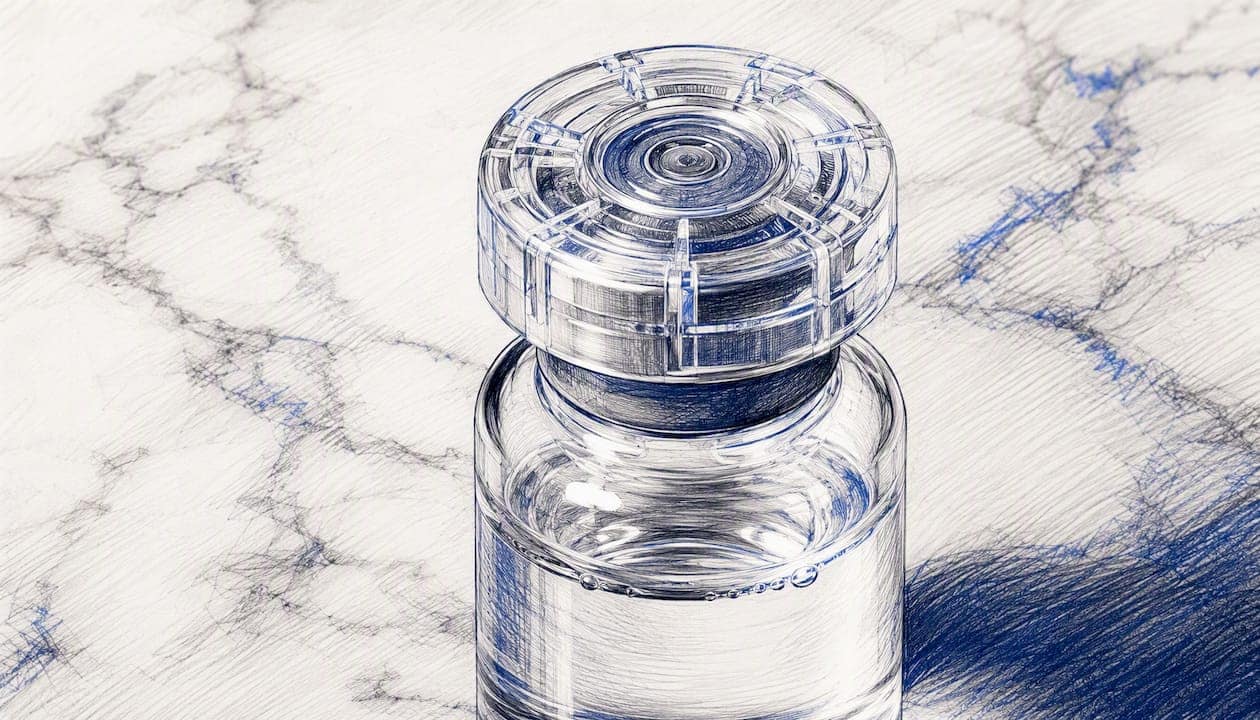
Technique-wise, a few habits separate clean, consistent results from guesswork. Aim the fluid against the vial wall instead of spraying the lyophilized cake directly, since this simple adjustment reduces foaming and lowers the odds of mechanically stressing the protein structures in a peptide. Use the smallest volume that’s still comfortable for accurate dosing, rotate your injection sites if you’re dosing frequently, and keep a written log covering the date, lot number, reconstitution volume, and first-use date for every vial you open.
Compatibility always comes back to the specific compound. If you’re working with a GHS peptide or any other freeze-dried compound, the product’s own monograph or manufacturer guidance is the final word on which vehicle and storage conditions apply, not general reconstitution habits you’ve picked up elsewhere.
Are regulatory standards for bacteriostatic water the same everywhere?
Not entirely, and the differences matter more than most guides admit. In the United States, “Bacteriostatic Water for Injection, USP” refers to a product meeting the U.S. Pharmacopeia’s defined standard for sterility, preservative concentration, and pH, with labelling requirements enforced through the FDA’s monograph system. Other jurisdictions maintain their own pharmacopeial standards, and a product labelled to one country’s specification isn’t automatically identical to a product labelled under another.
This is exactly why the actual label on your specific vial outranks any general description you read online, including this one. Two bottles both called “bacteriostatic water” can carry slightly different benzyl alcohol concentrations, different approved uses, or different storage windows depending on which regulatory body approved them and under what monograph. When in doubt, the manufacturer’s own product information sheet or a pharmacist consultation resolves the question faster than comparing labels from memory.
Can bacteriostatic water affect a drug’s stability once mixed?
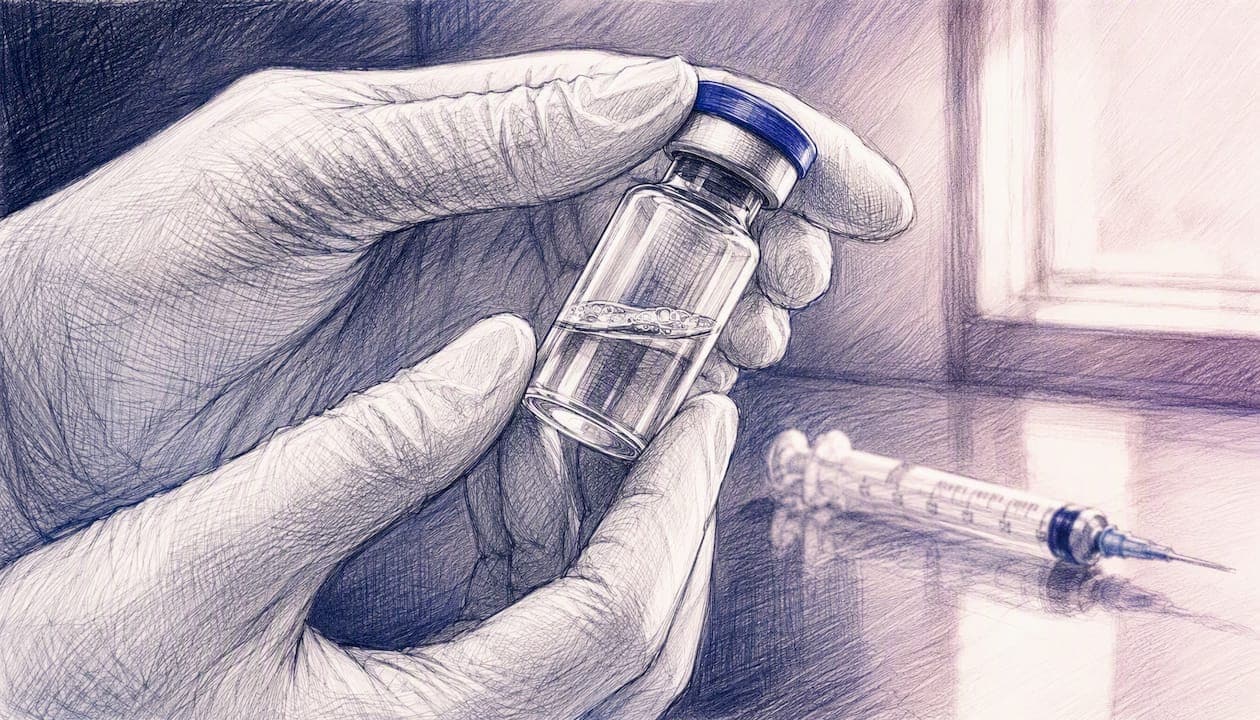
Yes, and this is where reconstitution technique stops being a formality. Peptides in particular are sensitive to mechanical stress, and directing the reconstitution stream against the vial wall rather than spraying the powder directly reduces foaming and helps limit denaturation of the protein structure. Vigorous shaking has the same risk profile as aggressive spraying, since both introduce unnecessary agitation into a compound that dissolves perfectly well with a gentle swirl.
Beyond technique, compatibility itself is drug-specific. Some compounds are simply not approved for reconstitution with a benzyl alcohol-preserved vehicle because the preservative can interact with the drug or affect its stability profile over the vial’s usable life. That’s the entire reason manufacturer guidance keeps pointing back to the individual drug’s monograph rather than offering one universal answer: what’s stable and effective for one peptide or protein product may not hold true for another, even when both look like similar white powders in similar vials before reconstitution.
An editorial take on getting this right
Most of the harm in this space doesn’t come from bacteriostatic water itself. It comes from treating a preserved vehicle like a minor detail instead of the specific pharmaceutical product it actually is, with its own concentration, its own pH, and its own hard exclusions.
Soma Peptide’s position on this is straightforward: use the vehicle the drug’s monograph tells you to use, follow the aseptic steps every time rather than most of the time, and don’t guess when a manufacturer’s instructions are one search or one pharmacist call away. That applies whether you’re reconstituting a peptide for a multi-week protocol or diluting a concentrated injectable for a single dose. The neonatal warning around benzyl alcohol isn’t a footnote, it’s the clearest signal in the whole topic that “preserved” and “universally safe” are not the same claim.
Consultation with a clinician matters most for the populations where the stakes are highest: infants, anyone with significant liver or kidney impairment, and anyone pregnant or breastfeeding. For everyone else, the discipline is simpler than it sounds. Check the label, respect the puncture count, and inspect before you draw. Skipping those habits is where nearly every avoidable problem actually starts.
Where Soma Peptide fits into your reconstitution routine
Soma Peptide supplies high-purity, research-grade peptides alongside the ancillaries that make safe multi-dose reconstitution practical, including USP-grade bacteriostatic water, sterile syringes, and alcohol swabs. Every product line links back to its own guidance on storage and compatible vehicles, so you’re not left guessing which diluent a specific compound calls for.
If you’re building or refining a reconstitution routine, the peptides for muscle growth guide walks through product-specific handling details worth reading before your next order. And if fat loss or recovery protocols are more your focus, the best peptides for weight loss guide covers compound-specific storage notes alongside purity standards. Either page is a reasonable next stop once you know how to handle the diluent side of the equation.
Where to verify the details yourself
- The official product monograph on DailyMed lists exact benzyl alcohol concentration, pH range, and label warnings for bacteriostatic water.
- Pfizer Medical’s product page covers approved routes of administration and isotonicity requirements for IV use.
- The CDC’s historical reporting on benzyl alcohol toxicity explains the neonatal risk in clinical detail.
- NHS Scotland’s IV administration guidance outlines aseptic technique standards relevant to any injectable preparation.
Always check the specific drug’s own monograph or speak with a pharmacist before choosing a vehicle, since that document overrides any general guidance, including everything above.
Sources
- BACTERIOSTATIC WATER- water injection, solution US MedSource, LLC
- Bacteriostatic Water for Peptides: A Practical Guide | Done Dose
- CDC MMWR: reports on benzyl alcohol toxicity (gasping syndrome)
- Bacteriostatic water for injection, USP | Pfizer Medical
- Administration of medicines by intravenous route — NHS Scotland guidance
FAQ
Do you need to use bacteriostatic water?
Only if the drug you’re reconstituting will be withdrawn from the same vial multiple times and its monograph permits a preserved vehicle; single-use vials often call for sterile water instead.
What happens if I inject just bacteriostatic water?
It has no therapeutic effect on its own since it’s a diluent, not a treatment, and injecting it without a specific clinical reason serves no purpose.
How much bacteriostatic water should I use?
The volume depends entirely on the drug’s monograph and your desired concentration; a common practice is choosing a volume that makes your typical dose land on a clean syringe unit for easier measurement.
How do you use bacteriostatic water for injection?
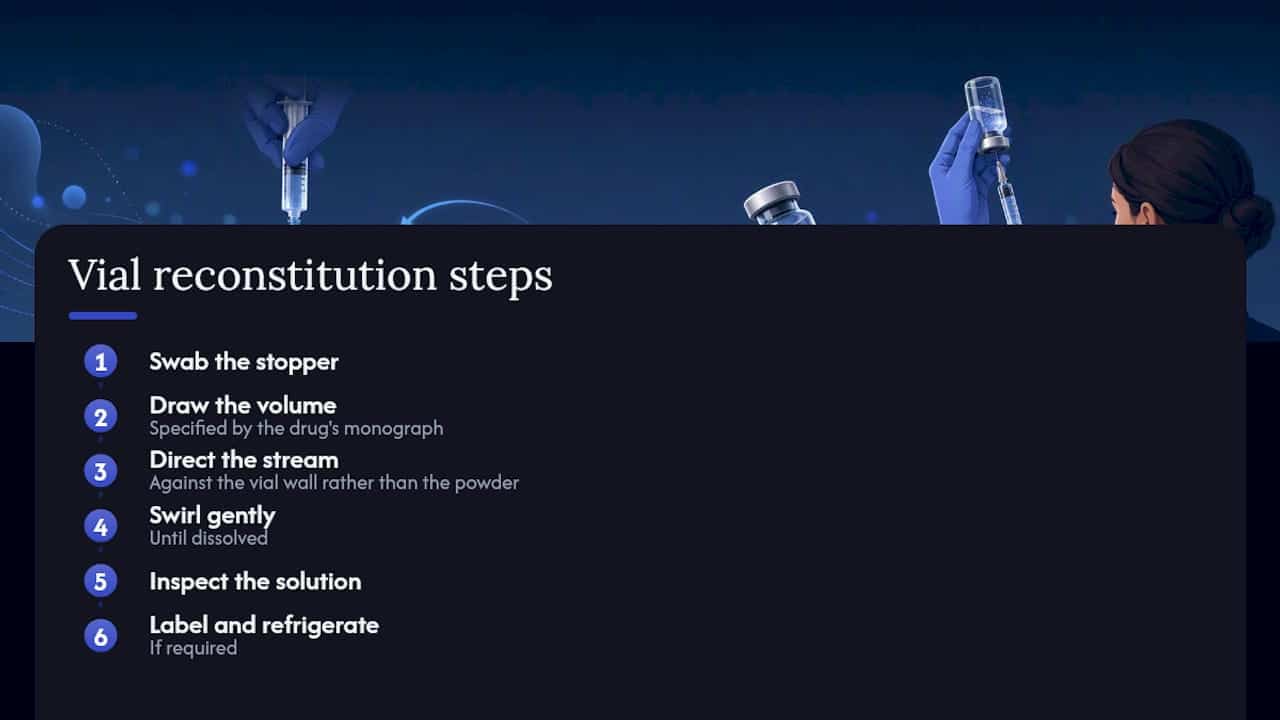
Swab the stopper, draw the volume specified by the drug’s monograph, direct the stream against the vial wall rather than the powder, swirl gently until dissolved, inspect the solution, then label and refrigerate if required.
What’s the difference between bacteriostatic water and sterile water?
Bacteriostatic water contains a benzyl alcohol preservative suited to multi-dose vials, while sterile water carries no preservative and is intended for single, immediate use.