


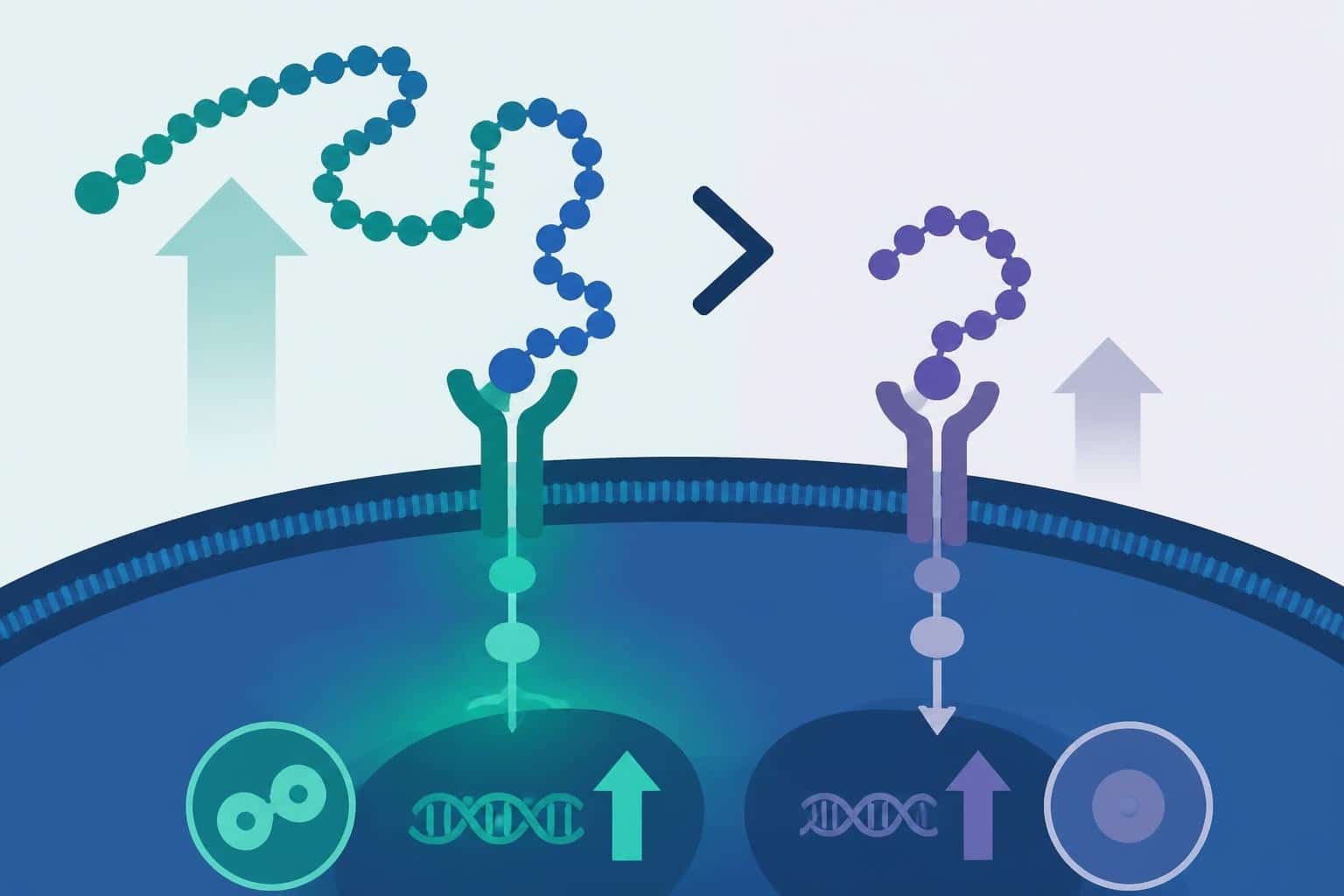
The landscape of peptide research continues to evolve as scientists explore modified versions of naturally occurring compounds that offer enhanced stability and biological activity. Among these synthetic analogs, igf lr3 stands out as a structurally modified variant of insulin-like growth factor 1 (IGF-1) that has attracted significant attention in research settings. This extended form features specific amino acid substitutions and additions that fundamentally alter its interaction with binding proteins, resulting in a longer half-life and potentially amplified effects on cellular growth and metabolism. Understanding the science behind this peptide requires examining its structural characteristics, mechanisms of action, and the research evidence that has shaped current knowledge about its applications.
Understanding the Structure and Chemistry of IGF LR3
IGF LR3 represents a carefully engineered modification of the native IGF-1 molecule, designed to overcome certain biological limitations that reduce the effectiveness of the natural compound. The "LR3" designation refers to Long-R3, indicating both its extended amino acid sequence and a specific arginine substitution at position 3.
Key Structural Modifications
The peptide contains 83 amino acids compared to the 70 amino acids found in native IGF-1. This extension occurs at the N-terminus, where 13 additional amino acids are added to the original sequence. Additionally, researchers replaced the glutamic acid at position 3 with arginine, a substitution that dramatically reduces the molecule's affinity for IGF binding proteins (IGFBPs).
These structural changes create several functional advantages:
- Reduced binding protein interaction: The molecule binds poorly to IGFBPs, proteins that normally sequester IGF-1 in circulation
- Extended half-life: The peptide remains active in the body significantly longer than native IGF-1
- Enhanced bioavailability: More of the compound reaches target tissues in an active state
- Greater receptor activation: The modifications allow for more sustained interaction with IGF-1 receptors

According to research compiled by Peptide Helper, the modifications to igf lr3 result in a half-life approximately two to three times longer than native IGF-1, which typically degrades within minutes of entering circulation.
Receptor Binding and Selectivity
The IGF-1 receptor serves as the primary target for this peptide, though cross-reactivity with insulin receptors can occur at higher concentrations. The binding affinity to IGF-1 receptors remains comparable to native IGF-1, but the reduced interaction with binding proteins means that a higher percentage of circulating molecules remain available for receptor activation.
| Property | Native IGF-1 | IGF LR3 |
|---|---|---|
| Amino Acid Count | 70 | 83 |
| Half-Life | ~10 minutes | ~20-30 hours |
| IGFBP Binding | High | Very Low |
| Systemic Distribution | Limited | Enhanced |
| Receptor Specificity | IGF-1R primary | IGF-1R primary, IR secondary |
Mechanisms of Action and Cellular Effects
The biological activity of igf lr3 centers on its ability to activate IGF-1 receptors throughout various tissue types, initiating signaling cascades that influence growth, metabolism, and cellular survival. These mechanisms operate through well-characterized pathways that researchers have extensively studied in laboratory settings.
Primary Signaling Pathways
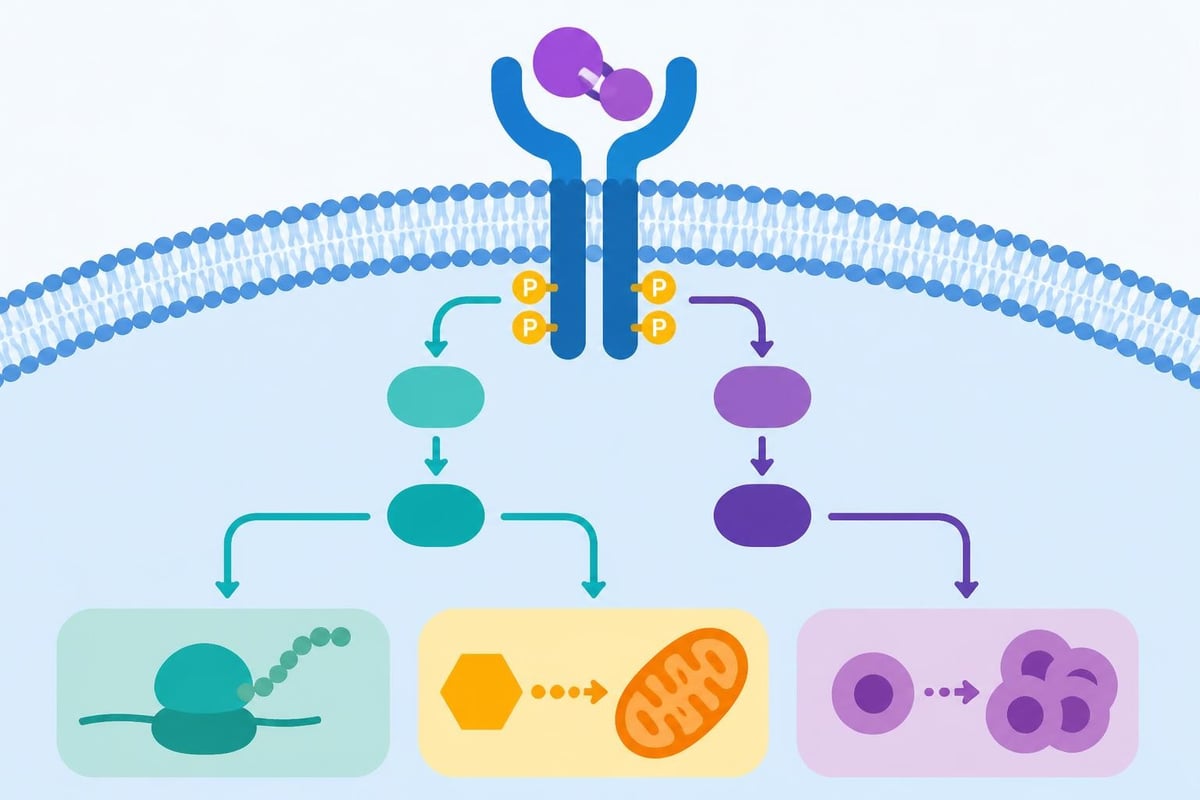
When the peptide binds to IGF-1 receptors on cell surfaces, it triggers receptor autophosphorylation, which then activates downstream signaling molecules. The two major pathways include the PI3K/Akt pathway and the MAPK/ERK pathway, each contributing distinct effects on cellular function.
The PI3K/Akt pathway primarily regulates:
- Protein synthesis through mTOR activation
- Glucose uptake and metabolism
- Cellular survival and anti-apoptotic signaling
- Glycogen synthesis and storage
The MAPK/ERK pathway influences:
- Cell proliferation and division
- Gene transcription related to growth
- Differentiation of various cell types
- Long-term cellular adaptation
Metabolic and Anabolic Effects
Research documented by Pepcodex indicates that igf lr3 demonstrates significant effects on both protein and carbohydrate metabolism. The peptide appears to shift cellular metabolism toward an anabolic state, favoring tissue building over breakdown.
In muscle tissue specifically, studies have observed increased amino acid uptake, enhanced protein synthesis rates, and reduced protein degradation. These combined effects create a net positive nitrogen balance that supports muscle fiber growth and repair. The peptide also influences satellite cell activation, a process essential for muscle regeneration and adaptation to mechanical stress.
Tissue-Specific Responses
Different tissue types respond variably to IGF-1 receptor activation. Skeletal muscle, cardiac tissue, bone, adipose tissue, and various organ systems all express IGF-1 receptors, though the downstream effects differ based on the cellular context and concurrent hormonal signals.
Researchers studying IGF-1 LR3 mechanisms have noted that the extended half-life allows for more consistent receptor occupancy across multiple tissue types, potentially creating more uniform effects throughout the body compared to native IGF-1, which shows higher local concentrations near sites of production.
Research Applications and Experimental Evidence
The scientific literature on igf lr3 encompasses primarily preclinical studies using cell cultures and animal models. These investigations have explored applications ranging from muscle wasting conditions to metabolic disorders, though human clinical trials remain limited.
Muscle Growth and Recovery Studies
Laboratory investigations using rodent models have consistently demonstrated that administration of the peptide results in increased muscle mass and enhanced recovery from induced muscle damage. Studies measuring muscle fiber cross-sectional area, total muscle weight, and contractile force production have shown dose-dependent improvements in these parameters.
Research highlighted by Peptide Wiki suggests that the anabolic effects appear most pronounced when combined with mechanical loading or resistance exercise protocols, indicating that the peptide may amplify adaptive responses to training stimuli rather than producing growth independent of such signals.
Metabolic Research Findings
Investigations into metabolic effects have revealed interesting interactions between igf lr3 and glucose homeostasis. While the peptide can enhance glucose uptake in muscle and adipose tissue through similar mechanisms as insulin, the overall metabolic impact depends heavily on nutritional status and concurrent hormone levels.
Some studies have observed:
- Improved insulin sensitivity in certain tissue types
- Enhanced nutrient partitioning toward muscle rather than fat storage
- Modulation of lipolysis and lipogenesis in adipose tissue
- Changes in hepatic glucose production and glycogen storage
Safety and Tolerability Research
Preclinical safety assessments have identified several considerations regarding prolonged exposure to elevated IGF-1 receptor activation. Research compiled by Pepi.ninja notes that chronic administration in animal models has occasionally produced unwanted effects on various organ systems, underscoring the importance of proper dosing protocols and monitoring.
| Research Area | Primary Findings | Model Systems |
|---|---|---|
| Muscle hypertrophy | Dose-dependent increases in mass and strength | Rodent models, cell culture |
| Recovery enhancement | Accelerated healing of muscle damage | Injury models, exercise protocols |
| Metabolic effects | Improved glucose disposal, altered lipid metabolism | Metabolic chambers, tracer studies |
| Long-term safety | Organ-specific concerns with chronic use | Extended administration protocols |
For researchers and practitioners working with peptides for muscle growth, understanding these research findings provides essential context for appropriate application and monitoring strategies.
Dosing Protocols and Administration Considerations
Research protocols utilizing igf lr3 have employed various dosing strategies depending on the specific outcomes being investigated and the model systems used. These experimental approaches provide insights into how the peptide behaves under different administration conditions, though direct translation to human applications requires careful consideration.
Common Research Dosing Frameworks
Published studies have used dosages ranging from micrograms to milligrams per kilogram of body weight, administered at frequencies from daily to several times per week. The extended half-life of the peptide allows for less frequent dosing compared to native IGF-1, which requires continuous infusion or multiple daily injections to maintain therapeutic levels.
According to dosing information compiled by Peptide Research Handbook, most research protocols have utilized subcutaneous or intramuscular injection routes, with absorption kinetics varying between these administration sites.
Typical research parameters include:
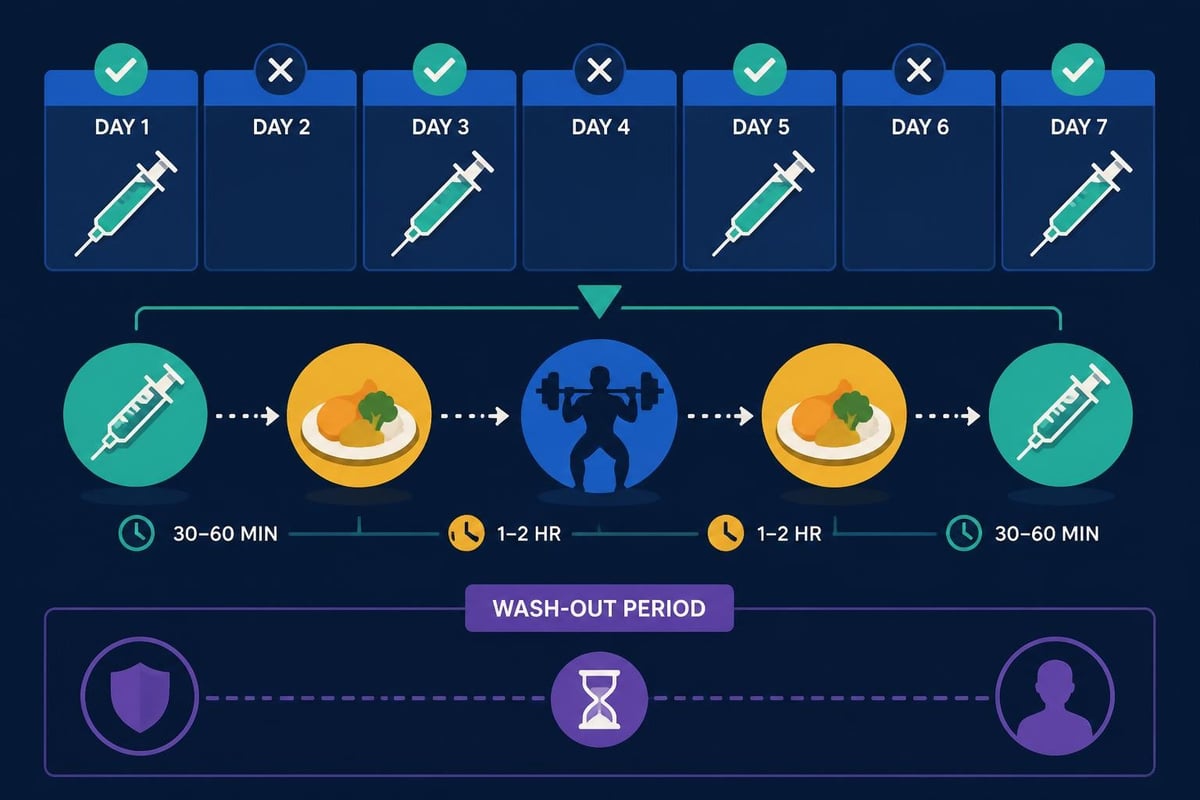
- Frequency: 3-7 times per week in most protocols
- Timing: Often administered post-exercise in performance studies
- Duration: Cycles ranging from 2-12 weeks in published research
- Reconstitution: Lyophilized powder reconstituted in bacteriostatic water
- Storage: Refrigeration required after reconstitution
Timing and Nutrient Considerations
The interaction between igf lr3 administration timing and nutrient availability appears significant in research outcomes. Studies examining muscle protein synthesis have noted enhanced effects when the peptide is administered in proximity to protein and carbohydrate intake, suggesting that substrate availability influences the magnitude of anabolic responses.
Reconstitution and Handling
Proper preparation requires attention to sterile technique and appropriate solvents. Research-grade peptides typically arrive as lyophilized powder requiring reconstitution with bacteriostatic water or sterile saline. The peptide calculator can assist researchers in determining accurate volumes for desired concentrations.
Once reconstituted, the solution requires refrigeration and typically maintains stability for several weeks when stored properly. Some protocols recommend freezing aliquots to extend shelf life, though repeated freeze-thaw cycles can degrade peptide integrity.
Comparing IGF LR3 to Related Compounds
The peptide landscape includes several compounds that share structural or functional similarities with igf lr3, each offering distinct characteristics that make them suitable for different research applications. Understanding these comparisons helps contextualize where this particular peptide fits within the broader category of growth-promoting compounds.
IGF-1 DES Versus IGF LR3
IGF-1 DES represents another modified form of IGF-1, though with different structural alterations. DES contains only the first three amino acids removed from the N-terminus, resulting in a truncated 67-amino-acid peptide. This modification also reduces binding protein affinity but through a different mechanism than LR3.
Key differences include:
- Half-life: DES has a shorter duration of action (20-30 minutes versus 20-30 hours)
- Local versus systemic effects: DES shows more localized effects due to rapid clearance
- Potency: DES demonstrates higher receptor binding affinity than LR3
- Application timing: DES typically requires administration immediately before or after training
Growth Hormone Secretagogues
Compounds that stimulate natural growth hormone release, such as CJC-1295 and Ipamorelin blends, work through entirely different mechanisms than direct IGF-1 receptor agonists. These peptides target the pituitary gland to increase endogenous GH production, which then stimulates liver production of IGF-1.
While this indirect approach avoids some concerns associated with direct receptor activation, it also introduces greater variability based on individual responsiveness and natural hormone rhythms. The choice between secretagogues and direct IGF-1 receptor agonists depends on research objectives and the specific biological questions being addressed.
| Compound Type | Mechanism | Duration | Primary Effects |
|---|---|---|---|
| IGF LR3 | Direct IGF-1R agonist | 20-30 hours | Systemic anabolic and metabolic |
| IGF-1 DES | Direct IGF-1R agonist | 20-30 minutes | Localized muscle effects |
| GH Secretagogues | Pituitary stimulation | Varies by compound | Indirect through GH/IGF-1 axis |
| Native IGF-1 | Direct IGF-1R agonist | ~10 minutes | Rapid, highly regulated |
Practical Selection Considerations
Researchers choose among these options based on several factors. Those investigating systemic metabolic effects may prefer the longer-acting igf lr3, while studies focused on site-specific muscle growth might select IGF-1 DES. Investigations into natural hormone regulation would more appropriately utilize growth hormone secretagogues.
Information available through Peptides Direct research resources suggests that many contemporary studies combine multiple peptides to achieve synergistic effects or to model more complex physiological scenarios.
Quality Considerations and Analytical Verification
The reliability of research outcomes depends fundamentally on the purity and authenticity of peptide compounds being studied. Analytical verification methods have become increasingly sophisticated, allowing researchers to confirm both identity and quality of igf lr3 preparations before experimental use.
Purity Standards and Testing Methods
High-quality research-grade peptides should meet minimum purity thresholds of 98% or higher, verified through high-performance liquid chromatography (HPLC). Mass spectrometry provides additional confirmation of molecular identity by detecting the precise mass-to-charge ratio expected for the compound.
Third-party testing through independent laboratories adds another layer of verification, reducing potential conflicts of interest that might arise from manufacturer-conducted testing alone. Researchers should request certificates of analysis that document:
- HPLC purity percentage
- Mass spectrometry confirmation
- Bacterial endotoxin levels
- Sterility verification
- Actual peptide content per vial
Storage and Stability Factors
Proper storage significantly impacts peptide integrity over time. Lyophilized peptides generally remain stable for extended periods when stored at -20°C or colder, protected from light and moisture. Once reconstituted, degradation processes accelerate, making refrigerated storage and timely use essential.
Peptide storage guidelines from Peptide DB recommend against exposing reconstituted solutions to temperature fluctuations or direct sunlight, both of which can accelerate breakdown of the peptide chain.
Source Verification and Supply Chain Integrity
The peptide supply chain involves multiple steps from synthesis to end-user delivery, each representing a potential point where quality might be compromised. Reputable suppliers maintain controlled environments throughout manufacturing, implement quality control checkpoints, and provide transparent documentation of testing results.
When selecting peptide sources, researchers should evaluate supplier credentials, review available analytical data, and consider the broader reputation within the research community. Access to certificates of analysis provides essential documentation for research protocols and publications.
Regulatory Status and Research Compliance
The regulatory landscape surrounding igf lr3 varies significantly across jurisdictions and application contexts. Understanding these regulations is essential for researchers, clinicians, and institutions conducting studies involving this peptide.
Current FDA Classification
The United States Food and Drug Administration has not approved igf lr3 for any human therapeutic use as of 2026. The peptide remains classified as an investigational compound suitable for research purposes only. This status distinguishes it from FDA-approved medications that have completed comprehensive clinical trial programs demonstrating safety and efficacy for specific medical conditions.
Regulatory information compiled by Peptide Trace indicates that the compound is not legally marketed as a drug, dietary supplement, or cosmetic ingredient. Its sale and distribution are restricted to qualified research institutions and licensed professionals conducting approved studies.
Sports and Athletic Organization Policies
Major athletic governing bodies, including the World Anti-Doping Agency (WADA), the United States Anti-Doping Agency (USADA), and various professional sports leagues, have prohibited the use of IGF-1 and its analogs, including igf lr3. These substances appear on prohibited substance lists under the category of peptide hormones, growth factors, and related substances.
Athletes subject to drug testing protocols should be aware that detection methods for peptide hormones continue to improve, with increasingly sensitive assays capable of identifying even short-term use. Violations can result in sanctions ranging from competition bans to career-ending penalties.
Research Institution Requirements
Academic and commercial research facilities utilizing igf lr3 in experimental protocols must typically obtain approval from institutional review boards (IRBs) for human studies or institutional animal care and use committees (IACUCs) for animal research. These oversight bodies evaluate proposed studies for scientific merit, ethical considerations, and appropriate safety measures.
Researchers should also maintain detailed records of:
- Peptide procurement and chain of custody
- Storage conditions and handling procedures
- Administration protocols and dosing records
- Adverse event monitoring and reporting
- Data collection and analysis methods
For those exploring the broader range of peptide applications, visiting the main Soma Peptide shop provides access to comprehensive information about various research compounds and their appropriate contexts.
Future Research Directions and Emerging Applications
The scientific understanding of igf lr3 continues to evolve as researchers design more sophisticated studies addressing remaining knowledge gaps. Several promising research directions may yield valuable insights in coming years, potentially expanding the contexts in which this peptide proves useful.
Combination Therapy Investigations
Emerging research protocols increasingly examine how igf lr3 interacts with other compounds to produce synergistic or complementary effects. Studies combining the peptide with various growth factors, metabolic modulators, or recovery-enhancing compounds may reveal applications superior to single-agent approaches.
According to research insights from Peptide Insight, preliminary investigations suggest potential value in combining IGF-1 receptor agonists with compounds targeting different aspects of tissue repair and metabolic regulation.
Tissue-Specific Delivery Systems
Current administration methods result in systemic distribution of igf lr3, affecting multiple tissue types simultaneously. Advanced delivery technologies under development aim to target specific tissues or cell types, potentially enhancing desired effects while minimizing unwanted responses in non-target areas.
Potential approaches include:
- Encapsulation technologies: Nanoparticles or microspheres that release peptide at specific sites
- Conjugated delivery: Attaching the peptide to molecules that home to particular tissues
- Local injection protocols: Refined techniques for site-specific administration
- Sustained-release formulations: Extended-duration delivery systems reducing injection frequency
Metabolic Disease Research
While much attention has focused on muscle and performance applications, growing interest exists in exploring how igf lr3 might address metabolic dysfunction. Research into insulin resistance, type 2 diabetes, metabolic syndrome, and age-related metabolic decline may benefit from understanding how enhanced IGF-1 signaling influences glucose and lipid metabolism.
These investigations must carefully balance potential metabolic benefits against concerns about chronic receptor activation and its long-term consequences on various organ systems.
Aging and Longevity Studies
The relationship between IGF-1 signaling and aging remains complex and somewhat paradoxical. While higher IGF-1 levels during youth support growth and development, some longevity research in model organisms has associated reduced IGF-1 signaling with extended lifespan. Understanding how temporary or cyclical exposure to igf lr3 affects aging markers represents an intriguing research frontier.
Studies might examine effects on:
- Cellular senescence markers
- Mitochondrial function and biogenesis
- Oxidative stress and antioxidant systems
- Tissue regenerative capacity
- Cognitive function and neuroprotection
The anti-aging peptide category continues expanding as researchers identify compounds with potential applications in age-related conditions and healthspan extension.
Research into igf lr3 has established this modified peptide as a powerful tool for investigating IGF-1 receptor signaling and its wide-ranging effects on growth, metabolism, and tissue repair. While substantial preclinical evidence demonstrates significant biological activity, the path from laboratory findings to validated therapeutic applications remains ongoing. For researchers and practitioners seeking to explore peptide-based approaches to muscle growth, recovery, and metabolic optimization, working with verified, high-purity compounds forms the foundation of meaningful investigation. Soma Peptide provides premium-quality peptides supported by rigorous testing and certificates of analysis, ensuring researchers have access to the reliable compounds necessary for advancing scientific understanding in this dynamic field.