



The three side effects you’re most likely to notice from PT-141 (bremelanotide) are nausea, facial flushing, and a small, temporary rise in blood pressure. Nausea shows up in roughly 40% of users in clinical trials, flushing in about 20%, and it’s the single most common reason people stop using it. Injection-site redness or bruising is common and manageable; skin darkening at the injection site or on the gums is rare but can persist.
The screening rule that matters most: don’t use PT-141 if you have uncontrolled high blood pressure, existing cardiovascular disease, or are pregnant or breastfeeding, and always check your medication list for naltrexone first, since it blunts the drug’s effect.
Quick safety snapshot:
- Nausea (~40%) and flushing (~20%) are the two most reported effects
- Average blood pressure increase is small (about +1.9/+1.7 mmHg) but should still be checked
- Maximum dosing: no more than one dose in 24 hours, and no more than 8 doses per month per label guidance
- Avoid with uncontrolled hypertension, cardiovascular disease, pregnancy, or breastfeeding
By the numbers: Clinical trial data put nausea incidence at roughly 40% and flushing at roughly 20%, according to a clinical trial report indexed on PubMed, with average blood pressure changes small enough that most healthy adults tolerate them without incident.
Key Takeaways
Managing PT-141 side effects successfully comes down to screening before the first dose, respecting the dosing ceiling, and sourcing a product whose purity is actually verified.
| Point | Details |
|---|---|
| Nausea is the top concern | Affects roughly 40% of users, usually within 1 to 2 hours, and is the leading cause of discontinuation. |
| Flushing and headache are common but brief | Occur in about 20% of users from vasodilation and typically resolve within hours. |
| Blood pressure needs checking, not ignoring | Average rises are small (about +1.9/+1.7 mmHg) but a pre-dose reading catches the rare outlier. |
| Screening and dosing limits are non-negotiable | Avoid with uncontrolled hypertension, cardiovascular disease, pregnancy, or naltrexone use; cap at one dose per 24 hours. |
| Product quality drives real-world risk | Soma Peptide’s purity testing above 99% and proper ancillaries reduce the contamination and dosing errors seen with gray-market sourcing. |
Table of Contents
- What are the most common PT-141 side effects?
- Can PT-141 cause more serious side effects?
- Who should avoid PT-141, and what interacts with it?
- How can you reduce PT-141 side effects?
- How do side effects change with repeated use?
- Why gray-market PT-141 carries extra risk
- Our take on PT-141 safety and product quality
- Sourcing PT-141 without the gray-market gamble
- Sources
- FAQ
What are the most common PT-141 side effects?
Nausea is the effect nearly everyone asks about, and for good reason. It typically starts one to two hours after injection, tends to peak alongside the drug’s other effects, and fades within a few hours for most people. It’s also the leading cause of people discontinuing PT-141 partway through a treatment cycle, not because it’s dangerous, but because it’s unpleasant enough to outweigh the benefit for some users.
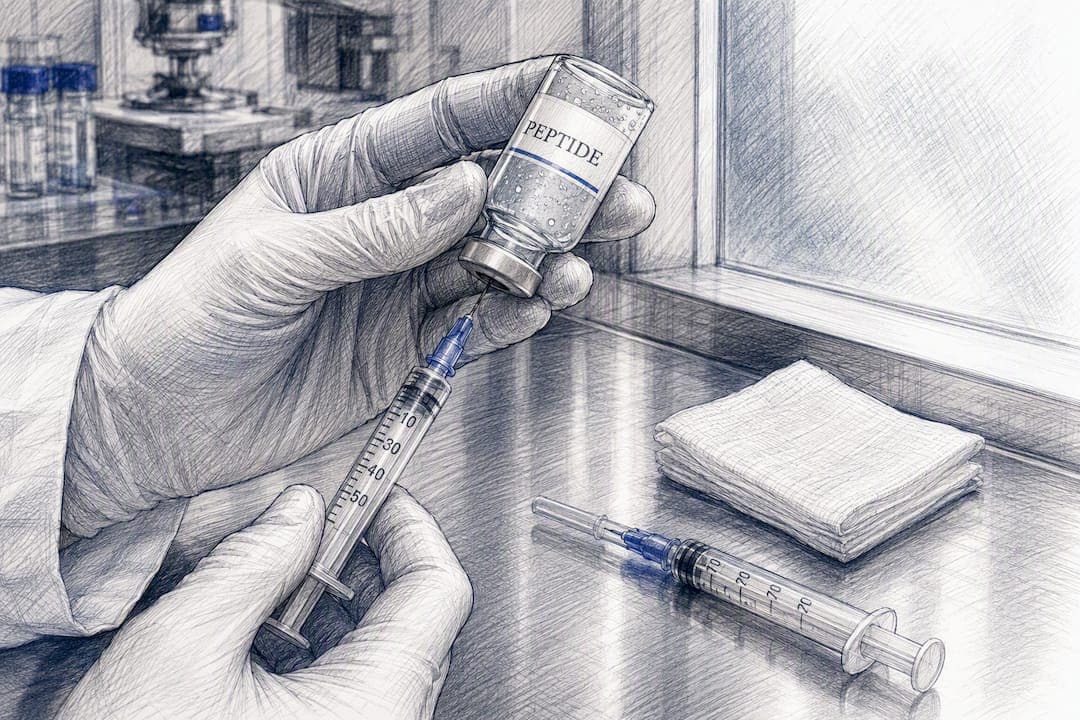
The mechanism explains why antacids and typical stomach remedies don’t do much here. PT-141 works by activating melanocortin receptors in the brain, primarily MC4R, and that same central pathway that drives its intended effect also triggers the brain’s nausea centre. A PMC review of melanocortin receptor agonists describes this dual action clearly: you can’t really separate the wanted effect from the nausea risk at a pharmacological level, which is why dose and timing strategy (covered later) matters more than reaching for a pill after the fact.
Flushing and headache follow a similar pattern and share the same root cause. Melanocortin receptor activation causes vasodilation, the widening of blood vessels, which produces that warm, reddish flush across the face and chest that roughly one in five users notices. Headache often rides alongside it. Both are transient, usually resolving within a few hours, and rarely require any intervention beyond patience and hydration.
Injection-site reactions round out the common-effects list. Redness, mild swelling, or a small bruise at the injection site is normal and usually resolves within a day or two. A few simple habits keep this from becoming a bigger issue:
- Rotate injection sites between doses instead of using the same spot repeatedly
- Apply a cold pack for a few minutes before and after injecting to reduce swelling
- Use proper hand hygiene and swab the site with an alcohol pad before injecting
- Avoid injecting into areas that are already bruised, irritated, or scarred
Pro Tip: If flushing or a mild headache shows up consistently within the same 30-to-60-minute window after dosing, that’s your body’s predictable pattern, not a sign something’s wrong. Plan around it rather than fighting it.
None of these common effects are typically dangerous on their own. The exception is when nausea escalates to repeated vomiting, or when flushing is accompanied by chest pain or unusual shortness of breath, both of which warrant stopping use and contacting a clinician.
Can PT-141 cause more serious side effects?
Blood pressure is the metric worth watching most closely, even though most people never notice a problem. Trial data show an average increase of roughly +1.9 mmHg systolic and +1.7 mmHg diastolic, which is modest for a healthy adult with normal baseline readings. The concern isn’t the average, though. It’s the outlier: a smaller subset of users see a more pronounced spike, which is precisely why screening for pre-existing hypertension or heart disease matters before the first dose, not after.
Vomiting, dizziness, and rare fainting episodes appear in post-marketing reports alongside the more common nausea and flushing. A Drugs also notes isolated reports of liver-related lab abnormalities, though these are uncommon and not considered a primary safety signal for most users.
Focal hyperpigmentation deserves its own mention because it behaves differently from every other effect on this list. Instead of fading in hours, it can persist. The mechanism ties back to residual activity at the melanocortin-1 receptor (MC1R), the same receptor family responsible for skin pigmentation generally, and it tends to show up with repeated or frequent dosing rather than a single use. Reports describe darkening at injection sites, on the gums, or occasionally on the face and chest.
Red flags that warrant stopping and calling a clinician:
- Chest pain, pressure, or shortness of breath after dosing
- A fainting episode or severe dizziness
- Persistent vomiting rather than brief nausea
- New or spreading dark patches on skin or gums
Who should avoid PT-141, and what interacts with it?
Screening before the first dose isn’t optional paperwork. It’s what separates the tolerability seen in clinical trials from the messier experience some users report when they skip it entirely.
Health Canada’s licensed product information lists uncontrolled hypertension and existing cardiovascular disease as contraindications, and advises against use during pregnancy or breastfeeding. Safety in postmenopausal women and in men hasn’t been formally established, which matters if you’re outside the population studied in the original trials.
The interaction most likely to catch people off guard is naltrexone. Whether prescribed for opioid dependence or alcohol use disorder, naltrexone can meaningfully reduce PT-141’s effectiveness, and Health Canada’s labelling specifically flags this combination for screening. Nitrates and other blood-pressure-lowering medications also deserve caution given PT-141’s own transient effect on blood pressure, and anyone using a PDE5 inhibitor alongside it should discuss the combination with a clinician rather than assume it’s fine because the two drugs work differently.
A practical pre-dose checklist:
- Confirm baseline blood pressure is under control, ideally measured within the same day
- Review your full medication list for naltrexone, nitrates, and antihypertensives
- Disclose any history of cardiovascular disease, uncontrolled hypertension, or hepatic concerns
- Confirm you’re not pregnant or breastfeeding
- Set a personal ceiling of one dose per 24 hours and no more than the monthly maximum on the label
Pro Tip: Keep a simple log of your blood pressure reading, the time you dosed, and how you felt over the following four hours. Patterns that seem random in the moment often become obvious after three or four entries.
How can you reduce PT-141 side effects?
Nausea gets the most attention here, and rightly so, but the fix isn’t a pill. It’s dosing discipline. Start at the lowest effective dose rather than the highest one you’ve read about online, and give your body a chance to show you how it reacts before increasing anything.
- Cap frequency deliberately. Never take more than one dose in a 24 hour period, and stay within the recommended monthly maximum rather than treating that number as a floor to push against.
- Time it around food. Taking PT-141 after a light meal, rather than on an empty stomach, tends to blunt the intensity of nausea for many users, even though the drug’s core mechanism is central rather than digestive.
- Stay hydrated and skip alcohol on dosing days. Alcohol compounds both the flushing and the blood pressure effects, and dehydration makes nausea and dizziness noticeably worse.
- Build in rest during the peak window. The one-to-three-hour window after dosing is when nausea, flushing, and headache are most likely to appear together. Planning something low-key during that window beats trying to push through symptoms.
- Check blood pressure before you dose. A quick reading at home takes thirty seconds and gives you a baseline to compare against if you feel unusual afterward.
Antiemetics such as ondansetron sometimes come up as an option, and a prescriber may consider one in specific cases. It’s worth setting expectations honestly, though: because PT-141’s nausea originates centrally through MC4R activation rather than in the gut, a PMC pharmacology review notes that standard antiemetics have limited effect against this particular mechanism. Dose reduction and better timing consistently outperform reaching for a second medication to counteract the first.
If a blood pressure reading comes back elevated before dosing, the safer move is to skip that dose and follow up with a clinician rather than proceed and monitor reactively.

How do side effects change with repeated use?
Most of the effects described above follow a fairly predictable arc: onset within one to two hours, peak somewhere in the two-to-three-hour range, and resolution within six to twelve hours for the majority of users.
What changes over repeated dosing is more nuanced. Flushing and headache often become milder as the body adjusts to the pattern, something users frequently describe anecdotally, though nausea tends to be more stubborn and can persist at a similar intensity across multiple doses for a meaningful share of people. Injection-site reactions usually stay mild and predictable if sites are rotated properly.
A reasonable monitoring cadence looks like this:
- Check blood pressure before each dose, especially in the first several cycles
- Do a quick skin check at injection sites every few doses, watching specifically for darkening rather than just redness
- Track how nausea intensity trends over your first three to four doses, since a worsening pattern (rather than a stable or improving one) is worth flagging to a clinician
- Report any new symptom that wasn’t present in earlier doses rather than assuming it will resolve on its own
Why gray-market PT-141 carries extra risk
A meaningful share of the adverse reactions people describe online trace back to the product itself rather than the compound’s known pharmacology. Unregulated bulk powder sold outside pharmaceutical channels carries risks that clinical trial participants never faced: inconsistent purity, contamination, bacterial endotoxins from improper handling, and dosing errors from inaccurate reconstitution.
Sterility matters just as much as purity. Reconstituting peptide powder with the wrong diluent, reusing needles, or working in an unclean environment introduces infection risk that has nothing to do with PT-141 itself and everything to do with how it was prepared.
Tolerability data from clinical trials reflects a specific context: clinician-directed screening, regulated manufacturing, and controlled dosing. Adverse events reported in gray-market use are often amplified by impure products and the absence of any screening step before that first injection.
Sourcing from a supplier that documents purity testing above 99% and provides proper reconstitution ancillaries removes an entire category of risk that has nothing to do with the peptide’s actual pharmacological profile. For anyone weighing where to source peptides responsibly, guidance on avoiding gray-market pitfalls is worth reading before the first purchase, not after a bad reaction.
Our take on PT-141 safety and product quality
Most of the alarming stories about PT-141 side effects trace back to sourcing, not the molecule. We’d rather a customer talk to a clinician before their first dose than guess at a dosing schedule from a forum thread. Our formulation work is guided by, and that’s a standard we don’t compromise on.
— Soma Peptide
Sourcing PT-141 without the gray-market gamble
The side effects covered above are manageable when the product is clean, the dose is right, and someone with clinical judgment is involved in the decision. They become unpredictable when any one of those three pieces is missing, which is exactly what happens with unregulated bulk powder bought without oversight. Soma Peptide’s approach closes that gap: every batch is tested for purity above 99%, and the product quality standards behind that claim are documented rather than asserted. Reconstitution ancillaries, including bacteriostatic water, syringes, and alcohol pads, are sold alongside the peptide itself so preparation doesn’t become the weak link in an otherwise sound protocol. If you’re researching options with clinician involvement in mind, start with a conversation about your health history, then review peptides for bodybuilding and performance to see how Soma Peptide’s tested formulations compare to what’s typically sold through unregulated channels.
Sources
For readers who want to verify the clinical details directly, the Health Canada product listing covers contraindications and licensing, the clinical trial report on PubMed documents incidence rates, and the Drugs.com adverse-effects summary compiles post-marketing observations. Clinicians managing dosing protocols may also find FitRX’s tadalafil monitoring resource useful as a comparative example of structured dosing oversight.
This article is general information, not a substitute for advice from a qualified doctor. Consult a qualified healthcare professional about your own circumstances before acting on anything here.
- Health Canada licensed product information (bremelanotide/Vyleesi)
- Relevant clinical trial report indexed on PubMed
- PMC review article on melanocortin receptor agonists
- Drugs
FAQ
Who should not take PT-141?
People with uncontrolled hypertension, existing cardiovascular disease, or who are pregnant or breastfeeding should avoid PT-141, according to Health Canada’s product listing. Anyone taking naltrexone should also check with a clinician first, since it can reduce the drug’s effectiveness.
What does PT-141 make you feel like?
Most users report a warm flush across the face and chest, mild nausea starting one to two hours after dosing, and sometimes a headache, all of which typically fade within several hours. The intended effect and the nausea share the same underlying mechanism, which is why they often overlap in timing.
Is PT-141 better than Viagra?
They’re not directly comparable since PT-141 works centrally through melanocortin receptors while Viagra (sildenafil) works locally as a PDE5 inhibitor, and they carry different side-effect profiles entirely. Using them together, or alongside antihypertensive medication, should be discussed with a clinician rather than decided independently.
Can you take PT-141 every day?
No. Label guidance limits PT-141 to one dose per 24 hours and no more than the recommended monthly maximum, and exceeding that raises the risk of both nausea and blood pressure spikes without added benefit.