


Metabolic health peptides work, but only some of them, and not to the degree marketing claims suggest. The strongest human trial data belongs to multi-receptor incretin agonists, which produced roughly 11 kg of weight loss and a 2.3% drop in HbA1c over 72 weeks in people with type 2 diabetes, per MDPI’s clinical outcomes review. Mitochondrial peptides and food-derived compounds show real mechanistic promise but far less human proof, and unregulated research-grade products carry genuine safety uncertainty without clinical oversight.
TL;DR:
- Multi-receptor incretin agonists achieve about 11 kg of weight loss and a 2.3% reduction in HbA1c over 72 weeks in type 2 diabetes patients, per clinical trials.
- The clinical efficacy of mitochondrial peptides and food-derived compounds remains limited, with mechanistic promise but sparse human trial data.
- Approved peptides undergo rigorous regulation and testing, whereas unregulated research-grade products have safety uncertainties and often lack comprehensive clinical validation.
- Combining peptide therapy with resistance training enhances weight loss and fat reduction, but long-term effects beyond 72 weeks are not yet well established.
- Food-derived peptides support mild insulin sensitivity and satiety but cannot match the effects of pharmaceutical peptides and should complement, not replace, medical interventions.
Table of Contents
- What are metabolic health peptides and how are they classified?
- How do metabolic peptides work at the cellular level?
- What does the clinical trial evidence actually show?
- Can food-derived peptides really improve metabolism?
- How do you check the safety and quality of a metabolic peptide?
- Who actually benefits from metabolic peptide therapy?
- Soma Peptide’s approach to quality and transparency
- A clinical perspective on where peptide therapy is actually heading
- Where to find high-purity metabolic peptides for research use
- Sources
- FAQ
What are metabolic health peptides and how are they classified?
The term “metabolic peptides” gets used loosely online, but the science splits into distinct categories with different jobs, different evidence bases, and different risk profiles. Understanding which bucket a compound falls into tells you almost everything about what to expect from it.
- Incretin-related peptides: These mimic gut hormones like GLP-1 and GIP, slowing gastric emptying, boosting insulin secretion, and suppressing appetite. They carry the deepest clinical trial record of any peptide class.
- Multi-receptor agonists: Dual and triple agonists that hit GLP-1, GIP, and sometimes glucagon receptors simultaneously, aiming to correct several hormonal deficits at once rather than pushing on a single lever.
- Mitochondrial-derived peptides (MDPs): Small peptides like MOTS-c that regulate cellular energy production and glucose uptake. Circulating MOTS-c is lower in people with type 2 diabetes, but human trials remain scarce.
- Growth hormone secretagogues: Compounds that stimulate the body’s own growth hormone pulse, indirectly influencing fat oxidation and lean mass retention rather than acting directly on glucose handling.
- Food-derived bioactive peptides: Fragments released during digestion of dairy, fish, or plant protein that can stimulate incretin hormones or exert mild anti-inflammatory effects. Collagen peptides fall into this group.
The clinical endpoint you care about should dictate which class matters. Weight loss and glycaemic control point toward incretin and multi-receptor peptides. Cellular energy and fatigue concerns point toward mitochondrial peptides, though the human evidence there is thin. Joint and connective tissue support sits with food-derived peptides like collagen, which has documented dosing ranges but modest, localized effects.
One nomenclature point trips up a lot of readers: “endogenous” peptides are ones your body already makes (like GLP-1 itself), while “analogues” are synthetic versions engineered for a longer half-life or altered receptor binding. Tirzepatide, for example, is a synthetic dual-agonist analogue, not a copy of a single natural hormone. That engineering is precisely why some analogues achieve effects the native hormone never could on its own, since natural GLP-1 breaks down in minutes while lab-modified versions can last a week. If you want a deeper technical breakdown of how these engineered agonists compare structurally, Soma Peptide’s guide to GLP-1 peptide science covers the receptor-binding differences in more detail.
How do metabolic peptides work at the cellular level?
Every metabolic peptide with real clinical backing acts on one of a handful of well-mapped pathways, and the pathway determines what kind of benefit you actually get. This isn’t interchangeable biology. A peptide that suppresses appetite through the brainstem behaves nothing like one that improves how muscle cells pull glucose out of the bloodstream.
Incretin signalling is the best understood mechanism. GLP-1 and GIP receptor agonists bind receptors in the pancreas, gut, and brain, triggering glucose-dependent insulin release, slowing gastric emptying, and dampening appetite signals in the hypothalamus. This is also where DPP-4 inhibition matters: DPP-4 is the enzyme that normally chews up natural GLP-1 within minutes, and blocking it (or engineering resistance to it) is how longer-acting analogues stay active for days.
AMPK activation works differently. AMPK acts as the cell’s energy sensor, and when peptides activate it, cells ramp up fatty acid oxidation and glucose uptake while dialing down fat storage. This pathway matters more for mitochondrial and food-derived peptides than for incretin drugs.
The IRS-1/PI3K/Akt cascade governs how insulin actually gets glucose into cells. Insulin binds its receptor, activates IRS-1, which triggers PI3K and Akt in sequence, and Akt tells GLUT4 transporters to move to the cell surface and start pulling glucose in. Bioactive peptides from dairy, legumes, and marine sources appear to support this exact cascade, according to a mechanistic review in Applied Food Research, which is one reason researchers keep circling back to food-derived compounds for insulin sensitivity even though their effect sizes are modest.
Adipokine modulation and anti-inflammatory effects round out the picture. Chronic low-grade inflammation in fat tissue drives insulin resistance, and several peptide classes appear to shift the balance of inflammatory adipokines released by fat cells, though this pathway is harder to measure directly in humans than blood glucose is.
Here’s where the pharmacokinetics get practically important:
- Half-life dictates dosing frequency. Native GLP-1 lasts minutes; engineered analogues can last a week, which is why weekly injections replaced daily ones in incretin therapy.
- Receptor desensitisation is real. Chronically stimulating one receptor pathway can trigger the body to blunt its own response over time, which is part of why researchers are shifting toward multi-receptor strategies instead of hammering a single target indefinitely.
- Oral proteolysis destroys most peptides before they work. Stomach acid and digestive enzymes break peptide bonds, which is why almost all clinically effective metabolic peptides are injectable rather than oral, a translational barrier confirmed in pharmacology research on peptide bioavailability.
This explains a question a lot of people ask without realizing it’s really two separate questions: why do some peptides suppress appetite while others seem to change metabolic rate? Appetite suppression is largely a central nervous system effect, mediated through hypothalamic incretin receptors. Metabolic rate and substrate use changes come from AMPK and mitochondrial pathways acting directly in muscle and fat tissue. A peptide can do one, the other, or occasionally both, but assuming every metabolic peptide suppresses appetite the way incretin drugs do is a common and costly misunderstanding.
Pro Tip: If a peptide’s marketing claims both dramatic appetite suppression and dramatic “metabolic boost,” ask which receptor pathway is supposedly doing each job. Legitimate multi-receptor agonists disclose this. Vague blends usually can’t answer the question.
What does the clinical trial evidence actually show?
The headline numbers for multi-receptor peptide agonists are genuinely large by pharmaceutical standards, and they come from properly controlled human trials rather than animal models or small pilot studies. That distinction matters more than almost anything else in this article.
The clinical trial numbers: In adults with type 2 diabetes, multi-receptor agonist therapy produced an average HbA1c reduction of roughly 2.3% alongside approximately 11 kg of weight loss over 72 weeks. In obesity trials without diabetes, average weight loss reached roughly 17.8% of body weight at the same 72-week mark, according to clinical outcomes data published in MDPI.
For context, a 2.3% HbA1c reduction is a substantial clinical shift. Most oral diabetes medications produce reductions in the 0.5% to 1% range, so this puts multi-receptor peptide therapy in a different tier of efficacy entirely. The 17.8% weight loss figure in obesity trials is comparable to what bariatric surgery patients often see in the first year, though surgical and pharmaceutical weight loss differ in durability and mechanism.
Adding structured exercise on top of peptide therapy appears to matter more than most people assume. Trials combining GLP-1 receptor agonist therapy with resistance training showed additive benefits: participants maintained 5.6 kg of weight loss and achieved a 2.3% greater reduction in body fat percentage compared to peptide therapy alone, per research summarized in the same systematic review covering nutrition and combined interventions. The peptide does part of the work; the muscle tissue you preserve or build does the rest, particularly for protecting lean mass during rapid weight loss.
Now for the caveat that separates rigorous evidence from hopeful extrapolation. The 72-week, multi-thousand-participant trials behind those headline numbers exist almost exclusively for approved incretin and multi-receptor drugs. Move outside that category and the evidence thins out fast.
- MOTS-c, the mitochondrial-derived peptide with the most research buzz, has solid preclinical data showing improved glucose utilization and mitochondrial function, but human efficacy trials remain limited, and clinical development is still early according to BSR Intelligence’s review of MOTS-c’s mechanism and regulatory status.
- Spexin, a peptide studied for its appetite-regulating and adipose tissue effects, has generated interest in metabolic research circles but lacks the large randomized trial base that incretin therapies have accumulated.
- Pep19, an experimental compound, reduced adiposity and improved glucose and lipid parameters in rodent studies without apparent central nervous system side effects, per preclinical research. That’s a promising signal in mice. It is not evidence of what happens in a human body.
The gap between “mechanistically interesting” and “clinically proven in humans” is the single most important distinction in this entire field, and it’s the one most consumer-facing content glosses over. Trial duration matters too: 72 weeks tells you a lot about medium-term outcomes, but almost nothing about what happens after five or ten years of continuous use, since none of these compounds have been on the market that long. Trial populations for the approved agents also skew toward adults with obesity or type 2 diabetes specifically, so extrapolating those results to a lean, healthy 30-year-old chasing marginal metabolic gains is a stretch the data doesn’t support. Readers wanting a deeper technical comparison of trial designs behind the leading multi-receptor compound can check Soma Peptide’s tirzepatide research summary.
Can food-derived peptides really improve metabolism?
Food-derived peptides can move the needle on satiety hormones and mild insulin sensitivity, but nowhere near the magnitude pharmaceutical peptides achieve, and conflating the two categories is where a lot of supplement marketing goes wrong.
Protein hydrolysates, the peptide fragments released when dietary protein gets broken down during digestion, can stimulate meaningful hormone responses. One study cited in a systematic review on peptides in nutrition found that protein hydrolysates combined with calcium-containing milk minerals increased GLP-1 secretion ninefold compared to baseline. That’s a striking number on paper. In practice it reflects a short-term hormonal spike after a meal, not a sustained metabolic shift comparable to weekly injectable therapy.
Where food-derived peptides do have practical, usable evidence:
- Satiety and appetite signalling: Milk and whey-derived peptides trigger GLP-1, PYY, and GIP release after meals, which can genuinely help with meal-to-meal appetite control.
- Musculoskeletal support: Collagen peptides, at doses commonly studied in clinical research, are linked to measurable joint and connective tissue benefits, per the same nutrition review.
- Mild anti-inflammatory effects: Peptides from fish and plant sources show anti-inflammatory activity in lab and small human studies, which may support metabolic health indirectly since chronic inflammation worsens insulin resistance.
- Modest, not dramatic, insulin sensitivity support: Bioactive dietary peptides engage the same IRS-1/PI3K/Akt and AMPK pathways as pharmaceutical peptides, just at a fraction of the intensity.
The honest translational problem is dose and delivery. A whey protein shake delivers a transient hormone bump that fades within hours. An engineered multi-receptor agonist maintains receptor occupancy for a full week. No amount of dietary optimization closes that gap, which is why food-derived peptides belong in a supportive role, not as a substitute for pharmaceutical-grade intervention when someone actually needs the metabolic effect size those trials demonstrated. For readers who want a plain-language rundown of which foods carry the most researched bioactive peptides, Soma Peptide’s peptides in food guide is worth a look.
How do you check the safety and quality of a metabolic peptide?
Product quality varies enormously across the peptide market, and the regulatory line between an approved medicine and a research-grade compound is the single most important safety distinction most buyers never learn to check.
Approved incretin and multi-receptor medicines go through full regulatory review, with defined manufacturing standards, dosing protocols, and post-market surveillance. Research-grade and compounded peptides sit in a different category entirely, often manufactured to variable purity standards without the same oversight. Harvard Health’s review of peptide safety makes the point plainly: approved peptide medicines carry strong trial evidence, but many non-approved peptides marketed online lack large human trials and carry real safety uncertainty. Athletes should also know that several metabolic and growth-hormone-related peptides appear on prohibited substance lists for competitive sport, so anyone subject to anti-doping testing needs to check current status before use.
Adverse events reported in trials of approved incretin therapies include gastrointestinal symptoms (nausea, diarrhea), gallbladder issues, and rare pancreatitis cases, which is why clinicians monitor liver enzymes and lipid panels during treatment. Compensatory physiology is also worth anticipating: chronic stimulation of a single hormonal axis can trigger the body to upregulate opposing signals over time, a dynamic described in translational research on endocrine therapy, which is part of the argument for planning dose adjustments and lifestyle support alongside any long-term peptide protocol rather than expecting one compound to work at a fixed dose indefinitely.
A practical quality checklist before considering any peptide product:
- Confirm regulatory status. Know whether you’re looking at an approved medicine, a legitimate research compound, or an unregulated grey-market product, since the safety data and legal standing differ completely between the three.
- Demand third-party testing. A Certificate of Analysis from an independent lab, not just the manufacturer’s own claim, is the baseline for confirming purity and identity.
- Check for sterile compounding practices. Anything intended for injection needs verified sterile handling; contamination risk is not theoretical.
- Review storage and handling requirements. Many peptides need refrigeration, correct aliquoting, and protection from freeze-thaw cycles to remain stable, a detail confirmed in stability research on mitochondrial peptides that applies broadly across the category.
- Watch for labelling red flags. Vague ingredient lists, undisclosed concentrations, or claims of effects with no cited human trial should raise immediate suspicion.
Pro Tip: A Certificate of Analysis that only lists “purity” without specifying the testing method (HPLC and mass spectrometry are the standards) is not a real quality guarantee. Ask which method was used before trusting the number.
Soma Peptide’s own safety guide walks through sterile technique and injection practices in more depth for readers preparing to handle any peptide product themselves.
Who actually benefits from metabolic peptide therapy?
Peptide therapy is not a universal metabolic upgrade, and the evidence points to a fairly specific set of people who benefit most.
The strongest candidates are adults with type 2 diabetes or obesity who have already tried structured lifestyle intervention without reaching their glycaemic or weight targets. That’s precisely the population the 72-week trials enrolled, and it’s where the 2.3% HbA1c and double-digit weight loss figures actually apply. People chasing marginal performance or aesthetic gains without a diagnosed metabolic condition are extrapolating trial results to a population that was never studied.
Certain groups should avoid peptide therapy or proceed only under close supervision: anyone pregnant or trying to conceive, people with a personal or family history of medullary thyroid carcinoma, those with active pancreatitis, and anyone with significant, undiagnosed gastrointestinal disease. This is not an exhaustive list, and any of these situations calls for a conversation with a qualified physician before starting anything.
A sensible monitoring framework looks like this:
- Baseline testing before starting: fasting glucose and HbA1c, a full lipid panel, liver function tests, and a pregnancy test where relevant.
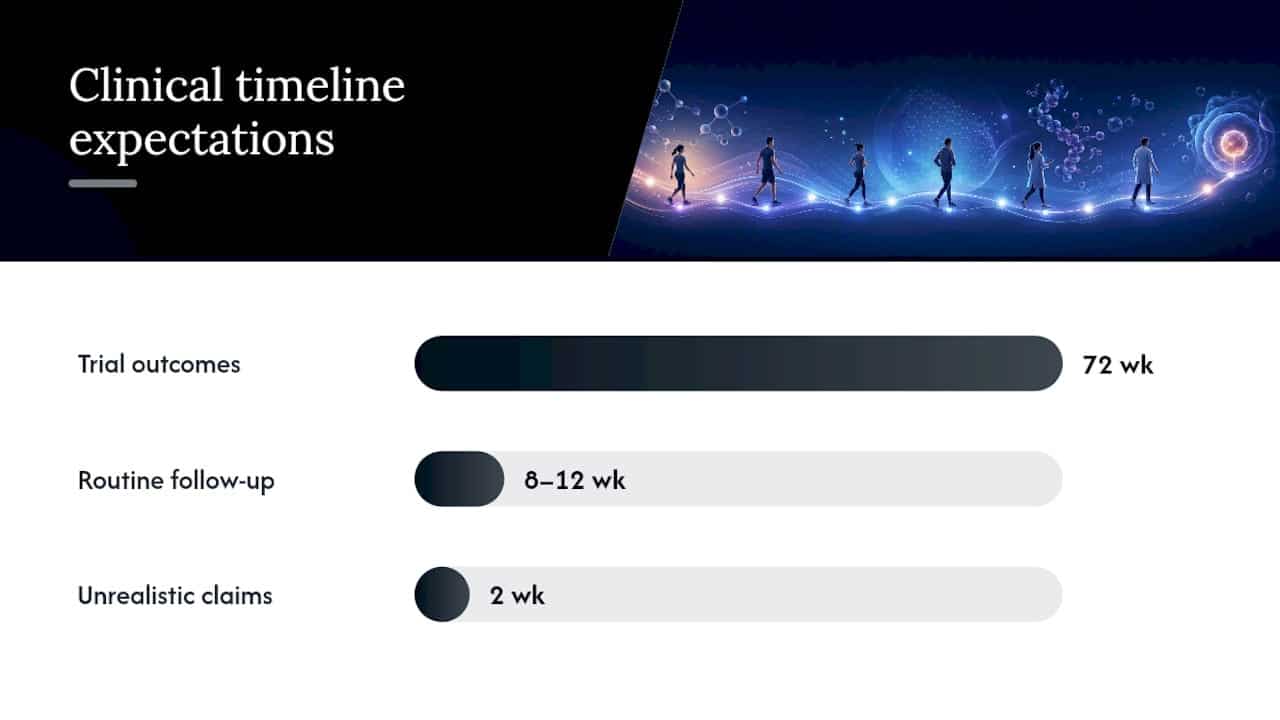
- Follow-up testing at 8 to 12 weeks, then at regular intervals, repeating the same panel to track both benefit and emerging side effects.
- Injection technique and storage review at the start of therapy, since improper reconstitution or storage undermines both safety and efficacy.
- Interaction screening with existing medications, particularly other diabetes drugs, since combining agents can increase hypoglycaemia risk.
- Realistic timeline expectations: meaningful weight and glycaemic changes in the major trials took 72 weeks to fully materialize, not a matter of days or weeks.
Pro Tip: If a peptide protocol promises visible metabolic change inside two weeks, treat that as a warning sign rather than a selling point. Every major trial behind the headline statistics measured outcomes at 72 weeks, not two.
Soma Peptide’s approach to quality and transparency
Soma Peptide formulates its research-grade peptides to exceed 99% purity, verified through advanced purification methods rather than relying on supplier claims alone. That standard exists because the gap between a well-manufactured peptide and a poorly made one is exactly the gap this article’s safety checklist is built to catch.
Some suppliers offer purity documentation above 99% across peptide formulations, with formulations designed around documented use cases, including fat loss, recovery, and hormone support. Product catalogues may include reconstitution ancillaries, bacteriostatic water, syringes, and alcohol pads alongside the peptides themselves, since proper handling is inseparable from product quality.
None of this replaces a conversation with a physician, and Soma Peptide does not position any product as a substitute for medical supervision, particularly for anyone managing diagnosed type 2 diabetes or obesity under a treatment plan. The purity standard and quality documentation matter precisely because the regulatory landscape for research-grade peptides is inconsistent, and buyers deserve verifiable specifics rather than vague assurances. Anyone considering a peptide protocol should apply the same third-party testing and Certificate of Analysis standard outlined earlier in this article to any product, from any supplier, before use.
A clinical perspective on where peptide therapy is actually heading
The field is quietly moving away from single-pathway thinking, and that shift matters more than any individual trial result. Hammering one hormonal axis, even effectively, tends to invite compensatory physiology: the body pushes back against sustained single-receptor stimulation over time. Multi-receptor strategies exist because resynchronizing several hormonal signals at once produces more durable results than maximizing one.
That said, the evidence gap between approved multi-receptor agonists and everything else in this category, mitochondrial peptides, food-derived compounds, experimental candidates, is wide and not closing quickly. Mechanistic promise is not clinical proof, and treating MOTS-c or Pep19 as interchangeable with tirzepatide-class therapy because they share the word “peptide” is a category error. Lifestyle integration, particularly resistance training, isn’t an optional add-on; the trial data shows it changes outcomes materially. Research priorities from here should focus on longer-duration human trials for the mechanistically promising compounds, not more preclinical mouse data.
— Soma Peptide
Where to find high-purity metabolic peptides for research use
Everything in this article points to the same practical conclusion: the compound matters less than what backs it. A peptide with strong trial data and verified purity is a different proposition than the same molecule name sold with no Certificate of Analysis and vague sourcing.
If you’re evaluating options after reading through the evidence on multi-receptor agonists and weight management outcomes, Soma Peptide’s peptides for weight loss collection is a reasonable next stop for comparing formulations against the safety checklist covered above. Whatever you choose, run it past a physician first, particularly if you have an existing metabolic diagnosis or take other medications, and apply the third-party testing standard outlined earlier before purchasing from any source.
This article is general information, not a substitute for advice from a qualified doctor. Consult a qualified healthcare professional about your own circumstances before acting on anything here.
Sources
- Multi‑receptor peptide agonists — clinical outcomes (MDPI)
- The role of peptides in nutrition: systematic review (PMC)
- Bioactive peptides and metabolic health: mechanistic review (Applied Food Research)
- Harvard Health: peptides — benefits and safety concerns
FAQ
What peptide is best for metabolic health?
Multi-receptor incretin agonists have the strongest human trial evidence, showing roughly 2.3% HbA1c reduction and 11 kg of weight loss over 72 weeks in type 2 diabetes trials, according to MDPI’s clinical outcomes data. Mitochondrial peptides like MOTS-c show mechanistic promise but lack comparable human trial support.
Do metabolic peptides actually work?
Approved incretin and multi-receptor peptides work, with 72-week trials showing substantial weight loss and glycaemic improvement. Food-derived and experimental peptides show real biological activity but far smaller, less consistently proven effects in humans.
What peptides support metabolism and insulin sensitivity?
Incretin-related peptides, dual and multi-receptor agonists, and dietary bioactive peptides from dairy, fish, and legumes all engage insulin sensitivity pathways, including IRS-1/PI3K/Akt and AMPK, per a mechanistic review. Specific effects of some peptides remain in early, largely preclinical research rather than established human trial evidence.
What’s the downside of taking peptides?
Approved medicines carry documented side effects like gastrointestinal upset and rare pancreatitis, monitored through routine blood work. Unapproved research-grade peptides carry an additional risk layer: inconsistent purity, unclear sourcing, and a lack of large human safety trials, a concern Harvard Health raises directly.