


Store lyophilized peptides at −20 °C for routine use, drop to −80 °C for sequence-sensitive or long-term archival needs, and keep reconstituted solutions at 4 °C for no more than a few days before freezing them at −20 °C or colder in single-use aliquots. Temperature is only half the equation. A 2012 controlled study found that cold storage combined with a protective solvent slowed degradation far more than cold alone, and NIBSC’s handling guidance treats moisture control as just as critical as the freezer setting.
TL;DR:
- Peptides stored at −20 °C are suitable for months, but sequence-sensitive peptides benefit from storage at −80 °C to ensure maximum stability.
- Lyophilized peptides resist degradation longer because they lack water, with brief room temperature exposure being acceptable but longer periods increasing risk.
- Reconstituted peptide solutions should be kept at 4 °C and used within a few days, with freezing at −20 °C or −80 °C for longer storage, depending on sequence sensitivity.
- Proper sealing, moisture control, and light shielding are critical, as humidity and light accelerate peptide degradation regardless of temperature.
- Shipping with dry ice or gel packs requires careful monitoring; thawing or condensation can compromise peptide integrity, especially for sensitive sequences.
Table of Contents
- Why dry peptides survive longer than solutions
- Storing reconstituted peptide solutions the right way
- Matching storage temperature to how long you need stability
- What degrades peptides besides temperature
- A practical handling checklist for receiving and storing peptides
- Shipping peptides without losing stability in transit
- How Pure Peptide’s lab guidance lines up with the research
- Why storage discipline is a research quality issue, not a housekeeping one
- Get the supplies that make correct storage practical
- Sources
- FAQ
Why dry peptides survive longer than solutions
Lyophilisation removes the water that drives most peptide degradation. Without water, hydrolysis and molecular mobility slow dramatically, which is why a dry peptide sitting at room temperature for a day rarely shows the damage a reconstituted one would suffer in the same span. That single fact explains almost every storage rule that follows.
For dry peptide, the practical hierarchy looks like this:
- Short term (days to weeks): 2 °C to 8 °C, standard refrigeration
- Long term (months): −20 °C, the consensus recommendation from JPT’s storage guidance and most manufacturer literature
- Highest stability (years, or sequence-sensitive peptides): −80 °C, which Bachem’s handling guidelines recommend for anything below −15 °C on a long-term basis, with lower temperatures preferred for fragile sequences
A dry peptide may tolerate brief exposure of a few hours at room temperature without measurable loss, but longer exposures increase degradation risk.
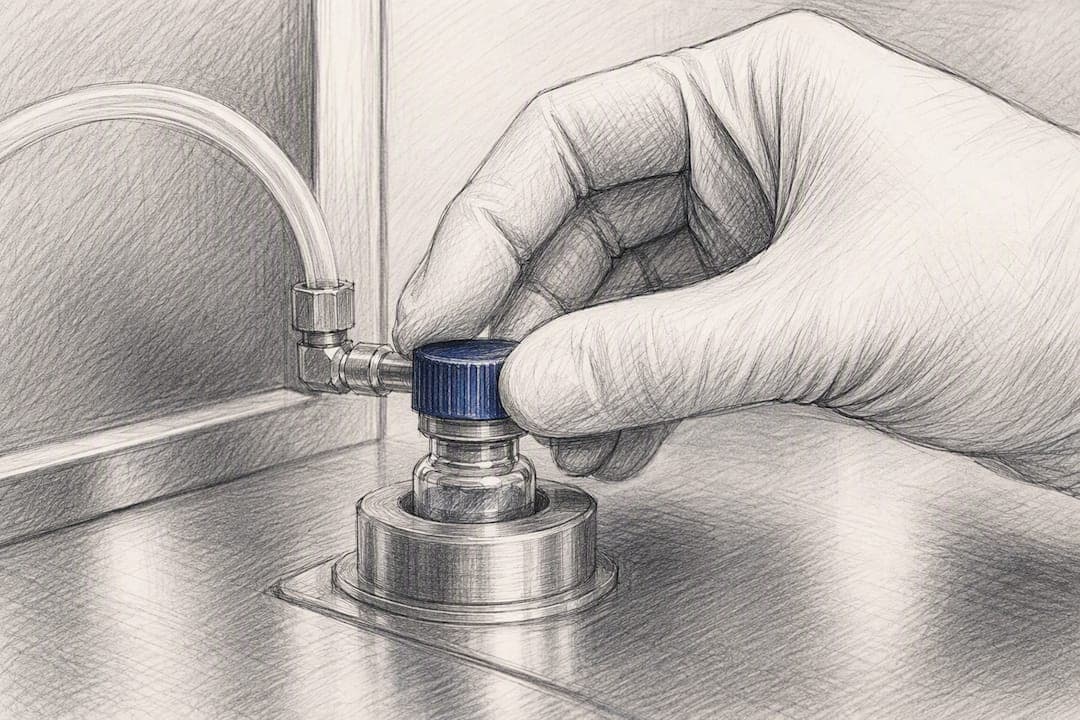
Pro Tip: Vacuum-sealed or nitrogen-flushed vials extend shelf life well beyond what temperature alone provides, particularly for peptides containing oxidation-prone residues.
Storing reconstituted peptide solutions the right way
Once a peptide is dissolved, the clock speeds up. Sigma-Aldrich’s technical guidance puts solution stability at a limited period at refrigerated temperatures around 4 °C before quality starts to slip, and recommends freezing anything you won’t use within that window.
Follow this sequence when you reconstitute:
- Reconstitute into a buffer near pH 5 to 6 for most peptides. This range minimizes deamidation at asparagine and glutamine residues and reduces aggregation risk compared with neutral or alkaline buffers.
- Filter the solution if sterility matters for your application, using a low-protein-binding syringe filter.
- Split the batch into single-use aliquots immediately, rather than pulling from one master vial repeatedly.
- Freeze aliquots at −20 °C for routine work, or −80 °C when the sequence contains vulnerable residues or the material is irreplaceable.
- Skip frost-free freezers entirely. Their automatic defrost cycles create temperature swings that erode stability over repeated exposure, a point Sigma-Aldrich’s guidelines flag directly.
Small polypropylene tubes, roughly 0.5 mL to 1.5 mL, work well for aliquoting because they limit headspace and reduce the surface area exposed to any residual oxygen. A detailed reconstitution walkthrough covers buffer selection and technique in more depth if you’re setting up a workflow for the first time.
Matching storage temperature to how long you need stability
The right temperature depends entirely on your timeline, not just on what’s convenient.
- Immediate use (same day): Room temperature is fine, but handle the material quickly and avoid direct light.
- Short-term lab storage (hours to a few days): 2 °C to 8 °C for reconstituted solutions or dry peptide you’re actively working with.
- Medium-term (weeks to a few months): −20 °C, aliquoted, for both dry and dissolved peptide.
- Long-term archival (months to years): −80 °C, especially for peptides containing cysteine, methionine, or other sensitive residues, or for any batch tied to a study you can’t afford to repeat.
Before opening any frozen vial, let it warm to room temperature first. Opening a cold vial straight from the freezer invites condensation, and that moisture undoes a lot of the protection the cold storage was supposed to provide.
What degrades peptides besides temperature
Two peptides stored at identical temperatures can age at completely different rates if their sequences differ. GenScript’s handling guidelines single out cysteine, methionine, and tryptophan as oxidation-prone, while asparagine and glutamine are vulnerable to deamidation regardless of how cold the freezer runs.
The main non-temperature risks to manage:
- Moisture: even lyophilized peptide absorbs ambient humidity over time, which is why NIBSC recommends desiccated, sealed storage rather than relying on cold alone.
- Light: UV and visible light accelerate degradation in photosensitive sequences; amber vials or foil-wrapped secondary packaging solve this cheaply.
- Oxygen: vacuum sealing or nitrogen flushing protects oxidation-prone residues far better than a standard screw-cap vial in open air.
A peptide kept perfectly cold but exposed to humidity and light will still degrade faster than one stored slightly warmer but properly sealed and shielded.
A practical handling checklist for receiving and storing peptides
Getting storage right starts the moment a shipment arrives, not after it’s already in the freezer.
- Inspect the package immediately, check for any included temperature indicator, and log the condition on arrival.
- Transfer dry peptide to −20 °C (or −80 °C for sensitive material) within minutes of opening, not at the end of the day.
- Aliquot reconstituted solutions into single-use volumes before the first freeze, never after multiple withdrawals from one vial.
- Label every aliquot with the reconstitution date and freeze date, and store in a manual-defrost freezer only.
- If you’re left with excess dissolved peptide you won’t use soon, consider re-lyophilizing it rather than leaving it in solution indefinitely, and run a purity check afterward if the batch matters to a study’s outcome.
The peptide laboratory standards guide walks through aliquoting and quality-preservation steps in more detail for anyone setting these procedures up for the first time.
Shipping peptides without losing stability in transit
Cold-chain failures during shipping are one of the most common ways peptide quality gets compromised before a researcher even opens the box. Dry ice keeps −20 °C or −80 °C shipments stable but comes with carrier-specific hazmat rules worth confirming before you ship internationally. Gel packs are usually sufficient for 2 °C to 8 °C shipments over shorter transit windows.
Temperature data loggers or single-use indicator strips give you an objective record of whether a shipment stayed within range, rather than guessing based on how warm the package feels on arrival.
- If a vial shows minor thawing and the transit time was short, refreezing promptly is usually acceptable.
- If thawing was extended or the material is sequence-sensitive, quarantine the batch and consider an HPLC purity check before using it in anything critical.
- Visual cues like clouding, discolouration, or unexpected precipitate are reasons to test before use, not reasons to assume the material is fine.
Pro Tip: Keep a small log of every excursion, even minor ones. A pattern of repeated near-misses on one supplier route is worth flagging before it costs you a study.
How Pure Peptide’s lab guidance lines up with the research
These handling instructions align directly with the same evidence this article draws on, rather than around convenience or marketing shortcuts. That distinction shows up in a few concrete ways:
- Products are formulated and tested to high purity standards, which matters because a lower starting purity gives degradation processes more to work on regardless of storage conditions.
- The peptide laboratory standards guide walks through aliquoting, sealing, and freeze-thaw avoidance in the same terms manufacturer literature like GenScript’s and Bachem’s storage pages use.
- The reconstitution guide covers buffer pH selection and sterile technique, mirroring the pH 5 to 6 range recommended for minimizing deamidation risk.
None of this replaces third-party purity testing on a specific batch, and readers running study-critical work should still verify lot documentation directly with their supplier before relying on it for publication-grade results.
Why storage discipline is a research quality issue, not a housekeeping one
A lot of failed replication attempts trace back to a freezer log nobody kept, not to a flawed hypothesis. We treat storage temperature and moisture control as part of experimental design at Pure Peptide, because a peptide that degraded quietly in transit produces data that looks clean and is actually wrong. Getting the cold chain right is cheaper than repeating the study.
— Pure Peptide
Get the supplies that make correct storage practical
Knowing the right temperature only helps if you have the tools to hit it consistently. Every batch ships with lab documentation, so you’re not guessing at what condition the material arrived in before it hit your freezer.
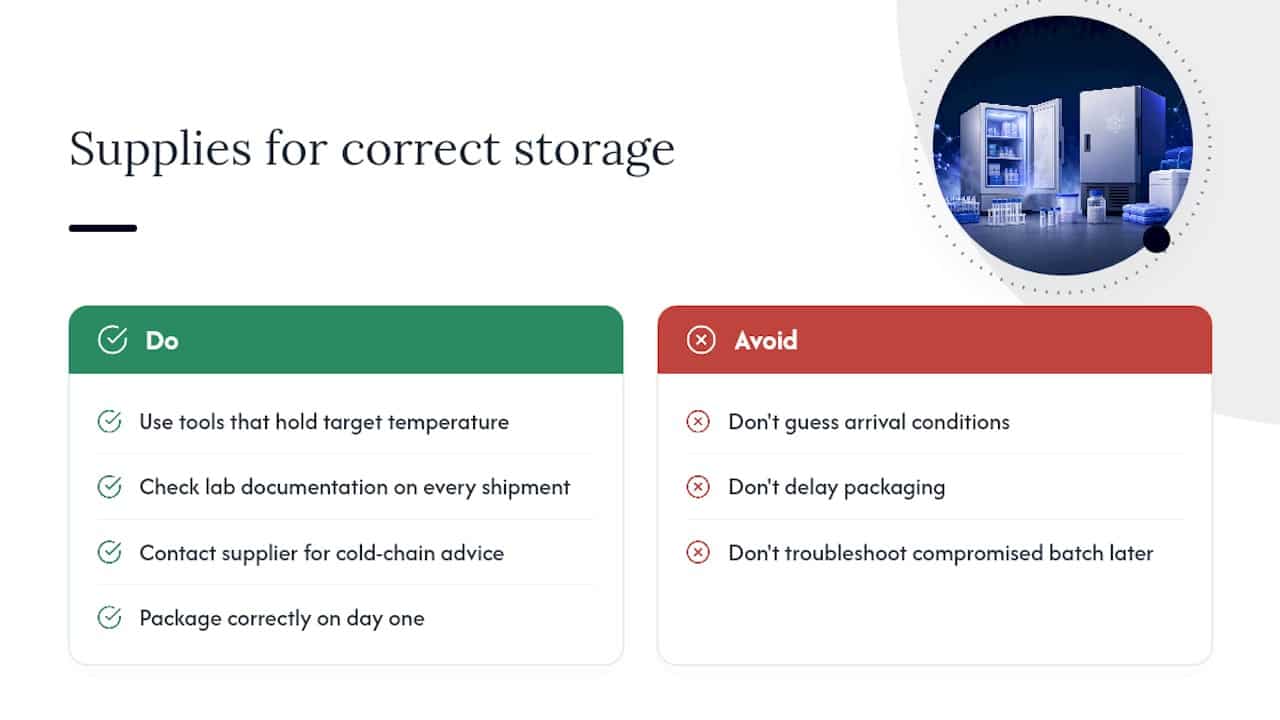
If your work depends on muscle and recovery-focused compounds, the peptides for muscle category page lists current stock with purity data attached to each listing. Reach out before ordering if you need specific cold-chain advice for your shipping region. Getting the packaging right on day one saves you from troubleshooting a compromised batch on day thirty.
Sources
- PMC study (2012) — peptide stability at different temperatures and solvents
- NIBSC — peptide storage guidance
- How to store peptides | JPT — best practices for researchers
- GenScript — peptide storage and handling guidelines
- Sigma-Aldrich — handling and storage guidelines for peptides and proteins
FAQ
At what temperature do peptides go bad?
Dry peptides can begin degrading noticeably above 8 °C over extended periods, while reconstituted solutions lose stability much faster, often within a week even at 4 °C according to Sigma-Aldrich’s guidance.
How long can a reconstituted peptide stay unrefrigerated?
Most reconstituted peptides should not sit unrefrigerated beyond a few hours; degradation accelerates quickly at room temperature once the peptide is in solution, so refrigeration or freezing right after reconstitution is the safer default.
What temperature is safe for peptides?
Dry peptide is safest at −20 °C for routine storage or −80 °C for long-term and sequence-sensitive material, while reconstituted solutions belong at 4 °C for only a few days before freezing, per NIBSC’s guidance.
Should peptides be stored in a fridge?
A standard fridge (2 °C to 8 °C) works for short-term storage of dry peptide or brief holding of a reconstituted solution, but it is not suitable for anything beyond a few days or weeks, at which point a freezer is necessary.